





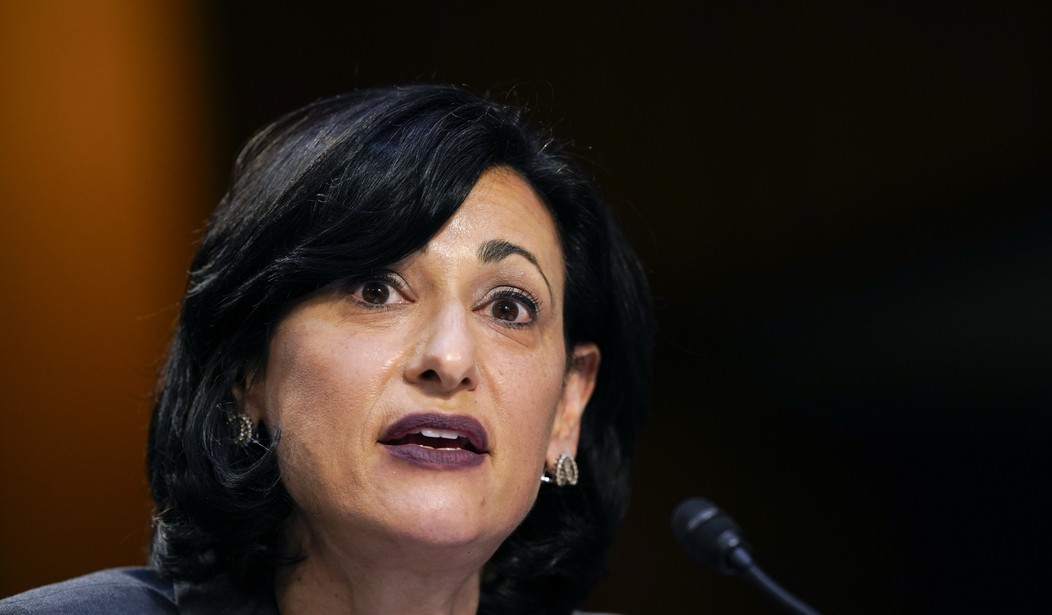
U.S. Centers for Disease Control and Prevention (CDC) Director Rochelle Walensky said on Friday that she does not think the country has reached the peak of the Omicron variant surge.
Walensky made the remarks on NBC's "Today." In the interview with Savannah Guthrie, she compared the Omicron variant peak in the United States to other countries, such as South Africa.
"The way it [Omicron] has peaked in other countries, in South Africa, it has come down rapidly as well," Walensky said in the interview. "But, I don't believe we've seen that peak yet here in the United States."
“I don’t believe we’ve seen the peak yet here in the United States.” -@CDCDirector Rochelle Walensky on the latest surge in COVID-19 cases due to the omicron variant pic.twitter.com/PGiEtv5LpX
— TODAY (@TODAYshow) January 7, 2022
In the interview, Walensky discussed the CDC's updated guidelines on isolating after a positive COVID-19 test. As Leah covered, CDC now recommends asymptomatic people infected with the virus isolate for five days. Previously, CDC guidance recommended ten days.
"We are now standing on the shoulders of years of science that has demonstrated that if you are infected, you are most contagious in the one or two days prior to your symptoms and the two to three days after your symptoms," Walensky told "Today." "So we know that the vast majority of your contagiousness by day five is really behind you."
Additionally, the CDC does not recommend undergoing a COVID-19 test before leaving isolation. The American Medical Association (AMA) came out in opposition to the CDC's guidance this week, describing it as "confusing" and that it puts others at risk of the virus.
"In this moment, where we're evaluating the science and looking at the epidemiology of the disease, we said five days of isolation and then, are you feeling better? Is your cough gone? If your symptoms are gone, we say you're okay to come out of that isolation, but you really do need to wear a mask all of the time," Walensky added in the interview.
She added that she has "deep respect" for the AMA but that the CDC has received support for its new guidelines.
"We've gotten a lot of support from our partners in our public health spheres, in our clinical spheres, and in our laboratory spheres as well," Walensky said.
Why is the guidance so confusing? -@SavannahGuthrie
— TODAY (@TODAYshow) January 7, 2022
We are now standing on the shoulders of years of science. -@CDCDirector pic.twitter.com/S1trulvyEf



Join the Conversation
VIP members get the ability to comment on articles.