







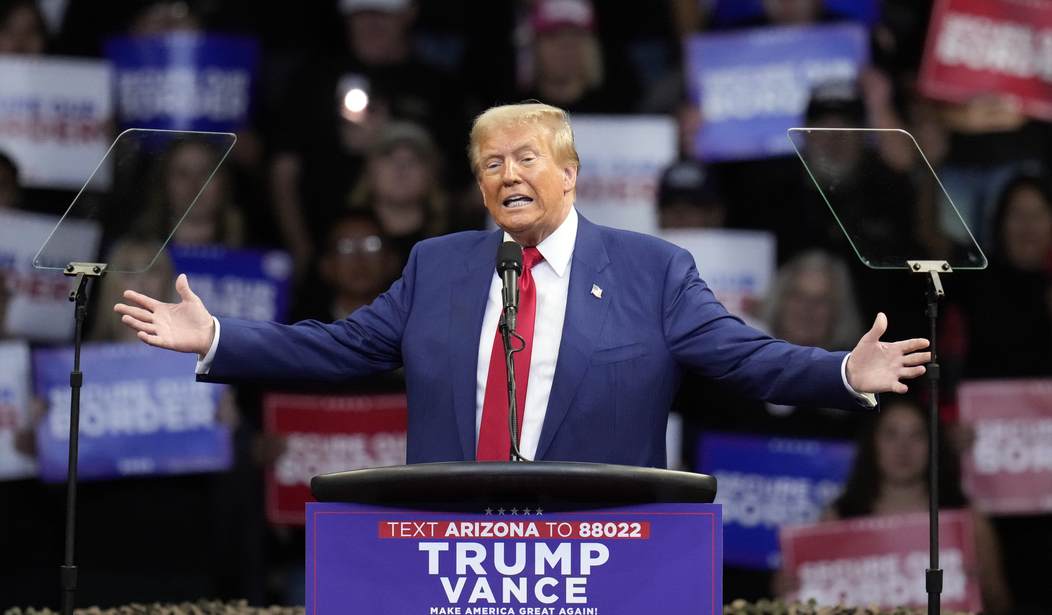
Former President Donald Trump announced how he plans to help families affected by “migrant crime” if elected next week.
“Today, I’m announcing that for the first time under my administration we will be seizing the assets of the criminal gangs and drug cartels and we will use those assets to create a compensation fund to provide restitution for the victims of migrant crime and the government will help in the restitution,” Trump said during an address at Mar-a-Lago on Tuesday.
🚨 NEW POLICY ALERT 🚨
— Trump War Room (@TrumpWarRoom) October 29, 2024
President Trump announces that his administration will seize the assets of the criminal gangs and drug cartels and use them to set up a compensation fund for the victims of migrant crime. pic.twitter.com/No6sxV5uxC
The proposal is similar to existing federal policy.
The Federal Crime Victims Assistance Fund provides financial assistance to those who have been affected by crimes. The $3.2 billion fund is financed by fines and penalties from convictions in federal cases, and payments to victims help offset medical and funeral costs, lost wages and other crime-related expenses. (WSJ)
“Expanding its use to compensate victims of violent crime adds a powerful layer of support by redirecting money and assets seized from criminal organizations involved in drug trafficking, gang violence, and other harmful activities,” former New York DEA chief Ray Donovan told The New York Post. “This approach not only disrupts criminal enterprises but also provides direct aid to those impacted by such violence.”
Derek Maltz, the former chief of DEA’s Special Operations division, told the Post such a policy would help "unite American citizens."
“It would be a great way to pay back victims that have been hurt by these savages that have come illegally into the country and operate with impunity,” Maltz said.


Join the Conversation
VIP members get the ability to comment on articles.