





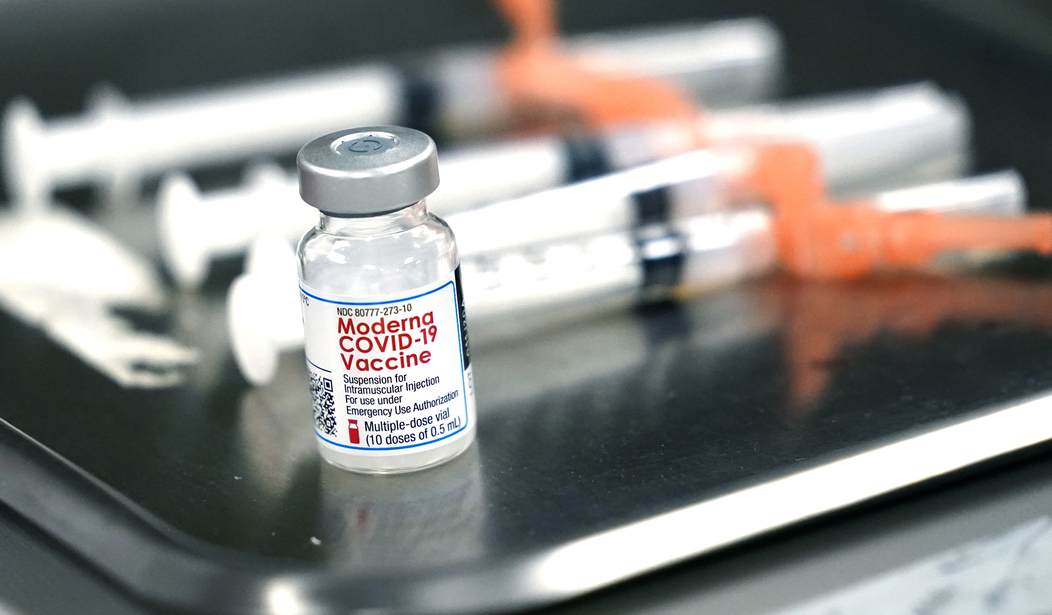
The federal government’s vaccine advisers were not presented with early data about Moderna's newest COVID-19 booster during meetings last year when the officials debated whether to authorize the jab, according to a CNN report.
The preliminary data, though it had limitations, suggested the updated booster, which cost taxpayers about $5 billion, may not be more effective than previous shots. Several advisers told CNN they were upset they weren’t shown the findings.
“I was angry to find out that there was data that was relevant to our decision that we didn’t get to see,” said Dr. Paul Offit, a member of the Vaccines and Related Biological Products Advisory Committee, a group of external advisers that helps the FDA make vaccine decisions. “Decisions that are made for the public have to be made based on all available information – not just some information, but all information.”
At a meeting of this FDA advisory group in June and a meeting in September of a panel that advises the US Centers for Disease Control and Prevention, the experts were presented with reams of information indicating that the new vaccine worked better than the one already on shelves, according to a review of videos and transcripts of those meetings and slide presentations made by Moderna, CDC and FDA officials.
That data – called immunogenicity data – was based on blood work done on study participants to assess how well each vaccine elicited antibodies that fight off the Omicron strain of the virus that causes Covid-19.
The data that was not presented to the experts looked at actual infections: who caught Covid-19 and who did not.
It found that 1.9% of the study participants who received the original booster became infected. Among those who got the updated bivalent vaccine – the one that scientists hoped would work better – a higher percentage, 3.2%, became infected. Both versions of the shot were found to be safe.
This infection data was far from complete. The number of study subjects who became infected was very small, and both the patients and the researchers were aware of who was getting the original shot and who was getting the new booster.
Despite these imperfections, the data was included in a preprint study that was posted online in June, again in September in an FDA document and then later that month in a top medical journal – and advisers to the FDA and the CDC said the data should have been shared with them, too. (CNN)
FDA vaccine advisory committee member Dr. Eric Rubin told CNN the advisers would have understood the study’s limitations.
“It’s not a group of children. We understand how to interpret these results,” he said.
The six advisers from CDC and FDA that CNN spoke with said the data would not have changed their vote but they would have wanted to see it anyway in the name of transparency.
Offit and others say the decision getting made without the preliminary data further erodes trust in the process.
“This was not acceptable. I understand we’re in the middle of a pandemic. I understand we’re building the plane while it’s still in the air, but you can’t do this,” he told CNN. “It did shake my faith. It shook my faith in how these decisions were being made.”
Such a striking lack of transparency @FDA when reviewing #CovidVaccines is among the root causes of vaccine hesitancy. Did the FDA & Moderna think that actual infection data was irrelevant for advisers to review, no matter how preliminary the data? https://t.co/8eGAKue55N
— Brett Giroir (@DrGiroir) January 11, 2023
Sen. Tom Cotton said the revelation that not all data was presented to the advisers warrants an investigation.
Hiding data—especially as these shots were sometimes mandated—warrants a full investigation and testimony under oath. @JudiciaryGOP https://t.co/uO9CBH3GCK
— Tom Cotton (@TomCottonAR) January 11, 2023



Join the Conversation
VIP members get the ability to comment on articles.