





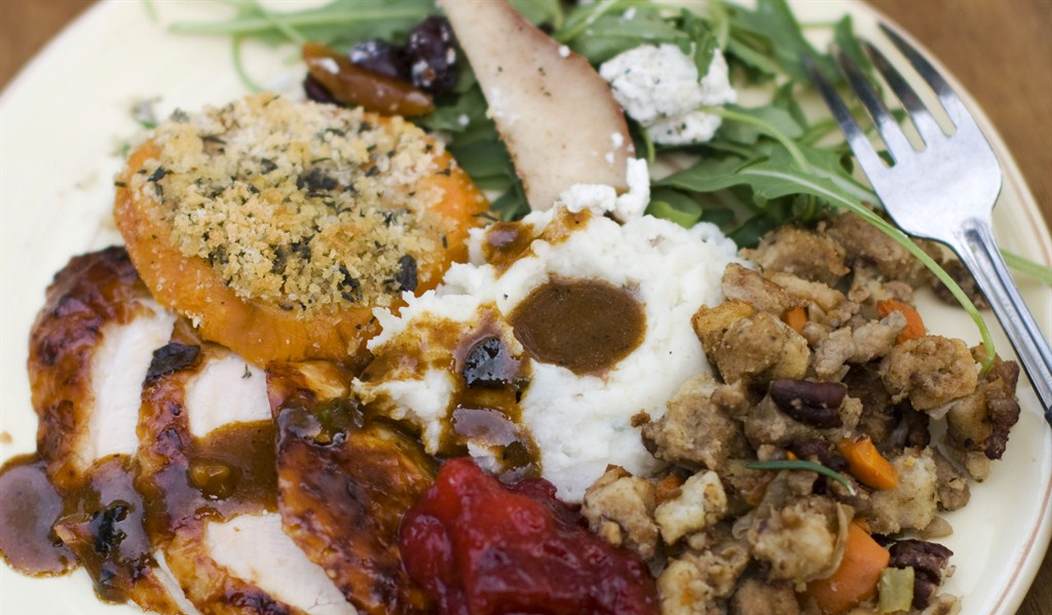
As most Americans fret over the astronomical cost of hosting Thanksgiving dinner this year, some on the left seem more concerned with the holiday’s climate impact.
In a Washington Post column titled, "The Climate Impact of the Thanksgiving Meal Might Surprise You," the writer praises the holiday’s relatively low climate impact compared to the food associated with celebrations like Independence Day—when burgers and hot dogs are staple items.
“I know, I know, nobody wants to put 'climate' and 'Thanksgiving' in the same sentence. Tallying the environmental impact of a holiday feast doesn’t seem like it’s in the spirit of the thing,” the column begins. “But I’m here to tell you that the news is good. The mainstays of the meal are poultry and plants, which make Thanksgiving a much more climate-friendly holiday” than July 4.
The author then dives into a climate analysis of common Thanksgiving foods (and Oysters?), from turkey to cranberry sauce to green beans, pie, and more.
"On the beef-pork-poultry axis of meat, poultry has the lowest greenhouse gas emission levels," she writes. But green beans don't stack up to root vegetables.
For the particularly climate obsessed, the writer recommends ways to decrease your meal’s impact.
“Potatoes roll in at about one-tenth the greenhouse gas emissions of the poultry (on a per-calorie basis). Of course, the butter and cream increase the tally because dairy is comparable to poultry and pork, and if you want to cut back on those, try roasting your potatoes instead of mashing; go crispy instead of creamy,” she writes.
The column does throw in a surprising twist—recommending that venison is an even better choice than turkey when it comes to the climate. The author says that’s what she serves “in years when I’ve gotten a deer.” Following the link shows she wrote last year about how venison “is the most eco-friendly food on the planet—if you hunt the deer yourself.”
She encourages readers to “think about getting your hunting license. Our world could be the better for it.”
Still, the overwhelming consensus on social media is that most people couldn't care less (expressed in language too colorful to post here.)
Perspective: The climate impact of the Thanksgiving meal might surprise youhttps://t.co/UbPZGcTTqC
— The Washington Post (@washingtonpost) November 18, 2022
It's a much better day to count your blessings, not their environmental impact.


Join the Conversation
VIP members get the ability to comment on articles.