





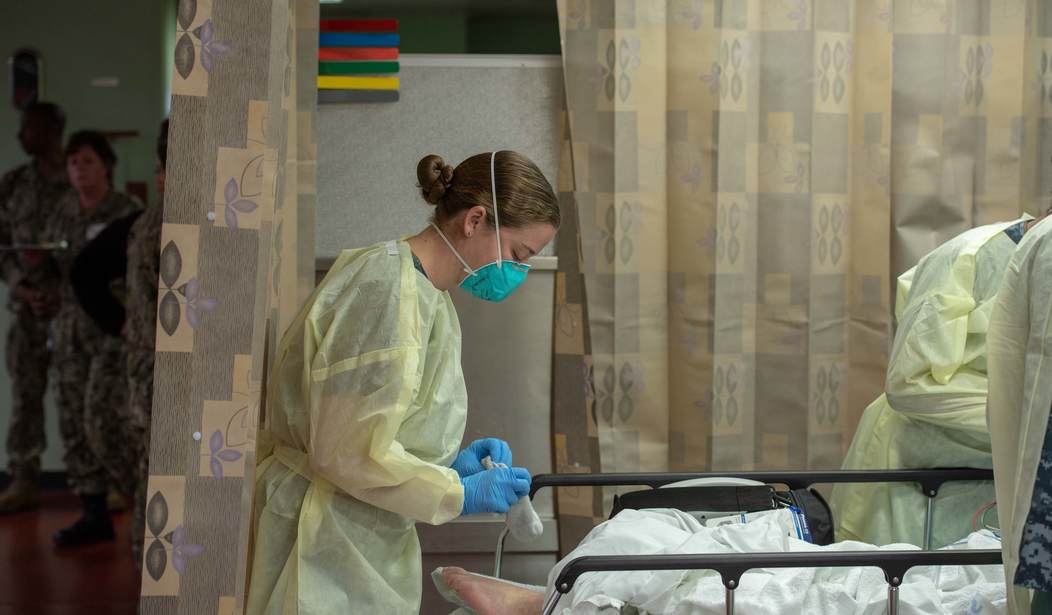
New York’s Department of Health issued a memo this week to health care providers and facilities in the state warning that there is a severe shortage of Covid-19 treatments.
In order to be eligible to receive oral antivirals or monoclonal antibody treatment products, patients need to meet five conditions. The first four are not controversial—there are age and weight requirements, having a mild or moderate case of Covid-19, and able to begin treatment within five days of symptoms. The fifth criterion, however, is more controversial. In addition to meeting the other requirements, patients must also “have a medical condition or other factors that increase their risk for severe illness."
The memo goes on to state, “Non-white race or Hispanic/Latino ethnicity should be considered a risk factor, as longstanding systemic health and social inequities have contributed to an increased risk of severe illness and death from Covid-19."
So while white patients can certainly get the treatment, they must have another condition that elevates their risk of severe illness.
NY State Department of Health warns they don't have enough Paxlovid or Monoclonal Antibody Treatment and white people need not apply. https://t.co/shbMWDomLJ pic.twitter.com/MwBtjv2pDx
— Karol Markowicz (@karol) December 31, 2021
This is illegal and should be enjoined. https://t.co/dAnN1kWzCA
— Harmeet K. Dhillon (@pnjaban) December 31, 2021
Illegal. https://t.co/YtPHLE0wUT
— Tom Fitton (@TomFitton) December 31, 2021
I’m speechless https://t.co/5wUvxRXQPY
— Mike (@Doranimated) December 31, 2021
Explicit government racial classifications, justified by cutting-edge political theories, setting access to medical treatment. Fun times. https://t.co/Xz7kEJYy6d
— Jason Willick (@jawillick) December 31, 2021



Join the Conversation
VIP members get the ability to comment on articles.