







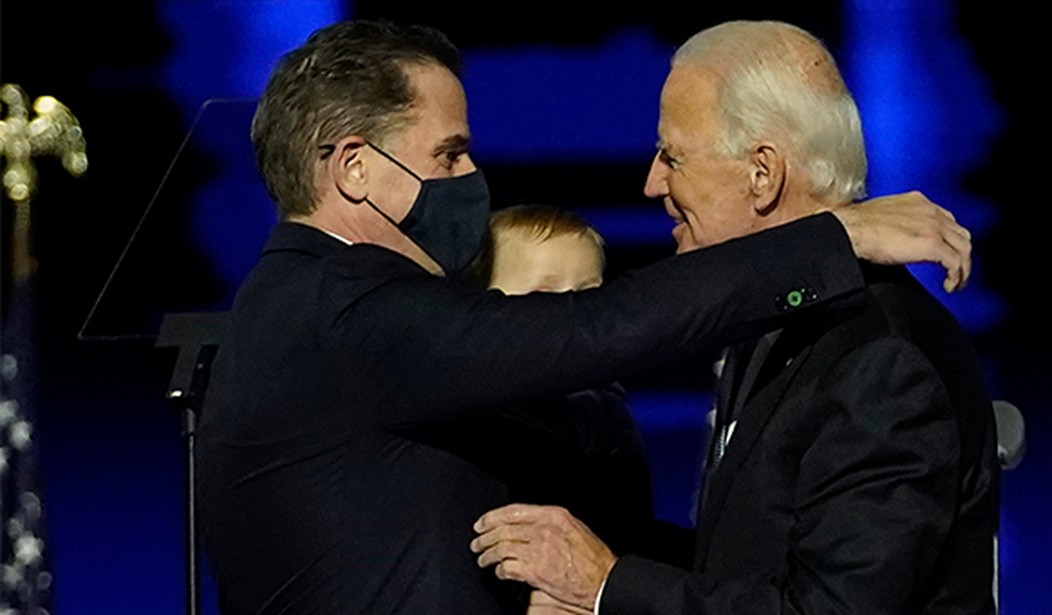
The Federal Election Committee concluded that, after months of deliberation, Twitter did not violate any laws when it censored the New York Post's bombshell report last fall on Hunter Biden's shady business dealings, just ahead of the 2020 election.
Twitter had locked the New York Post out of their account for two weeks back in October 2020 for violating its "hacked materials policy" while also restricting all users from both posting the newspaper's article to the social media platform and from sharing it with others through direct messaging due to concerns that the article link could be "potentially harmful."
The FEC ruled that the tech giant did not violate any laws due to the Post's article being censored for a commercial reason, not a political one, according to a document obtained by The New York Times that outlined the commission's decision to dismiss an October complaint filed by the Republican National Committee, which argued that Twitter’s censorship of the article was an "illegal in-kind contribution" to the presidential campaign of then-candidate Joe Biden.
The agency also determined that there was "no information" that Twitter worked with Biden's campaign in censoring the report.
The FEC documents further detailed that Twitter’s head of site integrity had allegedly been notified by federal law enforcement in the early stages of the 2020 election cycle to look out for content from "malign state actors" who target political campaigns and those associated with them, which includes Hunter Biden.
The Post's story detailed evidence that a Ukrainian company may have used Hunter Biden, who joined the company in April 2014, for political leverage.
The report outlined that, based on emails obtained from a Hunter Biden laptop, Joe Biden, who was vice president when the email communications occurred, was introduced by his son to a top executive at Ukrainian energy firm Burisma Holdings less than a year before the now-president pressured Ukrainian government officials to terminate the employment of a prosecutor that had been looking into the company's dealings.
The emails from the Post's article were reportedly found in a laptop that had been left at a Delaware repair shop in April 2019 but never collected. The shop's owner, John Paul Mac Isaac, first reported the contents to a lawyer for former New York Mayor Rudy Giuliani before speaking with the FBI, which then seized possession of the device.
The FBI subpoenaed the laptop and hard drive that allegedly belonged to Hunter Biden as part of a money laundering investigation.
A senior federal law enforcement official told Fox News that the laptop's emails were "authentic."
And while The New York Times' report on the FEC's ruling included a claim that the Post's article was "unsubstantiated," the commission's decision did not include this framing, a source familiar with the ruling told The Washington Free Beacon.
The FEC also wrote that Twitter "credibly explained" that it blocked the story over its "hacked materials policy," which prohibits content "obtained through hacking that contains private information, may put people in physical harm or danger, or contains trade secrets." The Post, however, has previously asserted that the laptop was not hacked, but rather, was provided to the paper by the repair shop owner after Hunter failed to pick it up.
Back at a House hearing in March, Twitter CEO Jack Dorsey said that his company "made a total mistake" in their censoring of the Post's story.
"It was literally just a process error. This was not against them in any particular way," he said at the time, referring to the Post.
Twitter CEO Jack Dorsey said the platform “made a total mistake” in its handling of a New York Post story on the Biden family. https://t.co/GiodFMVqVI pic.twitter.com/62cJDtB52W
— Cheddar News ?? (@cheddar) March 25, 2021


Join the Conversation
VIP members get the ability to comment on articles.