







On Monday the Supreme Court refused to hear yet another case about the subversion of Americans' Second Amendment rights.
The case in question is Snope v. Brown, a challenge to Maryland's ban on the sale and ownership of AR-15 sporting rifles. The ban was upheld by the Fourth Circuit and appealed to the Supreme Court. The Supreme Court declined to take up the case, for now.
"This case primarily concerns Maryland’s ban on the AR–15, a semi-automatic rifle. Americans today possess an estimated 20 to 30 million AR–15s. And AR–15s are legal in 41 of the 50 States, meaning that the States such as Maryland that prohibit AR–15s are something of an outlier. Given that millions of Americans own AR–15s and that a significant majority of the States allow possession of those rifles, petitioners have a strong argument that AR–15s are in 'common use' by law-abiding citizens and therefore are protected by the Second Amendment under Heller," Justice Brett Kavanaugh, who voted not to take on the case, wrote.
"If so, then the Fourth Circuit would have erred by holding that Maryland’s ban on AR–15s complies with the Second Amendment," he continued. "Under this Court’s precedents, the Fourth Circuit’s decision is questionable. Although the Court today denies certiorari, a denial of certiorari does not mean that the Court agrees with a lower-court decision or that the issue is not worthy of review."
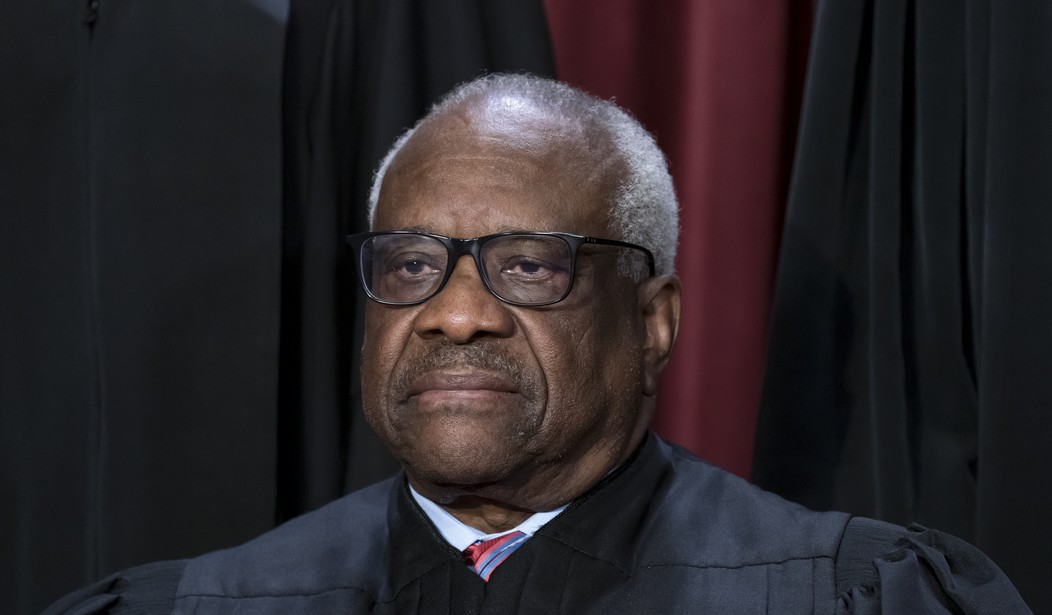
But the Court punting, yet again, isn't sitting well with Justice Clarence Thomas.
"Despite the foregoing, the Fourth Circuit upheld Maryland’s ban on the ground that AR–15s are not '‘constitutionally protected arms’ under the plain text of the Second Amendment," Thomas wrote in his dissent. "The Fourth Circuit placed too high a burden on the challengers to show that the Second Amendment presumptively protected their conduct. And, its determination that AR–15s are dangerous and unusual does not withstand scrutiny."
"I would not wait to decide whether the government can ban the most popular rifle in America. That question is of critical importance to tens of millions of law-abiding AR–15 owners throughout the country. We have avoided deciding it for a full decade," Thomas continued. "And, further percolation is of little value when lower courts in the jurisdictions that ban AR–15s appear bent on distorting this Court’s Second Amendment precedents...on the Court’s logic, it seems that ATF could at any time declare AR–15s to be machineguns prohibited by federal law. Until we resolve whether the Second Amendment forecloses that possibility, law-abiding AR–15 owners must rely on the goodwill of a federal agency to retain their means of self-defense. That is 'no constitutional guarantee at all.' I respectfully dissent."
As Thomas noted, states subverting the Second Amendment rights of Americans by banning the most commonly used and owned rifle in the country are able to continue until the Court takes on the issue. It's long past due.

Join the Conversation
VIP members get the ability to comment on articles.