





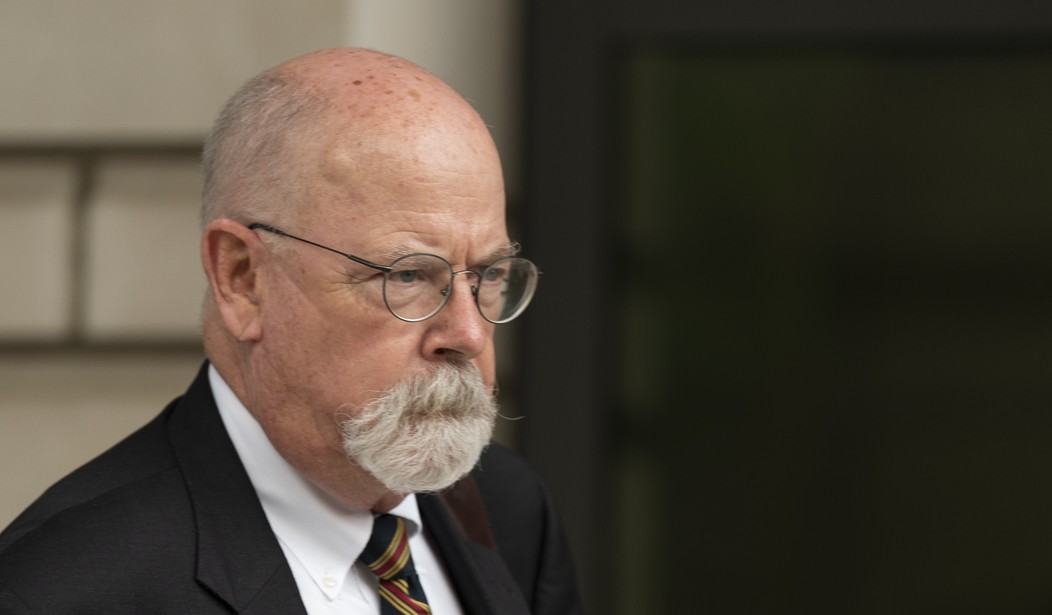
Special Counsel John Durham's long awaited findings of his investigation into Crossfire Hurricane, the probe launched by the FBI against President Donald Trump alleging "Russian collusion," were finally released Monday in a 306-page report.
The lengthy document roundly condemns the FBI for interfering in the 2016 presidential election, breaking protocols and using politics to justify doing so. Durham's team asked the following questions and concluded, "Our findings and conclusions regarding these and related questions are sobering."
Was there adequate predication for the FBI to open the Crossfire Hurricane investigation from its inception on July 31, 2016 as a full counterintelligence and Foreign Agents Registration Act ("FARA") investigation given the requirements of The Attorney
General's Guidelines for FBI Domestic Operations and FBI policies relating to the use of the least intrusive investigative tools necessary?
Was the opening of Crossfire Hurricane as a full investigation on July 31, 2016 consistent with how the FBI handled other intelligence it had received prior to July 31, 2016 concerning attempts by foreign interests to influence the Clinton and other campaigns?
Similarly, did the FBI properly consider other highly significant intelligence it received at virtually the same time as that used to predicate Crossfire Hurricane, but which related not to the Trump campaign, but rather to a purported Clinton campaign plan "to vilify Donald Trump by stirring up a scandal claiming interference by Russian security services," which might have shed light on some of the Russia information the FBI was receiving from third parties, including the Steele Dossier, the Alfa Bank allegations and confidential human source ("CHS") reporting? If not, were any provable federal crimes committed in failing to do so?
Was there evidence that the actions of any FBI personnel or third parties relating to the Crossfire Hurricane investigation violated any federal criminal statutes, including the prohibition against making false statements to federal officials? If so, was that evidence sufficient to prove guilt beyond a reasonable doubt?
Was there evidence that the actions of the FBI or Department personnel in providing false or incomplete information to the Foreign Intelligence Surveillance Court ("FISC") violated any federal criminal statutes? If so, was there evidence sufficient to prove guilt beyond a reasonable doubt?
The FBI responded to the report, which showed the agency should have never opened the investigation and had zero evidence to do so, by claiming new rules have been implemented to avoid political targeting in the future. Legal experts are skeptical of that claim.
Statement on Report by Special Counsel John Durhamhttps://t.co/lcow0ea3mG pic.twitter.com/T4vXqoOMrp
— FBI (@FBI) May 15, 2023
Just so I have this straight, we've implemented new FBI training so that agents know they shouldn't swear in court applications to the truth of political opposition research that they haven't corroborated? What was the prior training that said that was OK? https://t.co/dUvsSj0Tfy
— Andy McCarthy (@AndrewCMcCarthy) May 16, 2023
...The statement is ample evidence of a lack of remorse by the FBI like a habitual offender giving a shrug in his court “allocution” before a judge.
— Jonathan Turley (@JonathanTurley) May 16, 2023

Join the Conversation
VIP members get the ability to comment on articles.