







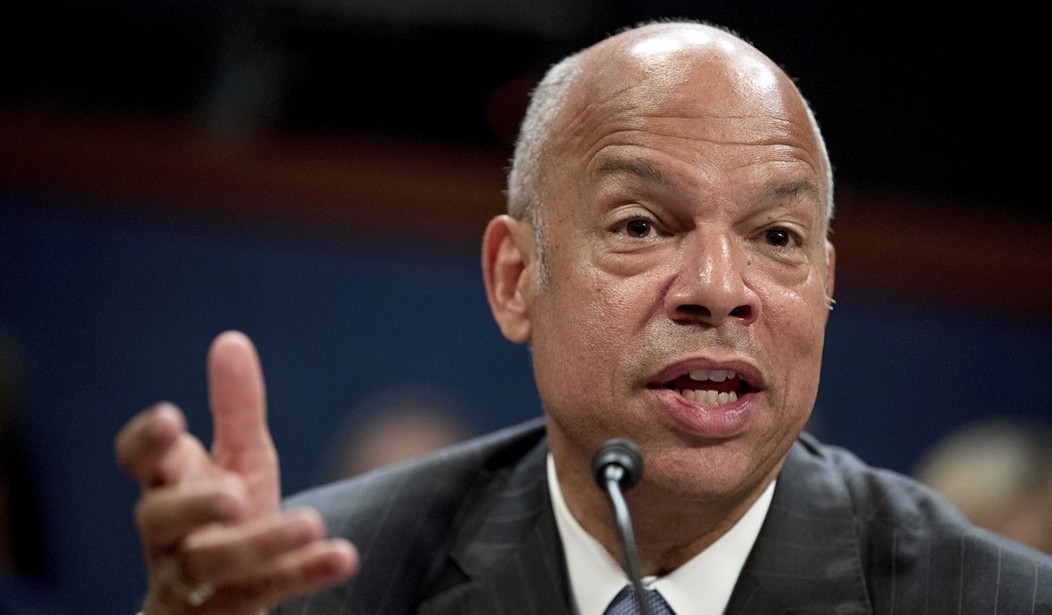
Former Department of Homeland Security Secretary Jeh Johnson gave the left another reality check over the weekend about detention centers on the southern border with Mexico.
“Chain link barriers, partitions, fences, cages, whatever you want to call them, were not invented on January 20, 2017, okay?" Johnson said during an interview at the Aspen Institute.
Johnson was asked about a photo taken in 2014. It shows the former Secretary touring a border detention facility in Arizona when the unaccompanied minor and family unit crisis actually began. Most of the media started paying attention to the issue, while expressing outrage over the Trump administration's response to it, only recently.
Obama’s DHS secretary Jeh Johnson pic.twitter.com/PuquzMVIM7
— MissJackieGames (@SpeedyGamerGir1) June 28, 2019
"The photograph you're referring to was a facility in Arizona. I recognize the photo because Governor Brewer was with me and it was during the spike. We had a lot of unaccompanied kids, we had a lot of family units and under the law one they're apprehended by the Border Patrol, within 72-hours we have to transfer unaccompanied children to HHS and HHS then puts them in a shelter and find placement for them somewhere in the United States," Johnson said. “But during that 72 hour period, when you have something that is a multiple, like four times of what you’re accustomed to in the existing infrastructure, you’ve got to find places quickly to put kids. You cant just dump seven year old kids on the streets of McAllen or El Paso. And so these facilities were erected and that one I think was a large warehouse and they put those chain link partitions up so you could segregate young women from young men, kids from adults, until they were either released or transferred to HHS.”
Townhall has been reporting on this crisis since it started in 2014.


Join the Conversation
VIP members get the ability to comment on articles.