





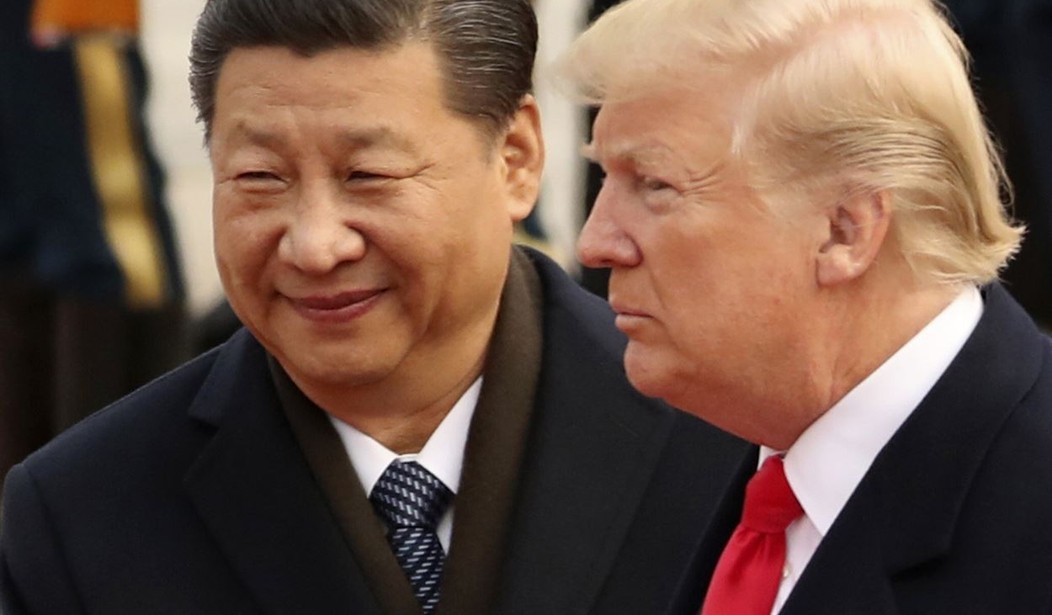
Deputy Treasury Secretary Michael Faulkender said Thursday that China has more to lose than the U.S. from an increasing trade war between the two countries.
China has retaliated over President Trump’s tariffs.
“The president has said all along that one of his primary objectives is to eliminate the tariffs and non-tariff barriers that have been putting U.S. exporters at a disadvantage for decades, that we need to revisit this asymmetry we have in the way that foreign countries treat our manufacturers versus the way that we provide access to our markets. And so he gave people a choice. Do you want to come and give us a negotiation on those tariff and non-tariff barriers, or do you want to retaliate and have us put in place even further tariffs?” Faulkender told Newsmax.
“You see shining examples of the two. We have China, who decided that they wanted to try to retaliate, and you have seen that we have taken tariffs up to 125%. On the other hand, we have 70 countries who have reached out to us, who are ready to talk about ways to make access to their markets easier for our American exporters and to really realize reciprocity in both tariffs and non-tariff barriers between our two countries. And so the Secretary of Treasury, my boss, Secretary of Commerce, the U.S. trade representative, all of them are reaching out to the countries that have contacted us so that we can start to address those and put in place permanence for the American people and American exporters,” Faulkender added.
China is “a lot more dependent” on the U.S. than the other way around because “they export a lot more to our country, both in absolute terms and as a percentage of their economy,” Faulkender said.
“If they want to engage in a tit for tat, such that we keep escalating tariffs, it's their economy — that's already teetering — that's going to face bigger impact from it, whereas we have the ability here to bring back a lot of that activity. The president has said all along that his objective is to bring back manufacturing capacity to the United States, not just for economic security, but also for national security. It's critical that we rebuild our industrial base, bring back those middle class jobs to the towns that have been shuttered,” he added.
Faulkender noted that shortages and supply chain problems during the COVID-19 pandemic shows the need for the U.S. to be more self-reliant, saying that “[I]f China wants to go at this, it's just going to accelerate the movement we have away from China, which, as we saw during the pandemic, we are entirely too critical, we are entirely too dependent upon China for a number of critical components. And so, what this is going to do is accelerate the need of American businesses and American importers to find alternative sources from countries that are going to treat us more fairly and address some of the imbalances that have persisted.”



Join the Conversation
VIP members get the ability to comment on articles.