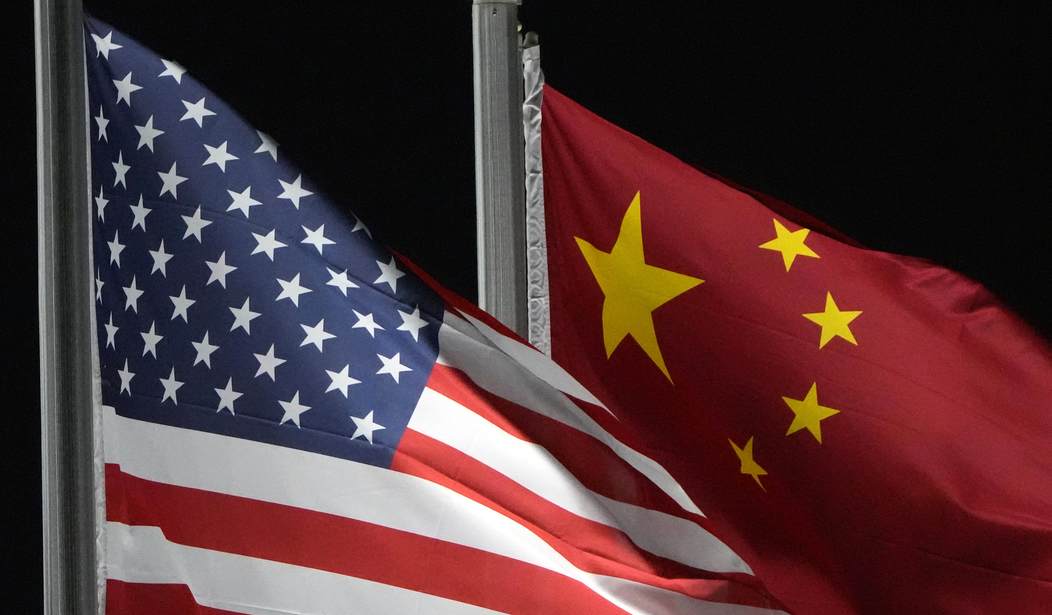

In a recent interview, Bill Maher and William Adams (will.i.am), a founding member and frontman of the Black Eyed Peas, discussed what the term “freedom” means, with Adams arguing that the people of China are free, simply because they have a different kind of freedom than the U.S. does.
The conversation highlights a broader issue on the left: not only the idea that words can have different definitions, but also the view that the American ideal of “freedom” is something that applies differently depending on the situation, rather than an eternal value.
Bill Maher: “[China] doesn’t have freedom. Their people are not free. It is a police state.”
— RedWave Press (@RedWavePress) May 18, 2026
will-i-am: “Their freedom is different than ours. Their need for freedom is different than our need for freedom.”
Bill Maher: “That’s kind of patronizing to say what another person’s… pic.twitter.com/v34T4V1tET
"They don't have freedom," Maher said. "Their people are not free. It is a police state. And when you don't have that..."
"Their freedom is different," Adams said. "Their need of freedom is different than our need of freedom."
"Well, that's kind of patronizing to say what another person's need of freedom is," Maher replied. "Freedom is freedom. I think they, maybe they don't know, maybe they're so brainwashed at this point they don't know how much freedom they need, but I think people yearn for freedom and they don't have it. "
"Say, for example, you come from a place that was war-torn and you want to be free from that. That's different from, I want to be free to do something that is not at the same level," Adams said. "So not every freedom is the same freedom. Sometimes you want to be free from tyranny. You want to be free from, you know, people in the Congo want to be free from that thumb, that oppression. People in America's freedom is a different freedom. And to say they're the same, that's not fair to the folks that are truly suffering."
"I agree. I mean, we are lucky. We have, we complain about freedom and some of those complaints, of course, are valid and certainly in history they're tremendously valid. But the perspective is important," Maher said. "To compare ourselves to what the rest of the human race has done with this concept is important and we generally have more freedom here than many, many people do."
Adams' conception of freedom is a mockery of the term that Western political philosophers spent generations perfecting.
Yes, people can achieve degrees of freedom from certain immediate problems, as Adams explained. But just because someone has achieved freedom in a single sphere does not mean they “have freedom” in the broader sense he suggested, nor does it mean freedom is the guiding ideal of their society.
Freedom, in American political thought, is generally understood as the ability for individuals to pursue their own goals and desires without unwarranted government restraint or oppression. It is not a trivial concept, but one that shaped the Founding Fathers, the nation’s political development, and everyday civic life.
It is not as simple as freedom from one form of oppression if another replaces it. Using Adams’ example of the Congo, a society may free itself from one form of tyranny only to fall into another.
Democrats often attempt to broaden and soften the meaning of “freedom” in the same way Adams does. In doing so, they shift it toward ideas like “freedom from want,” as Franklin Delano Roosevelt famously described, or other expanded interpretations that emphasize outcomes and entitlements rather than limits on power and governance.
In that way, freedom becomes less about restraint on authority and more about what society is expected to provide to people. That is not freedom, but a system in which each person’s life is increasingly controlled by others.