







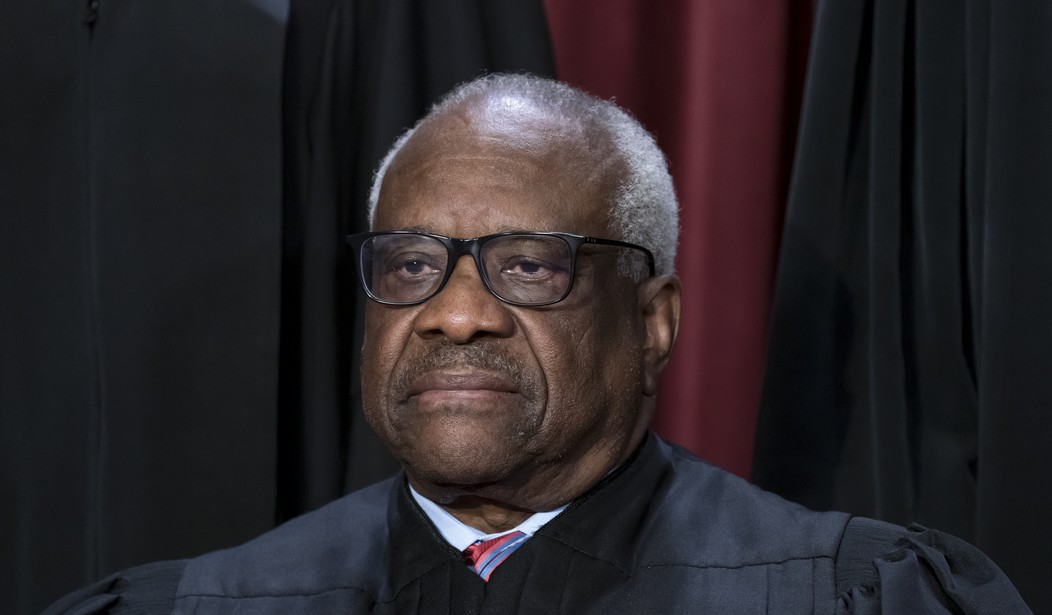
On Wednesday, the Supreme Court struck down Louisiana’s congressional map, which a group of voters had challenged as the product of unconstitutional racial gerrymandering. The ruling upheld a lower court decision that barred the state from using the new map.
Justice Clarence Thomas, widely viewed as the Court’s most conservative member, wrote in concurrence that he would have gone further, calling for a reconsideration of how the Court interprets Section 2 of the Voting Rights Act. In his view, the provision should be applied strictly in a textualist sense, ending what he described as a “disastrous misadventure” in voting-rights jurisprudence and preventing future Section 2 challenges to congressional maps.
Today’s decision should largely put an end to this “disastrous misadventure” in voting-rights jurisprudence. As I explained more than 30 years ago, I would go further and hold that §2 of the Voting Rights Act does not regulate districting at all. The relevant text prohibits States from imposing or applying a “voting qualification,” “prerequisite to voting,” or “standard, practice, or procedure,” in a manner that results in a denial or abridgement of the right to vote based on race. 52 U. S. C. §10301(a). How States draw district lines does not fall within any of those three categories. The words in §2 instead “reach only ‘enactments that regulate citizens’ access to the ballot or the processes for counting a ballot’; they ‘do not include a State’s ... choice of one districting scheme over another.’” Therefore, no §2 challenge to districting should ever succeed.
NEW: SCOTUS Justice Clarence Thomas issues a separate concurrence agreeing with the majority 6-3 decision on racial gerrymandering, but says he would have gone further:
— Bill Melugin (@BillMelugin_) April 29, 2026
“Today’s decision should largely put an end to this “disastrous misadventure” in voting-rights jurisprudence.…
🚨 BOOM: CLARENCE THOMAS LAYS THE HAMMER, AND LIBERALS MELTED DOWN
— Eric Daugherty (@EricLDaugh) April 29, 2026
He wrote: "I would go FURTHER and hold that Section 2 of the Voting Rights Act does not regulate districting AT ALL."
No more racial gerrymandering! Redraw it all 🇺🇸
Kagan lost it: Section 2 is essentially a… pic.twitter.com/uL9XwRkmvP
Justice Thomas' view, however, remains non-binding, as it would require the overturning of a major Supreme Court case, Thornburg v. Gingles, something the majority opinion did not discuss.
This comes as the Supreme Court’s decision is paving the way for much of the South to redistrict in ways that could benefit Republicans, bolstering their chances of maintaining control of the House in the 2026 midterm elections.
🚨 MASSIVE DEVELOPMENT: Louisiana Gov. Jeff Landry is preparing to SUSPEND the House primaries originally set for May 16 so the state can re-draw their map for the 2026 midterms — WaPo
— Eric Daugherty (@EricLDaugh) April 30, 2026
All thanks to the Supreme Court GUTTING raced-based VRA districts
GOOD! REDRAW ASAP and WIN!… pic.twitter.com/MWQZRCP6XL
Editor's Note: President Trump is leading America into the "Golden Age" as Democrats try desperately to stop it.
Help us continue to report on President Trump's successes. Join Townhall VIP and use promo code FIGHT to receive 60% off your membership.


Join the Conversation
VIP members get the ability to comment on articles.