







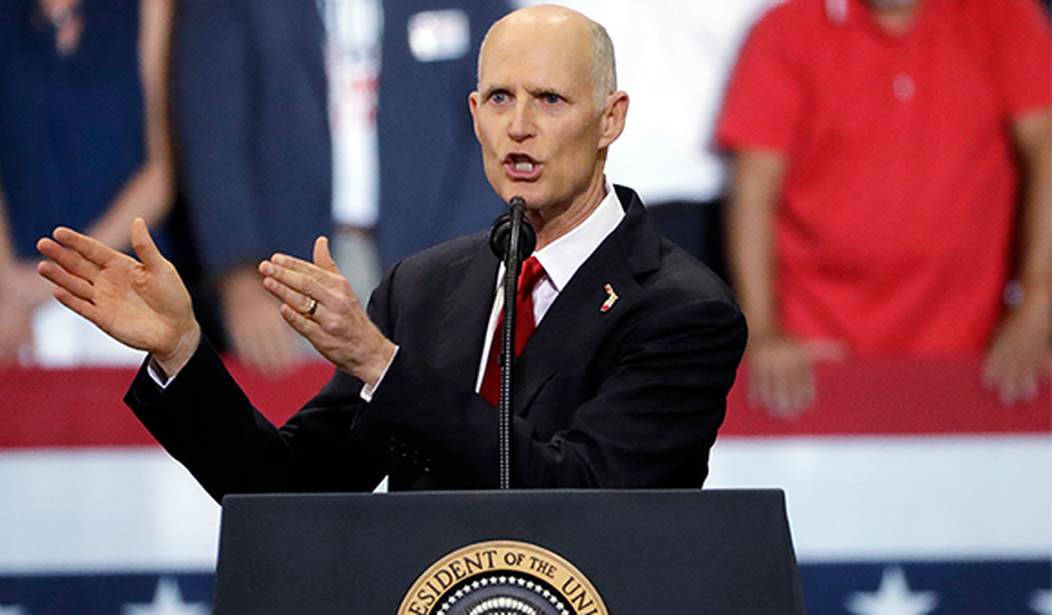
Sen. Rick Scott (R-FL) was among the dozens of lawmakers to vote against the latest COVID relief bill, a $900 billion package that will send $600 stimulus checks to most Americans. The measure, which is nearly 6,000 pages long, had a whole lot of other, seemingly irrelevant provisions that 50 House Republicans, two House Democrats, and six GOP senators couldn't approve.
Sen. Scott explained why he was a "no." Too little time to read, he wrote, and too much "wasteful spending."
I supported and fought for many of the Covid provisions in last night’s bill.
— Rick Scott (@SenRickScott) December 22, 2020
Unfortunately they were attached to an omnibus spending bill that was thousands of pages long and chock full of handouts to special interests and wasteful spending. I couldn’t support it. pic.twitter.com/7nsFYMj6M8
“Early this afternoon, we were finally provided the text of the combined $1.4 trillion omnibus spending bill and $900 billion COVID relief bill. It is almost 5,600 pages long and we’re expected to vote on it tonight. Who in their right mind thinks that this is a responsible way of governing?
“This crisis has devastated American small businesses and American workers and I support many of the COVID-related provisions to boost small businesses, prevent further layoffs and enhance unemployment assistance – provisions that are necessary because of the recklessness of the Chinese Communist Party and the overzealous shutdowns by politicians here in America who do not know what it is like to struggle for money or for work. I’m also glad this package does not include state bailouts, which I’ve been fighting for months, and makes reforms to the Federal Reserve, which provides further protections to ensure taxpayer dollars are not wasted.
“But, in classic Washington style, vital programs are being attached to an omnibus spending bill that mortgages our children and grandchildren’s futures without even giving members a chance to read it. We are not spending money we have in the bank or anticipate we will collect in taxes. Washington doesn’t seem to understand that new spending today will be paid for by increased federal debt and result in a tax increase on families down the road. We have to stop operating this way; there is no excuse for the way Washington treats the American taxpayers. I’ve repeatedly voted against enormous and wasteful spending bills. The easy route is simply to go along as Congress continues to do harm to future generations of Americans, but I will not be a part of it.”
Scott was joined by Republican Sens. Marsha Blackburn (TN), Rand Paul (KY), Ron Johnson (TX), Mike Lee (UT) and Ted Cruz (TX). The two House Democrats to vote against the bill were Reps. Rashida Tlaib (MI) and Tulsi Gabbard (HI).
Here's a message from Rep. Gabbard on why she voted against the COVID relief bill, which she termed as a, "massive spending bill." As is often the case, she noted, some provisions were "snuck" into the bill "in the dark of night."
$600 is a slap in the face to every American struggling due to the pandemic. You deserve better.
— Tulsi Gabbard ?? (@TulsiGabbard) December 22, 2020
I voted against the 5,593-page spending bill that gave billions to corporate interests, the military industrial complex & other countries, leaving crumbs for you who need help most. pic.twitter.com/82F1HYF43T



Join the Conversation
VIP members get the ability to comment on articles.