





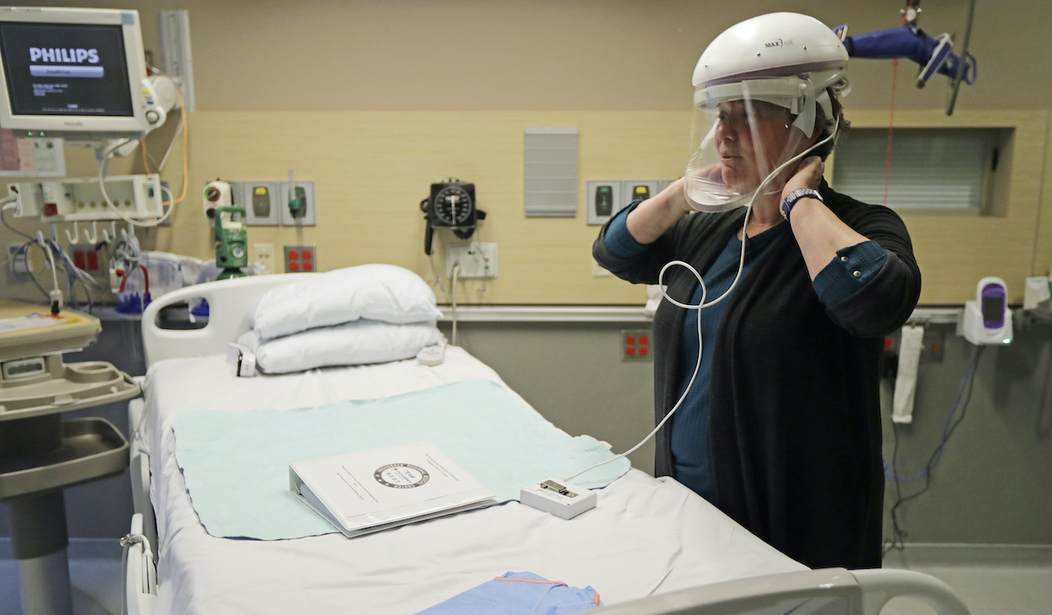
Dr. Douglas White, an intensive care physician at the University of Pittsburgh, is concerned by the White House's new proposal to allow hospitals to split ventilators between two patients.
"There's a real risk that it hurts more people than it harms if it comes to that," he told Fox News anchor Ed Henry on Thursday.
A respirator, as best as he could explain it, is just "a sophisticated box that blows air out typically through one tube to one patient." Under the Trump administration's new guidelines, health care workers can now use these boxes to blow air through one tube and split between two patients. Considering no two patients are the same, there's a high risk factor.
"You can't regulate what goes from one to other, and that's just not how we typically ventilate patients who are very sick in intensive care units," Dr. White explained.The new guidelines have frightened middle aged Americans who think they'd be passed over for a ventilator by younger patients. Henry asked the physician to address these concerns about the rationing of care.
"The ethical goal is to save as many lives as possible," he said. "Not everyone can get the treatment they normally would under usual circumstances. We've developed a framework that prioritizes patients who are most likely to survive hospitalization with intensive treatment and in the years beyond and this is in contrast to how we normally do things which is first come first serve."
He assured concerned citizens, however, that age and disability are not exclusion criteria. Instead, they use physiological measurements to help them estimate a person'a likelihood of surviving.
In an open letter to health care workers, Surgeon General Jerome Adams told hospitals that splitting ventilators should be an "absolute last resort."


Join the Conversation
VIP members get the ability to comment on articles.