





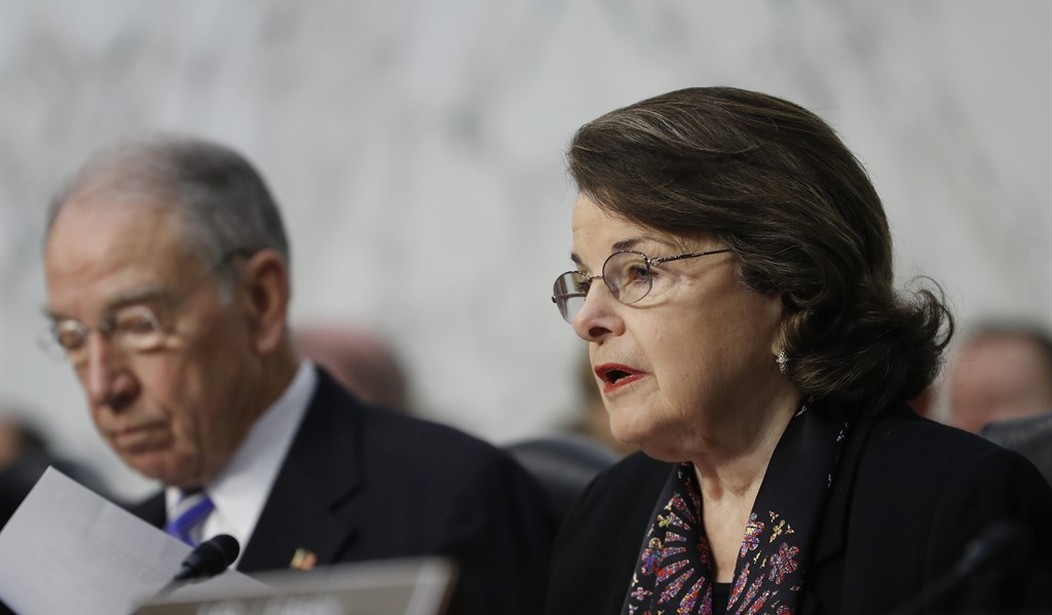
Washington, D.C. - On Tuesday, the second day of Supreme Court nominee Neil Gorsuch’s confirmation hearings, Sen. Dianne Feinstein (D-CA) wanted to know where the nominee stood on the use of torture. Specifically, she shared her concerns that he seemed to agree with President George W. Bush’s aggressive enhanced interrogation techniques, judging by an email he had written in 2005 when he was a lawyer dealing with detainee litigation. On the email, he jotted down handwritten notes where he concluded that the interrogation methods were effective and had yielded important intelligence.
HERE YOU GO: Here's the notes where Gorsuch hand wrote that torture yielded valuable intelligence. pic.twitter.com/RTsQ5uPgWy
— Josh Dorner (@JoshDorner) March 21, 2017
She wanted to know how he drew that conclusion. Gorsuch could not recall the email he had written, so Feinstein’s staff brought it to him and on Wednesday Feinstein brought it to his attention again. After a bit of pressing, Gorsuch admitted he simply took the position of his clients at the time.
“My memory is what it is,” he said. “It’s not great on this. My recollection is that was the position that the clients were telling us.”
Feinstein was concerned that Gorsuch took the word of his clients without seeking any personal information.
“People who advise have the obligation to find truth in these situations,” the senator said, especially in such a disturbing matter.
“We saw the horrible nature of what went on” during the torture programs, she noted, often sans supervision.
“It’s a closed chapter but it should never again happen.”



Join the Conversation
VIP members get the ability to comment on articles.