





The remains of U.S. Army Cpl. Ysabel Arredondo Ortiz are returning home nearly 70 years after the soldier was reported missing in action. Ortiz, 19, of El Monte, California, was killed in the Korean War and his remains were identified in August 2019.
Ortiz reportedly went missing in action on Dec. 2, 1950, near the Chosin Reservoir in North Korea, according to a report by the Defense POW/MIA Accounting Agency. Ortiz was a member of Battery D, 15th Anti-Aircraft Artillery Automatic Weapons Battalion, 7th Infantry Division. The report says Ortiz's remains could not be recovered after the battle.
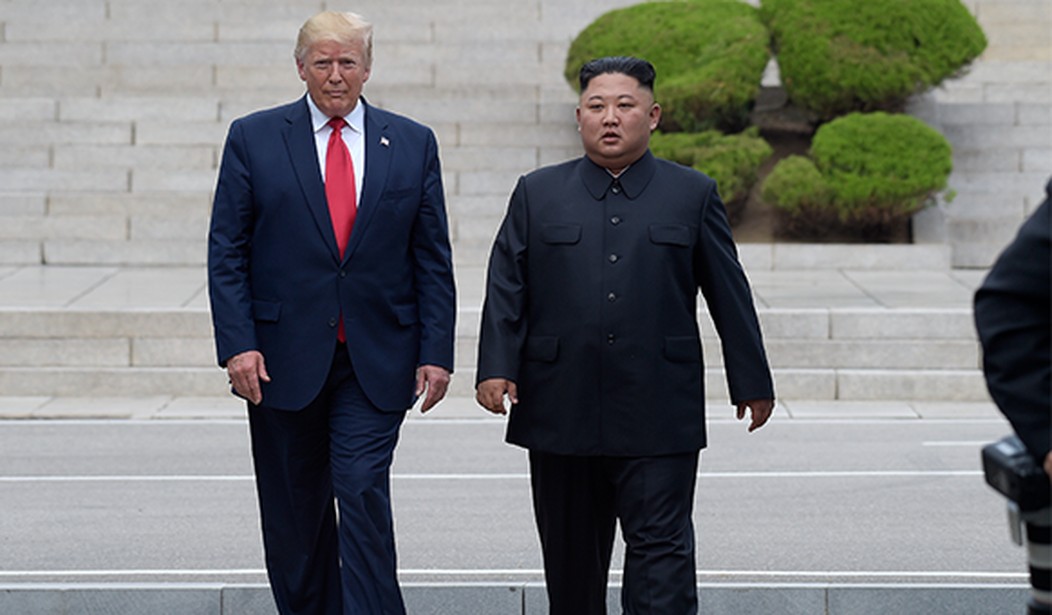
President Trump became the first U.S. president to step foot in North Korea after North Korean leader Kim Jong Un invited the president to step across the border. Following the historic summit, the North Korean leader turned over 55 boxes to the United States that contained the remains of American servicemen killed in the Korean War.
The remains arrived at Joint Base Pearl Harbor-Hickam, Hawaii on Aug. 1, 2018, and were subsequently accessioned into the DPAA laboratory for identification.
To identify Ortiz’ remains, scientists from DPAA used anthropological analysis, as well as circumstantial and material evidence. Additionally, scientists from the Armed Forces Medical Examiner System used mitochondrial DNA (mtDNA), Y-chromosome DNA (Y-STR) and autosomal DNA (auSTR) analysis.
Today, 7,608 Americans remain unaccounted for from the Korean War. Using modern technology, identifications continue to be made from remains that were previously returned by Korean officials, recovered from Korea by American recovery teams or disinterred from unknown graves. Ortiz’s name is recorded on the Courts of the Missing at the National Memorial Cemetery of the Pacific in Honolulu, along with the others who are missing from the Korean War. A rosette will be placed next to his name to indicate he has been accounted for."
Rob McMillan reports that the family credits President Trump for allowing them to finally lay the soldier to rest nearly 70 years later.
A @USArmy hero's remains return home to the IE decades after he went missing in the Korean War. The family credits the @realDonaldTrump summit with North Korea. Now they can finally lay Cpl. Ysabel Ortiz to rest nearly 70 years after he was killed in battle. Story on @ABC7 at 6pm pic.twitter.com/9veEFM5x3K— Rob McMillan (@abc7robmcmillan) October 25, 2019
Cpl. Ysabel Arredondo Ortiz returning almost 70 years pic.twitter.com/r4d0L0uCZD
— Mark Bravo (@bravomjd) September 9, 2019

Join the Conversation
VIP members get the ability to comment on articles.