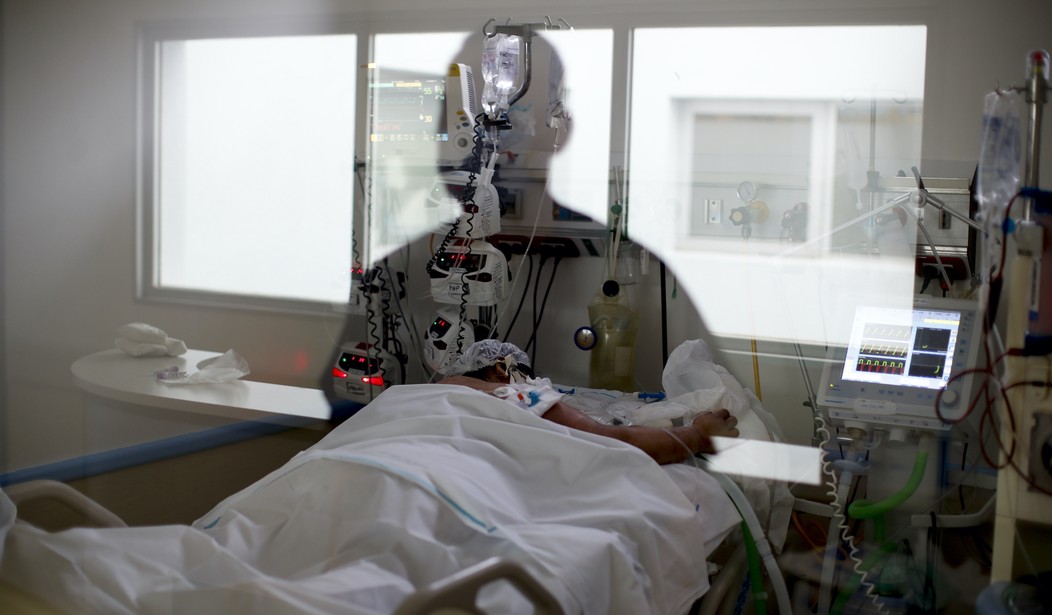

Conor Hylton was a University of Connecticut dental student when he went to Bridgeport Hospital's Milford campus with severe abdominal pain, nausea, and vomiting. The emergency room staff diagnosed Hylton with "alcohol-induced pancreatitis, dehydration, and other related issues."
He was considered "high risk" after his initial assessment, and Hylton's condition deteriorated quickly after arriving in the emergency room, but staffing issues meant Hylton did not get the level of care he needed, even though he was admitted to the hospital's Intensive Care Unit (ICU).
He had an elevated heart rate, a dangerously low blood pressure, and showed signs of alcohol withdrawal. Despite that, a doctor did not visit Hylton in the ICU, with staff instead conferring with a remote doctor who ordered Hylton to be intubated after he became unresponsive and vomited dark brown matter, which can indicate internal bleeding.
He came to the hospital at 11 am on August 14, according to NBC News. By the next morning, Conor Hylton was dead. He was 26 years old. Hylton's family filed a suit last month, accusing the hospital of negligence and pointing to the use of the "teledoctor" as evidence of their claims.
Now the same concept is coming to Ascension Wisconsin, one of the state's largest healthcare systems.
Ascension Wisconsin moves to tele-ICUs at some hospitals, no ICU doctors on-site https://t.co/4u694OwXHK via @SarahVolp
— Mary Spicuzza (@MSpicuzzaMJS) May 6, 2026
There will be far more cases like Conor Hylton, I fear. People are admitted to the ICU for a reason: they are critically ill and require constant, ongoing medical supervision and intervention. In every hospital where I've either worked as an RN or had a loved one in the ICU, the nurse-to-patient ratio is 1:1 or 1:2 at most.
When my ex-husband was hospitalized with sepsis in January 2024, his condition deteriorated despite constant care and on-site doctors. He ended up dying from those complications. In 2017, my mom had emergency surgery for a perforated bowel. She was so unstable the doctors couldn't even close her incision. She spent three days in the ICU getting stabilized so they could close her back up. She's alive because the doctors were on-site.
Having tele-ICU doctors would have only made things worse, and mom would have likely died, too.
Others will die. And for healthcare workers, it's only going to add to their stress and concern. As a nurse, I would refuse a job in an ICU where the doctors were not on-site. If something goes wrong, and it will, guess who will get blamed for it. That's right, the nurse. She's the frontline, and every decision and mistake made will be scrutinized and someone will be made a scapegoat. It won't be the doctor, and it won't be the administrators pushing this.
It will be the frontline staff who show up to work.
This is pretty big news that the Journal uncovered. Mequon, Brookfield and Franklin with no ICU docs. Had initially thought this was ER docs, but it’s ICU’s. Not sure which would be worse. What say you @Ascensionorg? https://t.co/xcdDxqTf6G
— SteveAustinWI (@SteveAustinWI) May 7, 2026
Mequon, Brookfield, and Franklin are Milwaukee suburbs with rather affluent communities. They are 25+ minutes from the biggest hospitals in the area, neither of which is Ascension-affiliated. That may be a selling point, but sometimes you don't have a choice but to go to the nearest available hospital.
I did some very brief digging to confirm what I've long suspected — that, like education, hospitals spend more on administrative costs than actual patient care. While specific numbers for Ascension are not available, a Trilliant Health analysis showed that administrative costs (e.g., home-office/affiliate overhead, management & admin, capital-related, and other operating costs) were $687 billion, while spending on direct patient care was half that at $346 billion. Once again, administrative costs are making healthcare more expensive while damaging access to patient care.
Instead of cutting the DEI office or some people in HR, hospitals instead cut ICU doctors to save a buck or two. Then again, my cynical side says they'll also save money if critically ill patients hurry up and die thanks to negligent care, so I guess they consider that a win, too?
Between this and the infusion of DEI into healthcare, we're gearing up for a perfect storm of incompetence and tragedy. Conor Hylton was not the first victim, and — unless things change — he won't be the last.