





Editor's Note: This piece was authored by Casey Given.
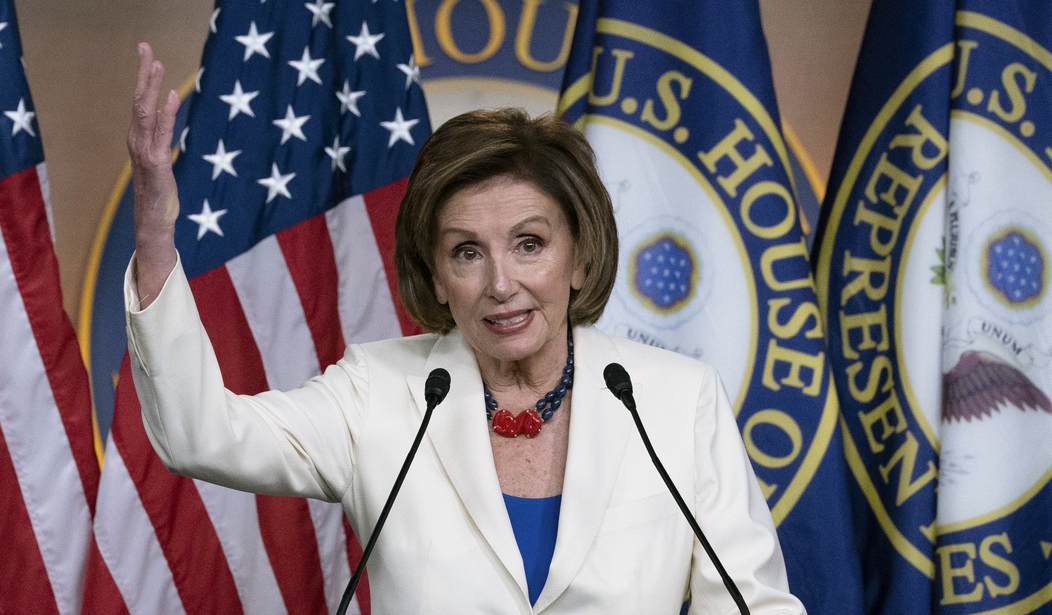
“[W]e have to pass the bill so that you can find out what’s in it.” These infamous words were uttered by Speaker of the House Nancy Pelosi during the leadup to the passage of Obamacare in 2010. However, they could just as easily be used today to describe Congressional Democrats’ attitude toward the $1.2 trillion infrastructure and $3.5 trillion budget reconciliation bills that they’re trying to jam through Capitol Hill without much forethought or debate.
So far, media coverage of the twin bills has been largely focused on the price tag alone. That’s understandable considering that, if passed, the law would be the largest single spending bill in American history. What’s more disturbing, however, is the substance of the bills, which would create new permanent entitlements that would amount to the largest expansion of the American welfare state since World War II. For the sake of preserving the United States as a beacon of enterprise and social mobility, Congress must not jam through this unprecedented spending, especially not without fully comprehending the long-term implications.
And so, in the words of Speaker Pelosi, let’s take a few minutes to “find out what’s in it”... or at least the highlights. It would be impossible to summarize the whole budget in an op-ed, but an article is enough to demonstrate how the two budgets would create new entitlement classes from cradle to grave.
The budget would expand one of the most controversial provisions of the American Rescue Plan passed in March, which provided up to $3,600 tax credits (often paid in advanced checks) to parents raising children. The credits phase out for single filers at $240,000 and $400,000 for joint filers, meaning that the government is currently sending checks to six-figure families that can raise their children very well with their own money. In short, the budget would create a new entitlement class of wealthy families who don’t need help, but who’d most likely hesitate to pass up more free stuff in the future.
On top of this madness, the budget would also provide funding for universal preschool programs in the states (read: daycare). Given the federal government’s terrible reputation running early childhood education with Head Start, which with every passing study has shown no long-term benefit to children, it’s doubtful that state preschool schemes would be any better.
Moving from early to higher education, the budget would further inflate the college bubble, providing free community college while barely increasing Pell Grant eligibility for students seeking degrees higher than an associate’s. The result will likely be more students driven to pursue an expensive Bachelor’s degree, which has been decreasing in employment value for years, rather than pursuing a trade or a more lucrative occupation out of high school.
On the health care front, the current version of the budget being considered would lower the Medicare age from 65 to 60 at a cost of $380 billion over 10 years. While politically popular, this expansion makes little sense considering most seniors can find cheaper premiums through Obamacare exchanges than Medicare itself according to a study commissioned by The Associated Press.
The budget is also proposing to expand vision and dental coverage to Medicare, a move opposed by the American Dental Association because of the program's infamously low reimbursement rates for caregivers and nightmarish bureaucracy. Medicare is already projected to be insolvent by 2026, according to its trustees. Lowering the eligibility age and expanding benefits would be a one-two punch that could permanently cripple the vital program for America’s seniors.
Even the most sensible spending from the bills is riddled with bloat. There’s widespread agreement that America’s roads and bridges are in disrepair. That said, only $110 of the $1.2 trillion infrastructure package — less than 10% — is dedicated to repairs to roads and bridges. Nearly half, $550 billion, instead goes to new spending, getting the government involved in more boondoggles.
Mind you, everything I have touched on so far is simply on the spending side. The budget also includes historic new tax hikes, including a raise on the corporate income tax to 26.5 percent from 21 percent, a hike on the capital gains tax to 25 percent from 20 percent, a raise of the top individual income tax rate to 39.6 percent from 37 percent, and heavily regressive new excise taxes on tobacco products that will be ultimately borne by consumers.
Remember that when Speaker Pelosi uttered her infamous lines, she was referring to an $1.2 trillion spending package with Obamacare over ten years. The package being considered on the Hill amounts to more than five times the cost, yet it’s receiving much less attention. For the sake of fiscal sanity, Congress should say no to this spending spree and consider any future new spending with singular, simple budgets and plenty of time to deliberate.
Casey Given is executive director of Young Voices.



Join the Conversation
VIP members get the ability to comment on articles.