





In good economic times, the burdens of big government and excessive regulation are easy for many to ignore. When the system comes under heavy strain, however, those costs quickly become intolerable.
That's why, even as freedoms are being restricted to unprecedented degrees in hopes of slowing the spread of COVID-19, politicians are also lifting regulations that hinder economic activity. These rules and mandates have always been counterproductive, but only now are their costs glaring enough to compel action.
Perhaps the same will prove true once politicians spot the coming lawsuit tsunami. As Manhattan civil lawyer Elizabeth Eilender remarked to the New York Post, "You could teach several law school courses based just on all the different kinds of cases that will come out of this. There are going to be a million lawsuits."
Even though many, if not most, of these suits are likely to be frivolous, their sheer volume will significantly raise the costs of future economic recovery.
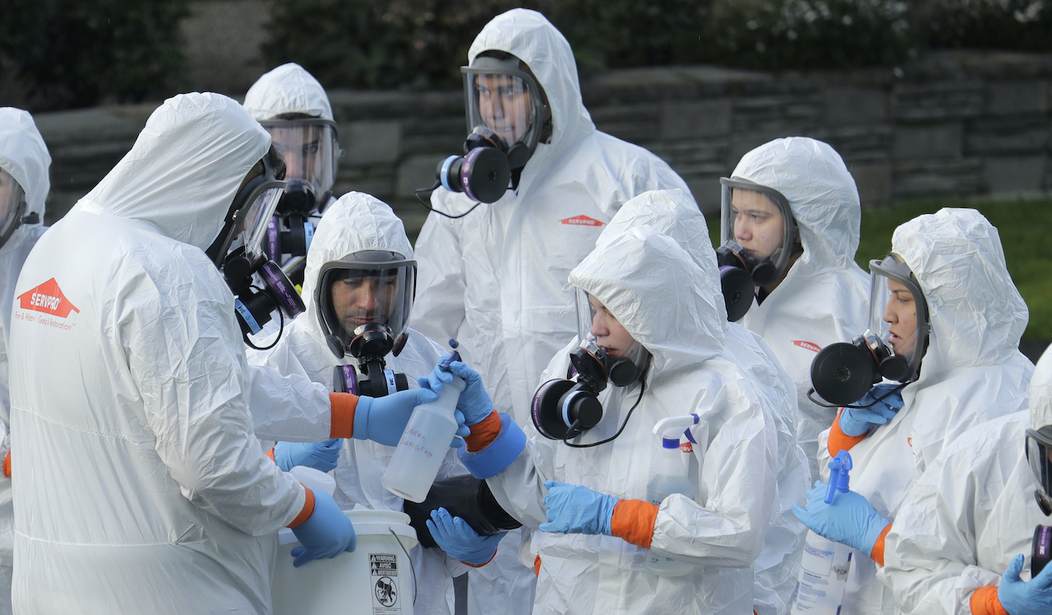
But there are also ill effects today. The threat of the lawsuits might obstruct the response of medical professionals who are fighting on the front lines against COVID-19. Indeed, we can predict that many of these lawsuits will target health care workers who are forced by medical circumstances to quickly make tough decisions, including how to ration care or which makeshift machinery could be used to treat as many patients as possible. The Coronavirus Aid, Relief and Economic Security Act has a section protecting volunteer health care workers from liability. Several states -- including New York, New Jersey and Michigan -- have also recently issued executive orders or passed legislation to protect doctors, nurses and other hospital staff from frivolous lawsuits.
But every type of business will be vulnerable, too. If we're in for anything akin to the aftermath of the 9/11 terrorist attacks, unscrupulous trial lawyers will test legal boundaries and attempt to apply standards of care that were designed for normal times to businesses and professionals now facing unprecedented emergency circumstances. Of course, nobody can reasonably expect every business to have all of the necessary medical supplies on hand and worker training already in place to immediately respond to such a rare and unanticipated pandemic.
Health care professionals and businesses are both worried. For instance, COVID-19 has hit seniors disproportionately, and nursing homes have become a significant target of these attorneys. Recently, the Florida Health Care Association urged Gov. Ron DeSantis to provide legal immunity to protect facilities and their workers from lawsuits that attempt to hold them liable for the harm spread suddenly by this virus.
Beyond the immediate impact, these medical malpractice lawsuits would also have long-term consequences, since studies show that they raise the cost of health care. According to estimates examined by my Mercatus Center colleagues Jared Rhoads and Robert Graboyes, because of fears of being sued, physicians resort to a form of defensive medicine that consists of doing more than is strictly necessary to treat a patient, at an aggregate cost ranging between $650 to $850 billion per year.
Extraordinary circumstances make these problems even more obvious. In 2002, Congress passed the Support Anti-Terrorism by Fostering Effective Technologies Act to protect airlines, airplane manufacturers and other industries hit hard by 9/11 from needless suits. Part of the concern was that investment in anti-terrorism technology and procedures would be stunted by the uncertainty created by a lack of case law establishing reasonable standards of care.
Pandemics are similarly infrequent, and as this one unfolds, the last thing we should want is medical professionals worrying about unwarranted lawsuits instead of delivering the best care possible under seemingly impossible circumstances.
Sen. Deb Fischer, R-Neb., has already released a bill -- the Health Care Workforce Protection Act -- to provide liability protection to manufacturers of masks and respirators, as well as to other professionals fighting COVID-19.
With the pandemic bringing the U.S. economy to its weakest state in decades, it's crucial that protections are quickly put in place to prevent a climate of excessive legal uncertainty and fear that threatens to slow recovery and prolong suffering.
But policymakers shouldn't stop there. The tort system, we must always remember, provides a crucial economic service by adjudicating legitimate conflicts between private parties. That said, it can be abused and end up stunting, rather than facilitating, commerce. Permanent, constitutional-minded tort reform will prevent a scramble to enact protections following the next unexpected event.


Join the Conversation
VIP members get the ability to comment on articles.