





Which is a greater threat to the United States? A shipment of heroin smuggled across the Mexican border that ends up in your hometown? Or a series of Facebook posts made by a Russian operative in St. Petersburg that show up on your Facebook feed?
Had you listened to the discussion in the Senate Select Committee on Intelligence on Tuesday, you might have been tempted to conclude that the greater threat comes from Russia's use of social media to manipulate what you think about American politicians and political issues.
The committee was holding its annual Worldwide Threat Assessment of the U.S. Intelligence Community hearing.
Senate Intelligence Chairman Richard Burr, R.-N.C., and Vice Chairman Mark Warner, D.-Va., asked questions about communications on social media.
They were deeply concerned.
"Is it the IC's assessment that this country's adversaries continue to use U.S. social media platforms as a vehicle for weaponizing disinformation and spreading foreign influence in the United States?" Burr asked FBI Director Christopher Wray.
"Yes, that is certainly the FBI's assessment," Wray said. "Not only have the Russians continued to do it in 2018 but we've seen an indication that they're continuing to adapt their model, and that other countries are taking a very interested eye in that approach."
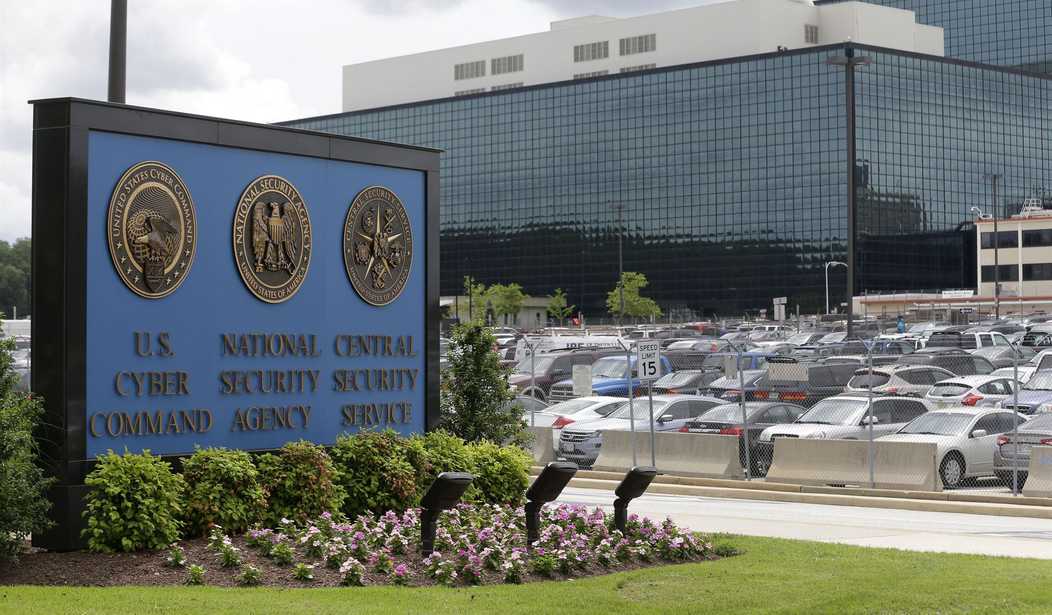
Burr asked Gen. Paul Nakasone, director of the National Security Agency, to answer the same question.
"It is certainly NSA's assessment as well, Mr. Chairman," said Nakasone.
Warner delivered a soliloquy on "this emerging challenge around social media."
"(W)hether it's Russians or other foreign entities that try to masquerade as Americans. They build large followings, create fake accounts," he said
"How," he asked, "do we work with our social media partners to put Americans on alert about the volume of foreign-based activity, bots and others who are masquerading as Americans going forward so they are not able to further manipulate not just our election process but actually to build social divisions?"
Sen. Kamala Harris, D.-Calif., demanded of Director of National Intelligence Dan Coats: "Do we have a written strategy for how we're going to counter the influence operations that target social media in the United States?"
Coats had to admit the intelligence community does not have this written strategy.
Yet there was little mention of the threat posed by drugs smuggled across our southern border.
Sen. Marco Rubio did note that cocaine smuggled through Venezuela "is destined to come into our streets" and that Venezuela "doesn't just tolerate drug trafficking. They give it the protection of government, and many high-level officials are active participants in narcotrafficking."
And in his opening statement, Coats briefly mentioned the situation in Mexico.
"We assess that Mexico, under new leadership, will pursue cooperation with the United States as it tries to reduce violence and address socioeconomic issues," Coats said. "But authorities still do not have the capability to fully address the production, flow and trafficking of the drug cartels."
This point is explained more fully in the intelligence community's written threat assessment.
"Global transnational criminal organizations and networks will threaten US interests and allies by trafficking drugs, exerting malign influence in weak states, threatening critical infrastructure, orchestrating human trafficking, and undermining legitimate economic activity," the assessment says.
"The foreign drug threat will pose continued risks to US public health and safety and will present a range of threats to US national security interests in the coming year," it says.
"Violent Mexican traffickers, such as members of the Sinaloa Cartel and New Generation Jalisco Cartel, remain key to the movement of illicit drugs to the United States, including heroin, methamphetamine, fentanyl, and cannabis from Mexico, as well as cocaine from Columbia," it says. "Chinese synthetic drug suppliers dominate US-bound movements of so-called designer drugs, including synthetic marijuana, and probably ship the majority of US fentanyl, when adjusted for purity."
"Approximately 70,000 Americans died from drug overdoses in 2017, a record high and a 10-percent increase from 2016, although the rate of growth probably slowed in early 2018, based on Centers for Disease Control (CDC) data," it says.
"Mexican criminals use bribery, intimidation, and violence to protect their drug trafficking, kidnapping-for-ransom, fuel-theft, gunrunning, extortion, and alien-smuggling enterprises," says the threat assessment.
"Gangs based in Central America, such as MS-13, continue to direct some criminal activities beyond the region, including in the United States," it says.
Yes, our government should work to stop foreign governments from hacking into U.S. computer systems and stealing data, or tampering with vote-counting systems.
But how many Americans died last year from reading a Russian Facebook post or tweet?
The top national security issue facing the federal government today has nothing to do with deceptive political speech on social media. It has everything to do with our southern border.
Build the wall.

Join the Conversation
VIP members get the ability to comment on articles.