





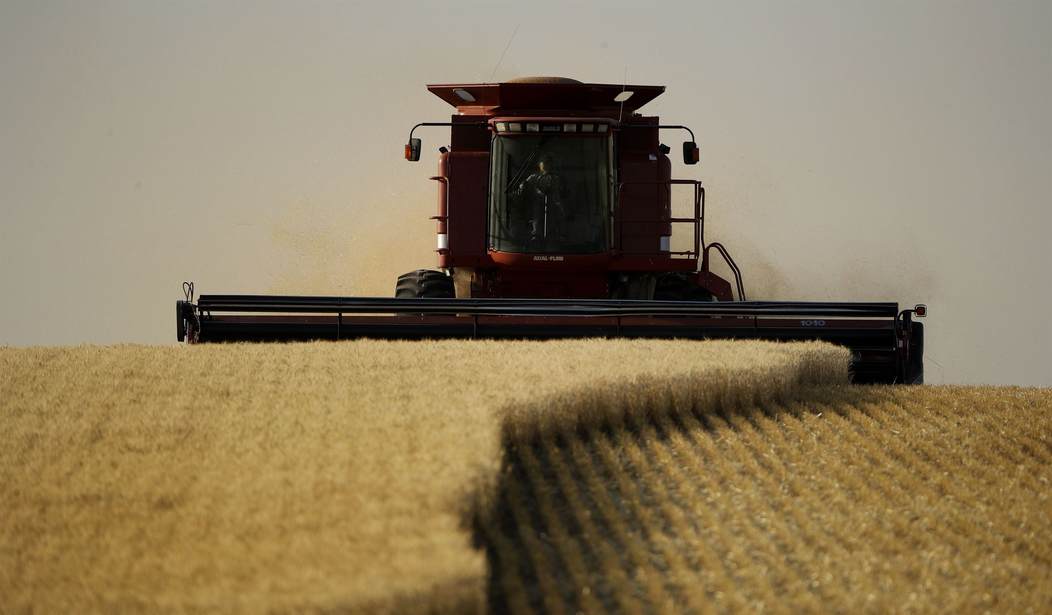
As the war in Europe continues a humanitarian crisis is quickly forming in front of the world. Millions of Ukrainians have been displaced from their homes. Families have been separated, young men and women killed in the onslaught, and countries reliant on Russia and Ukraine for their food are starting to feel the sting of hunger.
During a briefing held on Wednesday, U.S. Senators Joni Ernst and Roger Marshall stated their concerns about the world's food supply chain and the humanitarian crisis unfolding before their eyes.
Ernst claimed “there are about 400 million people- including the Middle East and Africa- are dependant upon Ukraine and Russia for their food. At least 14 African countries import half of their wheat – including Egypt, the world’s largest wheat importer – from Ukraine and Russia.”
As of 2019, Russia produced 17% of the world's wheat, a staggering 77,000 metric tonnes. This war between Russia and Ukraine threatens this lifeline for so many countries. Not only in the form of food, but in the form of fertilizers used to increase crop production, in Europe and here in the United States.
Ukraine is known as the “breadbasket of Europe.” To earn this title, they produce and export millions of dollars in sunflower seed oil, wheat, maize, and more. Counties like Yemen rely on the wheat that comes out of Ukraine/Russia to feed their population, and the EU feeds their cattle with the maize. And the severity of the crisis is made worse because of the stop in the transportation of agricultural goods.
Trade in the Black sea has been shut down indefinitely, as Russian missiles can harm the ships, crew, and cargo. Until a peace treaty can be agreed on, millions of people are going to feel the pain of hunger, and starvation.
It is at this moment America needs to rethink such a vastly interwoven food system, and what it means for the farming back home. The war in Europe is already starting to be felt at home as the price of fertilizers skyrockets. Farmers are having to ration the fertilizers they have or go without. A gamble which is going to hurt production for millions of acres of prime farmland.
While America is a powerhouse for agricultural goods, there are many products that are far easier to import from other countries such as China. Albeit trade is common for most countries, it gets dangerous when one of our largest trade partners vehemently hates us.
The Windrow Wilson Center claims “China is responsible for 90 percent of the vitamin (C) consumed by Americans, 78 percent of the tilapia, 70 percent of the apple juice, 50 percent of the cod, 43 percent of the processed mushrooms and 23 percent of the garlic.”
Not only is China our main producer for many of our agricultural products, but they have also been quietly buying land in America, and purchasing stakes in our companies. This is a trajectory that is unsustainable, as the Ukrainian crisis has shown. No matter how stable a treaty is, or how long a nation has been without war it is always possible. Allowing your food system to be controlled by other countries will only end in the suffering of its citizens.
Taylor Hunt is currently attending Washington State University pursuing a degree in AG Engineering. She loves to write about the natural world, and break down the complex world of Agriculture for everyone to understand.


Join the Conversation
VIP members get the ability to comment on articles.