





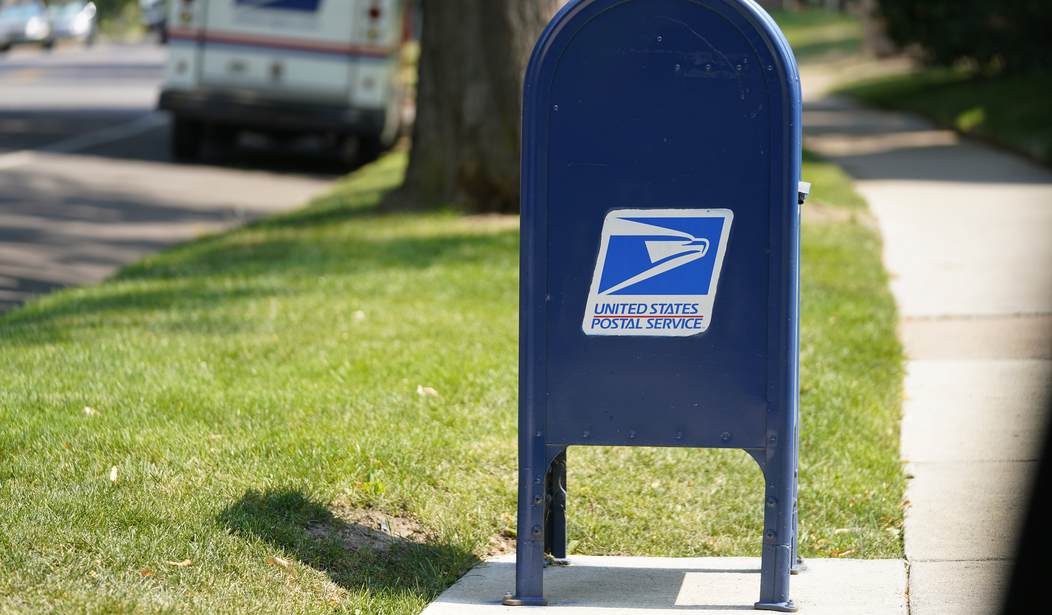
Those of us of a certain age – born before about 1970 – have fond memories of the mailman (yes, that's what we called him, not "postal carrier") dropping off a pile of letters and cards into the mailbox down the driveway six days a week.
But those days are long past. Now, if we have something important to say – "I love you," "I hate you," "happy birthday" – we text or email or hop onto Instagram. Even most bills are paid electronically, so that mail function is also close to obsolete.
Yet here we are, on our nation's 250th birthday, still hanging on to the 19th- and 20th-century idea that the government should deliver the mail – even though there's less and less of it every day. Mail volume is down by half in the last 20 years, and its total demise in 10 years is a near certainty as everything goes digital and the United States Postal Service's market shrinks to near zero.
Let's face it: The USPS is now about as relevant to everyday commerce as the telegraph office of old.
It no longer can meet its mandate of universal delivery; it can't pay its bills, and the service is increasingly unreliable. A new report by the Postal Regulatory Commission reports that over the past 20 years, the USPS has lost a gargantuan $120 billion. That same report finds declining productivity of the workforce. Almost every industry except mail delivery has seen big leaps forward in cost-cutting.
Where will that $120 billion come from to cover these losses? Get ready for one of the world's largest taxpayer bailouts.
The very best financial scenario we can hope for is that postal management loses money at a slower pace, but even that is a long shot given recent trends.
The USPS has managed to lose money every year despite the cost of a "forever stamp" rising to 78 cents – a 90 percent rise since 2017.
Even a master turnaround artist like Elon Musk couldn't make the USPS profitable. An obvious cost-cutter would be to invest in drones to drop mail on our front lawns. But then what would happen to all postmen – er, letter carriers?
The USPS's financial predicament is dire: We have a business with a catastrophic loss in market share, mounting financial losses, higher costs, and 535 members of Congress who boss it around and tell it how to run mail delivery. What's remarkable about the USPS is that it racks up these operating deficits even though it has been granted a legal monopoly by Congress in door-to-door letter delivery.
In short, USPS is a dead man walking – a stock you would sell in a nanosecond if it had shareholders rather than a federal government safety net. It's time to bring this 250-year experiment to an end.
The USPS should cease operations at some certain date, perhaps on January 22, 2028. It should declare bankruptcy and immediately start selling off any profitable operations to businesses like FedEx, or its valuable real estate holdings owned across the country should be auctioned off to help pay off its losses.
Most importantly, Congress should bring the free market to mail delivery by immediately repealing the "Private Express Statutes," the laws that make it illegal for private delivery services to deliver letters below a price determined by the government. It's an antiquated law that violates every aspect of antitrust laws, such as they are. There's no law of economics that mail delivery has to be a money-losing proposition. It's just a losing proposition when the government runs it.
Stephen Moore is a former Trump senior economic adviser and the cofounder of Unleash Prosperity, which advocates for education freedom for all children.
Editor's Note: Do you enjoy Townhall's conservative reporting that takes on the radical Left and woke media? Support our work so that we can continue to bring you the truth.
Join Townhall VIP and use promo code FIGHT to receive 60% off your membership.



Join the Conversation
VIP members get the ability to comment on articles.