







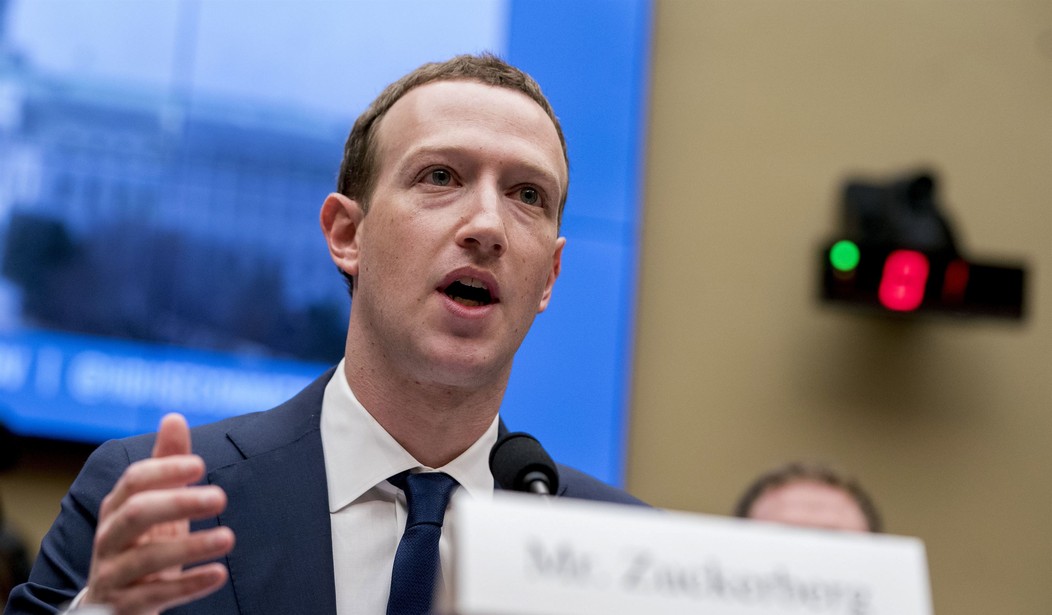
It's no secret that firms such as Facebook, Google, Amazon and Apple have extraordinary levels of power and influence. For example, most voters (55 percent) believe that Facebook has too much power. To some in the political world, this is a problem that only government intervention can solve.
But, that's not the way the public sees it.
There is very little public support for breaking up the tech companies or having the federal government regulate the platforms. That reluctance comes partly from the reasonable fear that giving such power to federal bureaucrats would make things worse rather than better.
Additionally, voters clearly recognize that consumer choice and marketplace competition exert more control over large companies than any government agency could impose. Looking out over the next 25 years, 87 percent of voters believe Facebook will have to deal with significant competition that challenges its dominance. In fact, a majority (52 percent) believe it is likely the social media giant will actually go out of business during that time.
Facebook is perceived to be in more trouble than the other tech giants, but voters overwhelmingly expect that Google, Amazon and Apple will also face significant competition over the coming quarter of a century. However, most believe those companies will survive. Just 26 percent believe Apple will go out of business; 23 percent say the same about Google; and 20 percent think Amazon will disappear.
Still, even though most believe these companies are expected to survive, the serious competition they face will hold them accountable.
This reality is often missed by people who look at the world as it is and can't believe anything will change without political action. The current debate over tech companies is simply the latest version in an ongoing saga.
In 1967, General Motors sold 49 percent of all cars purchased in the United States. John Kenneth Galbraith, a political economist, wrote that GM's position was so dominant that it could no longer be constrained by either consumers or competitors. Galbraith, who served in four presidential administrations, believed that the auto firms would never compete with each other because they shared a common interest in soaking the consumer by raising prices.
Eleven years later, Galbraith repeated his claim that no other auto company would be foolish enough to take on GM.
Why?
"Everyone knows that the survivor of such a contest would not be the aggressor but General Motors." The auto giant's market share was still a remarkable 46 percent at that point. It never again reached such lofty heights. In fact, GM's share of the market declined for 29 of the next 36 years, eventually leading it into bankruptcy and a government bailout. It went from selling 46 percent of all cars in 1978 to 35 percent a decade later, 29 percent a decade after that, and just 17 percent in 2014.
It's difficult to picture how large and seemingly invincible companies will someday fail. Still, as voters recognize, it's likely that many of today's tech giants will suffer the fate of General Motors. That's the way a dynamic economy is supposed to work. And, it's a system that puts power in the hands of the people rather than the politicians.

Join the Conversation
VIP members get the ability to comment on articles.