





In 1949, 20 years before the first moon landing, the world-famous American science fiction author Robert A. Heinlein wrote the short story called "The Man Who Sold the Moon." First published in 1950, the story centers on Delos David Harriman, a brilliant entrepreneur determined to achieve the first manned mission to the moon – regardless of the cost. Harriman is adamant that the mission should not be orchestrated or funded by the government. Instead, he plans the expedition as a private, commercially driven endeavor. With astute business acumen, persuasive propaganda, and adept political maneuvering, he succeeds in attracting investors, overcoming obstacles, and ultimately building a moon rocket.
In the 1960s and 70s, private initiatives such as this seemed unrealistic given the absolute dominance of state-funded space research. But is government-funded space research really the rule and private space research the exception? This perception might hold throughout the second half of the 20th century, which was marked by NASA’s government-funded Apollo program, which led to the moon landing, followed by the Space Shuttle program and the ISS.
But when Robert Heinlein wrote his book in 1949, there was already a significant tradition of privately funded space research, while primarily government-funded space exploration was still in its infancy. It would be another eight years before the Soviet Union launched the first Sputnik into space, and another nine years before NASA was founded.
Former NASA chief economist Alexander MacDonald’s excellent book, "The Long Space Age," deserves recognition for demonstrating that private space exploration played a far greater role than previously thought. Its central finding: “If we look at the history of American space exploration on a longer timescale, a very different history emerges – one in which personal initiative and private funding is the dominant trend and government funding is a recent one. The long-run history thus turns the conventional wisdom on its head: it is the governmental leadership of space exploration that is the more recent phenomenon, while the resurgence of private-sector space efforts in the early twenty-first century represents a return to an earlier pattern.”
One example cited by MacDonald is the emergence of ever larger and increasingly expensive observatories in the United States. It is certainly an unusual approach to include observatories alongside space probes, rockets, and satellites, but fundamentally, they served the same purpose: space exploration. Starting in 1830 and lasting about four decades, there was a real “American Observatory Movement.” This movement was predominantly funded by private sources rather than the government and was particularly fashionable among the wealthy. Of the 38 observatories listed by MacDonald, only two were not privately owned.
And it wasn’t just observatories that were privately funded; Robert Goddard, the pioneer of American rocket research, also received more money from entrepreneurs and private sources than from the government. Several millionaires supported Goddard, most notably members of the Guggenheim family, who were among the wealthiest families in the world at the time. In today’s terms, Goddard received a total of $26 million from the U.S. military, compared to $47.4 million from private sources such as the Guggenheims and the Carnegie Foundation.
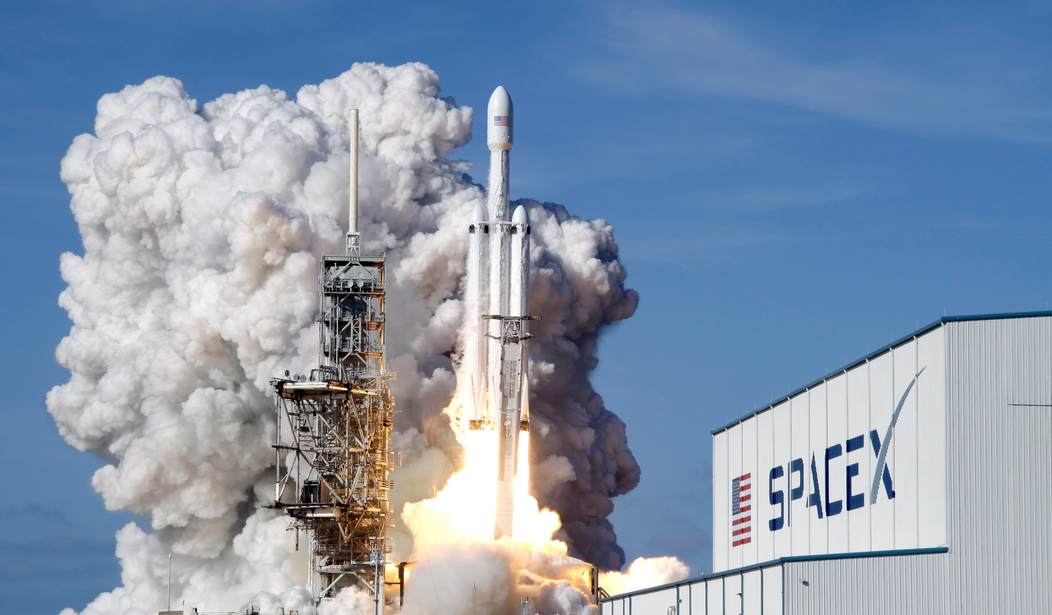
Private spaceflight, therefore, has a long tradition. And today it clearly dominates over state-led spaceflight. Of the 324 rocket launches worldwide last year, 165 were carried out by SpaceX. This means that a private company conducted more rocket launches than all the countries of the world combined. After SpaceX, in second place, comes the private company of the New Zealander Peter Beck, Rocket Lab. It carried out 21 successful rocket launches, almost three times as many as Europe. And of the roughly 15,000 active satellites in space, 10,000 alone are Starlink satellites.
If, in 100 years, people look back on the history of space exploration and spaceflight, the years from 1960 to 2010—when state-led spaceflight clearly dominated—may be seen as the exception. But for private spaceflight and projects such as asteroid mining or even the settlement of the Moon and Mars to have a future, one crucial condition must be met: it must be possible to acquire—or claim—land on celestial bodies as property. Under the Outer Space Treaty, this is prohibited for states, and it remains unclear whether this prohibition also applies to private individuals. But without private property, no economic system on Earth functions—why should socialism suddenly work in space?
Rainer Zitelmann is the author of the book “New Space Capitalism,” which will be published by Skyhorse in early June.
Editor's Note: Do you enjoy Townhall's conservative reporting that takes on the radical left and woke media? Support our work so that we can continue to bring you the truth.
Join Townhall VIP and use promo code FIGHT to receive 60% off your membership.



Join the Conversation
VIP members get the ability to comment on articles.