





It may feel like America is perpetually in campaign mode, but the 2026 midterm elections are now firmly in view. Candidates on both sides of the aisle will spend months talking about familiar national issues like the economy, immigration, crime, and foreign policy. Those debates matter. But for millions of parents, grandparents, and taxpayers, the most urgent questions are playing out much closer to home.
Across the country, K–12 school districts are adopting policies that cut parents out of major decisions, undermine federal law, and expose students to radical ideology and foreign influence. While education is largely a state and local responsibility, many of the most consequential issues facing schools today are national in scope and demand clear answers from candidates seeking federal office.
Here are three questions every parent should ask before heading to the polls in 2026.
1. Should parents be kept in the dark about their child’s gender identity at school?
This should not be a controversial question, yet it has become one of the most glaring scandals in American education.
More than 1,200 school districts have adopted policies instructing school staff to conceal a student’s “gender identity” from parents, even when that includes using a different name or pronouns at school or allowing access to opposite-sex restrooms and locker rooms. These policies are often justified as protecting students, but what they actually do is exclude parents from their own children’s lives.
Parents have a constitutional right to direct the upbringing of their children. Federal law reinforces that principle. The Family Educational Rights and Privacy Act (FERPA) guarantees parents access to their child’s educational records, including records reflecting name changes, pronoun usage, and other significant changes in how a child is treated at school.
The Trump administration has been unequivocal: so-called “parental exclusion policies” violate federal law. Candidates who cannot give a clear answer on this issue should not be given the benefit of the doubt. Vague language and evasive rhetoric amount to tacit approval of policies that deliberately keep parents in the dark.
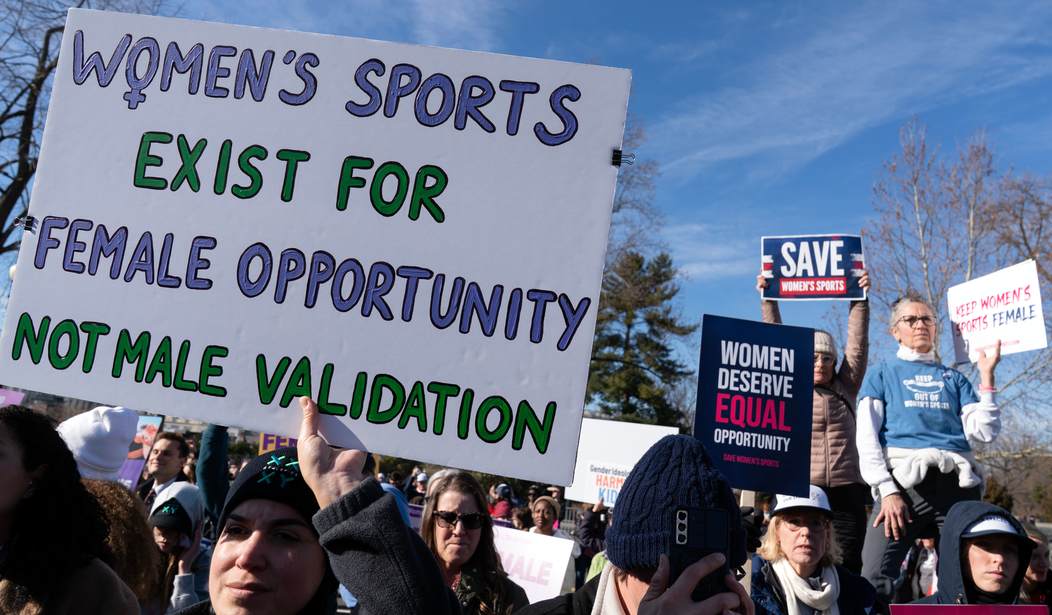
2. Should biological males be allowed to participate in female sports?
Title IX was enacted to ensure equal educational and athletic opportunities for women, including single-sex sports and private spaces. Yet, 18 states are not compliant with the law’s basic requirements.
What was once dismissed as a theoretical concern is now an undeniable reality. Female athletes across the country have been forced to compete against biological males, sometimes with serious physical consequences. Girls and women are increasingly encountering men in locker rooms and restrooms, told that discomfort and safety concerns must yield to ideological demands.
This is not compassion. It is a betrayal of the very women and girls Title IX was designed to protect.
Candidates for the U.S. House and Senate should be prepared to explain exactly how they intend to enforce federal law. Parents deserve to know whether their representatives will stand up for their daughters’ safety, privacy, and fair competition or continue to look the other way.
3. Should school districts be required to disclose when they accept money from foreign governments?
Foreign influence in American education is not hypothetical, and it is not limited to higher education.
A 2023 Defending Education report found that nearly $18 million has been spent by Chinese Communist Party–linked entities on K–12 programs in the United States since 2009. Other foreign governments, including Qatar, have funded programs operating under benign-sounding labels such as “language instruction” or “cultural exchange.”
What parents often do not know is what these programs are actually teaching or omitting about countries that are openly hostile to the United States. In many cases, districts provide little to no transparency about funding sources, curriculum, or oversight.
That is unacceptable. At a minimum, parents should be informed when their child’s school accepts money from foreign governments. This is not merely an education issue. It is a national security issue, and it demands serious scrutiny.
There will be no shortage of speeches and opinion pieces in 2026 about what America should look like in the years ahead. But education is not an abstract policy debate for families; it is a daily reality. Parents deserve candidates who are willing to give clear, honest answers before asking for their vote.
Editor’s Note: Do you enjoy Townhall’s conservative reporting that takes on the radical left and woke media? Support our work so that we can continue to bring you the truth.
Join Townhall VIP and use promo code FIGHT to receive 60% off your membership.


Join the Conversation
VIP members get the ability to comment on articles.