





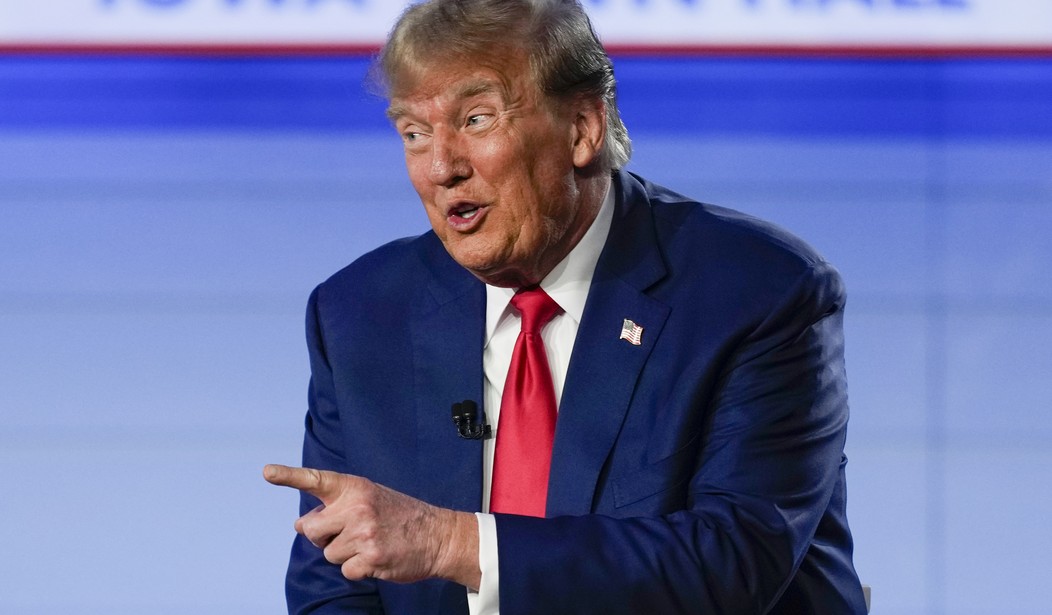
Iowa is enjoying the perennial political limelight as it hosts the first true contest in the GOP presidential primary. Not surprisingly, leftists have taken to deriding this largely white, agrarian, “fly-over state” as purely symbolic of the GOP’s primary race to nominate someone they’ll end up painting as extreme anyway. While Iowa is not a battleground state under this new political landscape, its place as the first-in-the-nation in a major political party primary is incredibly important to not just tradition but setting the tone for the rest of the primary.
The results in Iowa will kick off one of three likely scenarios. While the current polling data suggests all three of those will likely result in a Trump victory, the most crucial moments of this seemingly already long primary will happen between Iowa’s caucus and the slew of primaries on Super Tuesday. And yes, the difference between a caucus and a primary matter, especially at this pivotal moment.
Iowa has a caucus system which until this year meant that voters declared for a candidate would literally walk across the (usually a gymnasium) floor to gather in a show of majority numbers until a winner was declared. Despite a secret balloting system being used this year, Iowa contrasts to New Hampshire which allows non-Republican voters to cast ballots for their preferred candidate. This open system usually allows a more moderate candidate like Nikki Haley to make a strong showing.
In just the month of January, those first two contests set us up for Nevada, South Carolina, and Michigan in February. Both Nevada and Michigan changed various rules governing their primaries making both difficult to reliably use to determine likely outcomes ahead of Super Tuesday on March 5. This leaves South Carolina’s primary to complete the bellwether trifecta.
Currently, the most likely scenario is a decisive Trump victory in this trifecta: Iowa, New Hampshire, and South Carolina. Ideally for Trump, that would mean north of 50 percent in Iowa, north of 40 percent in New Hampshire, and north of 60 percent in South Carolina. In this scenario, even if some outlier states and/or territories like Hawaii or the District of Columbia picked someone other than Trump, the primary is pretty much solidified for Trump by Super Tuesday.
A similar scenario, based on our data and shown consistently across the industry, still has Trump winning all three states but potentially with a narrower margin in Iowa and New Hampshire. Vivek Ramaswamy is by far the leader in terms of events held and counties visited in Iowa. He has built a base of young voters and first-time caucus goers which could lead him to overperform in the Hawkeye State. Heading into New Hampshire, if Haley makes a strong showing in the Granite State, Trump’s reliance on South Carolina, Haley’s home state, becomes more important. There still, Trump enjoys his largest lead of these three early states and likely wins handily. The only difference in this scenario is who his second-place opponent becomes as Super Tuesday rolls around.
A third and less likely scenario is Trump losing in New Hampshire to Haley through the aforementioned open primary process and the backing of Governor Chris Sununu’s political apparatus. But let’s be honest, the real fight in all of these scenarios is between DeSantis and Hayley for the decisive second-place position ahead of Super Tuesday. Failure on either of their parts likely means an eminent drop out of the race because both camps know the best path to topple Trump in the primary is to consolidate the field to two choices. In this scenario, beating Trump in at least one of the three early states is absolutely essential.
Currently, no data suggests a scenario where Trump endures multiple upsets ahead of Super Tuesday. Iowa is the first state to give us an indication of how things will shakeout and while historically winners there have had a limited shelf life throughout the rest of the primary, it’s also true the Trump-era in American politics tends to buck historical trends and deliver surprises. In any event and despite what the left says, Iowa matters and it will mark the beginning of the end for all but two GOP primary candidates.
Mitch Brown is a pollster and director of political strategy at Cygnal, the fastest-growing and most accurate GOP polling firm.

Join the Conversation
VIP members get the ability to comment on articles.