





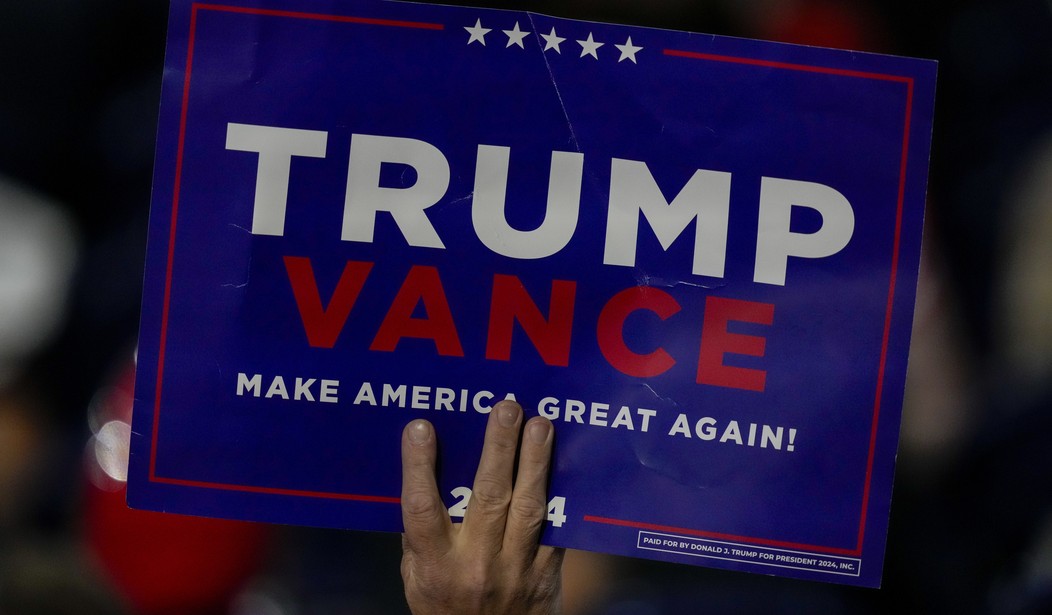
The recent sweeping Republican victory was not only a testament to the power of President Trump’s leadership and his commitment to putting America first, but also an important win for American patients, who will now avoid some of the left's most costly healthcare schemes. These plans would have raised costs, expanded government power, and reduced choice in healthcare, including prescription drugs. Here’s why it was so crucial for patients that Kamala Harris’s healthcare schemes were rejected by voters.
While Kamala Harris had many radical ideas, there were few that would have been more detrimental to Americans than her healthcare plan, which involved government intervention in your healthcare in ways both big and small. Her platform called for significant expansion of government authority over the private insurance market, including moving more Americans into government-run plans with fewer choices and longer lines. The practical impact on consumer choice would have been dramatic, as government control inevitably leads to stagnation and inflexibility, making it harder for individuals to find the specific care options they prefer.
In addition to a government expansion of the insurance market, Harris was passionately committed to a government takeover of the prescription drug market, a plan she championed alongside leftwing billionaire Mark Cuban. Cuban joined Harris in lambasting the free market forces that keep prescription drug prices down and introduce competition. To support his case, Cuban touted the success of his own company, Cost Plus Drugs, as proof positive that it was possible to offer lower drug prices without the current free market system that includes Pharmacy Benefit Managers (PBMs).
Cuban was half-right: Cost Plus Drugs did consistently offer lower prices, but it wasn’t due to cutting out free market forces; it was because the company relied almost exclusively on generic drug manufacturers for its production, rather than the brand names that make up much of today’s drug market. Indeed, there remain many products Cost Plus Drugs cannot offer at low prices due to their being controlled by those very same brand name companies. Attacking the free-market forces that serve as a check on the power of these companies to set high list prices is exactly the wrong conclusion to draw from successfully lowering prices for generic drugs, and it would only have resulted in brand name companies accruing more power to raise prices for consumers.
It is crucial to remember that for pharmaceutical companies, as with any company, the chief motivation will always be to maximize profit while limiting competition. This is natural in any free and open system, and it’s why entities like PBMs exist – to serve as a crucial check on this tendency. Cutting out PBMs would not have brought prices down; it would only have robbed consumers of their only recourse to negotiate lower prices with these companies. The Cuban-Harris plan was to replace this crucial entity by enlarging the size and scope of the federal government, by introducing price controls, and other terrible ideas that have never worked but always seem to end up back in the socialist playbook. In the end, this approach would have delivered precisely the opposite of what its proponents promised: fewer choices for patients, higher costs, and a stronger position for pharmaceutical giants to dictate market terms.
I ran small businesses in Kansas, and one of the reasons I ran for Congress in the first place was having seen firsthand the terrible effects that the Obama administration’s meddling in the healthcare industry was having on my own employees and people across my community. Increasing government power never ends well for ordinary Americans, yet they are always the ones stuck paying the price for big government’s mistakes.
The defeat of this left-leaning healthcare agenda sends a powerful message to policymakers on both sides of the aisle: The American people do not want Washington making their healthcare choices. They want reforms that emphasize free-market principles, where competition and consumer choice drive lower costs and deliver better services. Republicans should take note of this voter sentiment as we look to propose healthcare reforms that actually help the end consumer. The recent election results are a mandate to pursue reforms that prioritize patients and keep prices down, not ill-advised government intervention and meddling with free-market forces.
Mike Pompeo served as U.S. Secretary of State from 2018-2021, as director of the Central Intelligence Agency (CIA) from 2017-2018, and represented the Fourth Congressional District of Kansas in the U.S. House from 2011-2017.

Join the Conversation
VIP members get the ability to comment on articles.