





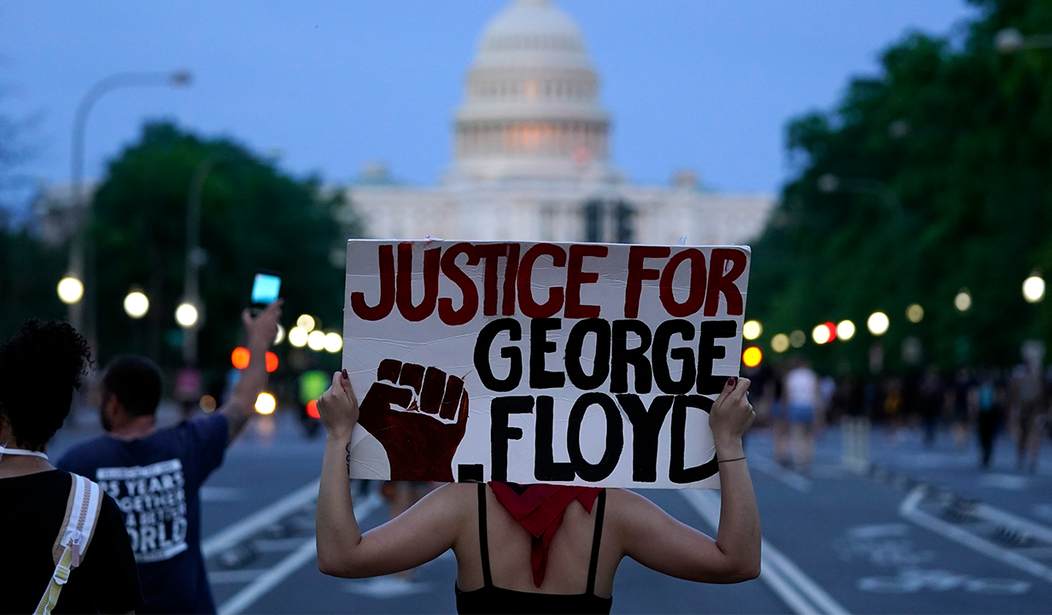
I try to reply cordially to every letter WORLD members send me. During June I briefly apologized 20 times to reprimands for a mistake I made, but with letter 21 something broke, and I responded at greater length.
Thanks for your note. I was inaccurate to say George Floyd “by all accounts was a gentle giant.” Relatives, friends, and ABC, CBS, NBC, NPR, USA Today, etc., characterized him that way, but I should have said: “by almost all accounts.” Some conservatives emphasized his repeated arrests in Houston—most involving less than an ounce of drugs—and a severe instance of armed robbery for which he rightly went to prison for four years. But I’d challenge your characterization of him as a “thug”: Floyd came out of prison in 2013 and by some accounts was a changed man over the next seven years.
Does it matter that Floyd grew up in Houston’s Third Ward in the Cuney Homes housing project, where kids sang their version of a familiar jingle: “I don’t want to grow up, I’m a Cuney Homes kid. They got so many rats and roaches I can play with”? Maybe not. Does it matter that he was more than 6 feet tall in middle school and didn’t get much of education except in football and basketball, so when he wasn’t good enough to go pro he wasn’t trained in anything? Maybe not. I don’t know much about Third Ward life, but an old-timer did show me around there a few years back: A tough environment does not justify criminal activity, but maybe a person who grew up in one and messed up badly should get a second chance.
Floyd after prison volunteered with Resurrection Houston church, which held many services on the Cuney Homes basketball court. Does it matter that he apparently set up chairs and a bathtub on the court for baptisms, and went door to door with Pastor Patrick Ngwolo, letting residents know about Bible studies and grocery deliveries? Maybe not. I don’t know much about the Christian program that brought him to Minnesota, and he did have drugs in his system when arrested. Would he have done well? We don’t know: Floyd died at age 46 when a police officer put his knee on Floyd’s neck for almost nine minutes as other police officers watched.
I have read about the century of racism that contributed to the Third Ward and many other wards becoming tough places. I oppose the politics and philosophy of the Black Lives Matter organization, but books I’ve reviewed in WORLD show that for a long time black lives didn’t matter, much, in the eyes of many whites. You might read Douglas Blackmon’s “Slavery by Another Name,” which shows the virtual post-Reconstruction re-enslavement of sharecroppers and others, and David Oshinsky’s “Worse Than Slavery,” which describes Jim Crow justice. In recent years, Jason Riley’s “Please Stop Helping Us” shows “How Liberals Make It Harder for Blacks to Succeed.”
We could discuss what’s gone wrong in some black communities, but here’s what I want to get to: The story of David Peña, a 64-year-old who as a young man did drugs, committed crimes, and gained a three-year prison sentence. Peña got out, founded Texas Reach Out Ministries, and as CEO of this organization for 30 years was God’s servant to alcoholics, drug addicts, and former inmates. Texas Reach Out provides eight homes for men and three for women, along with employment assistance and spiritual guidance.
I went to one of Peña’s Bible studies in South Austin last year. A dozen men who had made recent professions of faith in Christ sat on couches and folding chairs. Some were only a few weeks out of prison. An ex-con with head knowledge tried to impress Peña, who gently explained that abstract concepts were insufficient: Walk counts more than talk. Peña explained from his own experience that only Christ works. He was terrific.
David Peña died early in July from COVID-19. That’s sad. What’s tragic is that George Floyd might have become a David Peña. Now we’ll never know.



Join the Conversation
VIP members get the ability to comment on articles.