





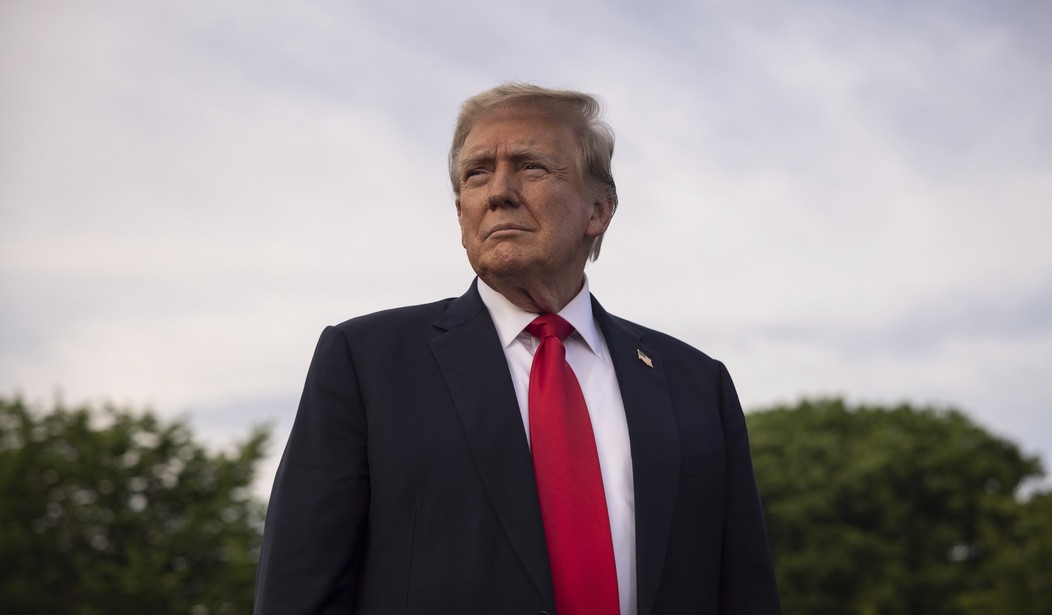
After weeks of testimony, the criminal trial of former President Donald Trump is now in the hands of the jury, with the outcome unpredictable.
Without cameras in the courtroom, news outlets relied on those attending the trial, many not even attending every day, to "report" whether Trump or the prosecution is "winning." With some exceptions, the hosts and pundits on outlets like CNN and MSNBC argued both the law and evidence warranted a guilty verdict. Host and analysts on conservative outlets saw the trial differently and argued the law and facts compel at least a hung jury, if not an acquittal, despite the overwhelmingly anti-Trump Manhattan voters.
Those rooting for a conviction have a problem. A lot of serious analysts, who cannot stand Trump, consider this case problematic at best and politically driven at worst.
Manhattan District Attorney Alvin Bragg campaigned promising to prosecute Trump. Yet, when he became DA, he did not charge the former president and even suggested there was insufficient evidence to do so. He reversed course after a former special assistant DA quit and wrote a book accusing Bragg of malpractice for refusing to follow through on his campaign pledge. Bragg denied the book influenced him, and said, "I bring hard cases when they are ready."
About Bragg's press conference where he announced charges, The New York Times wrote: "The accusations he went on to level against Donald J. Trump were salacious, involving money paid to a porn star just before the 2016 presidential election so she would remain silent about her claim that they had sex a decade before. But Bragg studiously avoided mentioning sex or hush money during the 13-minute event, focusing instead on the 34 counts of falsifying business records to cover up the payment. He seemed unprepared (or unwilling) to answer the most obvious questions: why he had abandoned a different case, about whether Trump had falsified the valuations of properties, or why he thought he could make these new charges stick."
Politico, like The New York Times an outlet harshly critical of Trump both as president and candidate, wrote: "Some wondered why Bragg revived a case he had appeared to leave for dead just months ago. Others questioned the specifics -- like how Bragg was able to elevate the 'falsification of business records' charges against Trump into felonies, a move that requires evidence that Trump attempted to conceal a second crime. Still, others focused on the delay in bringing charges -- six years after the core underlying conduct -- and anticipated that Trump would seek to toss the case for exceeding the statute of limitations, despite the assessment of some legal experts that the case is not time-barred. Bragg left those questions largely unanswered in Tuesday's filings and public comments."
In a New York Times opinion piece, Boston University law professor Jed Handelsman Shugerman wrote: "After listening to Monday's opening statement by prosecutors, I still think the district attorney has made a historic mistake. Their allegation about a 'criminal scheme to corrupt the 2016 election' has me more concerned than ever about their unprecedented use of state law and their persistent avoidance of specifying an election crime or a valid theory of fraud."
Ian Millhiser, a liberal legal commentator for Vox, wrote: "There is something painfully anticlimactic about Manhattan District Attorney Alvin Bragg's indictment of former President Trump. It concerns not Trump's efforts to overthrow the duly elected government of the United States, but his alleged effort to cover up a possible extramarital affair with a porn star. And there's a very real risk that this indictment will end in an even bigger anticlimax. It is unclear that the felony statute Trump is accused of violating applies to him. ... Bragg built his case on an exceedingly uncertain legal theory. Even if Trump did the things he's accused of, it's not clear Bragg can legally charge Trump for them, at least under the felony version of New York's false records law. ... Bragg has evidence that Trump acted to cover up a federal crime, but it is not clear that Bragg is allowed to point to a federal crime to charge Trump under the N!
ew, York state law."
Unintentionally, these liberal skeptics just explained why so many believe that Trump faces persecution by a two-tiered justice system.

Join the Conversation
VIP members get the ability to comment on articles.