





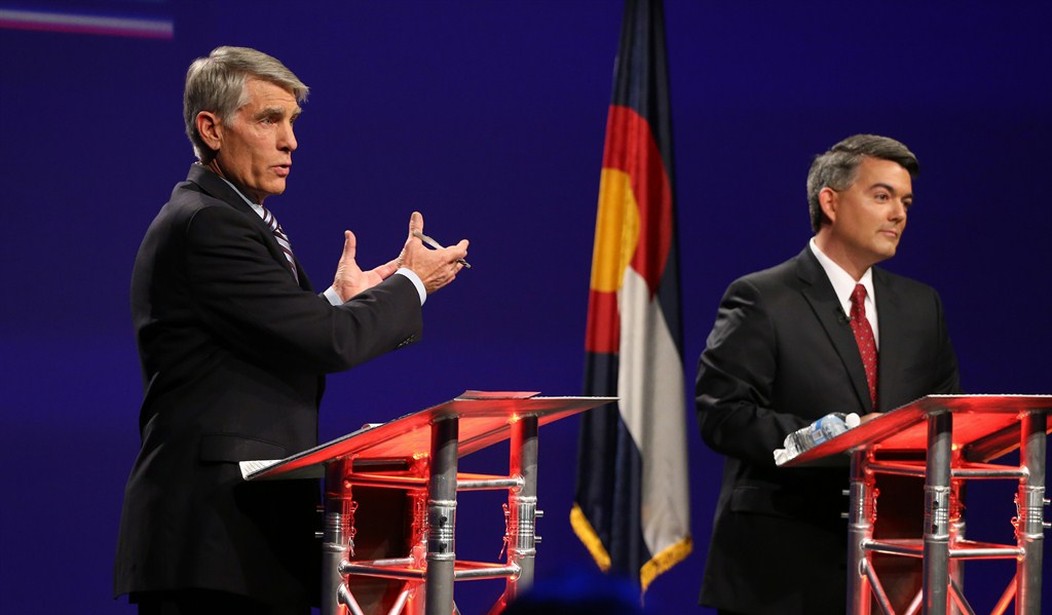
Well, it's finally over. With the exception of a few run-offs and perhaps a re-count or two, the 2014 elections are history. The House and the Senate are firmly in the grasp of the GOP, giving America a divided government for at least two more years.
It didn't take long for pundits to begin issuing their particular reading of the electoral tea leaves. Many on the Left are characterizing the loss not as a validation of Conservative principles or a referendum on Obama's failed policies, but as a combination of "bad messaging," low turnout among the base, and, of course, racism.
Whether the low turnout for Democrats was due to voter apathy, bad messaging, hugging the President too much, or not hugging him enough, the bottom line is that the voters who did turn out on election day cast their ballots for change (http://www.msnbc.com/msnbc/why-the-democrats-lost-midterms-according-everyone). They rejected the politics of class warfare and ideological demagoguery pedaled by the Democrats. They rejected the phony "war on women" trope by electing openly pro-life candidates in Iowa, North Carolina and Colorado. They dispelled the notion that Republicans and Conservatives and Southerners are bigots by electing Tim Scott in South Carolina and Mia Love in Utah. Above all, the voters pulled their levers in favor of those candidates who promised to get things done in Washington, promised to exercise leadership, advance a positive vision for America, and end the gridlock that has paralyzed and demoralized this nation for the past six years.
Whether the Republicans will be good stewards of the opportunity presented them remains to be seen. It's not an exaggeration to say that things are a mess in Washington and it will take more than good intentions and lofty rhetoric to effect positive change. The new majority faces several complex and controversial policy challenges including immigration reform; Obamacare reform/repeal; tax reform; the national debt and deficit; Iraq-Syria and the ISIS problem; Iran; and Russia, etc. These on top of the issue at the forefront of most Americans minds: jobs.
It appears that the first order of business will be for the GOP to decide how best to use their new mandate. Will they pursue a path of compromise as articulated by Senate Majority Leader Mitch McConnell, or will they embrace the attitude expressed by Senator Ted Cruz, who pronounced an end to the era of Obama before a crowd of cheering constituents? What's more, if the GOP does decide to strike a conciliatory tone, is there much common ground to be found? The elephant in the room, of course, is immigration, and perhaps it is this issue that will serve as a bellwether of potential bipartisan compromise between Capitol Hill and the White House over the next two years.
A brief survey of the Sunday talk shows this past week featured a lot of talk about common ground, the need to find those seemingly elusive issues upon which both sides can agree. The Keystone XL Pipeline was mentioned, as were the general issues of tax reform and trade policy. There is a pile of bipartisan bills sitting on Harry Reid's desk just waiting to be taken up by the Senate, so we're told. Will he allow them to see the light of day? How will an all Republican Congress respond to the President's promised use of Executive authority on the issue of immigration? Only time will tell.
In the meantime, the American people have to get on with life, working to pay the bills, put food on the table, and save and invest for their families' futures. Most of them won't have time to track the intricacies of Washington politics, but this doesn't mean they won't notice whether or not the new Republican majority is serious about restoring the nation's faith in government. They'll notice whether or not Congress finally passes a balanced budget. They'll notice if their tax bills go up or down, if their healthcare costs rise or fall. They'll notice if the prosperity gap between Main Street and Wall Street grows or shrinks.
They will notice, and come 2016, they will remember. The GOP wave of 2014 can easily give way to a Democratic wave in 2016 if Republican lawmakers squander this historic opportunity.

Join the Conversation
VIP members get the ability to comment on articles.