





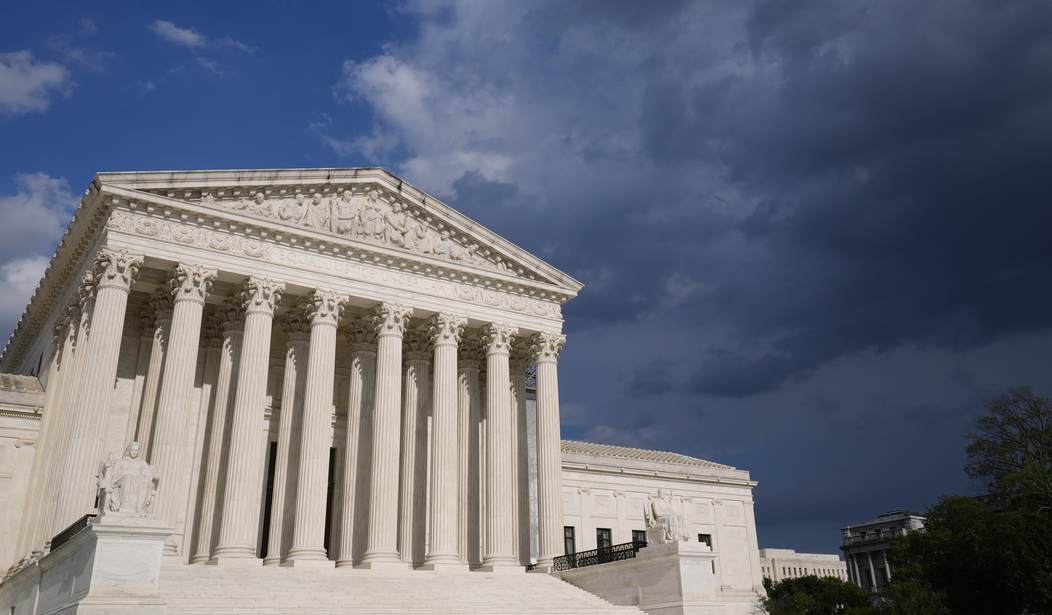
On January 20, 1801, President John Adams nominated John Marshall as Chief Justice of the Supreme Court. To date, he is the longest-serving chief justice and considered by many as the architect of American constitutional law.
For the nascent nation, now approaching its 250th birthday, Marshall’s imprint on constitutional law cannot be overstated.
In 1801, the Supreme Court was an afterthought in the constitutional design—respected in theory, but weak in practice. For example, Alexander Hamilton, in Federalist #78, called the federal judiciary "the least dangerous" branch. But Chief Justice Marshall transformed the judiciary into a coequal branch of government. His landmark opinion in Marbury v. Madison (1803) did more than establish judicial review; it laid the groundwork for the judiciary’s ever-increasing role in protecting individual liberties, including religious freedom, from the shifting tides of political power.
His idea certainly has its detractors, and his direct involvement in the events leading to the decision make the case more complicated than history remembers.
Yet, in an era when the Supreme Court is increasingly viewed through a partisan lens, Marshall’s legacy offers a vital reminder of why judicial independence remains essential to preserving the First Amendment.
In Marbury, Marshall articulated the principle that “it is emphatically the province and duty of the judicial department to say what the law is.” Marshall argued that a written Constitution is meaningless if Congress can ignore its limits. To him, therefore, judicial review was not a power grab, but a necessary mechanism to ensure that the foundational restraints of separation of powers operate and also that fundamental rights are not overridden by transient political majorities.
This principle is especially important when it comes to religious liberty. The First Amendment’s guarantees of free exercise and non-establishment were designed to protect conscience from coercion—whether by the state, the majority, or powerful political factions. Those protections would be fragile indeed if their enforcement depended solely on legislatures, which are inherently responsive to popular pressure and political expediency.
Marshall himself recognized this danger. While the Supreme Court would not meaningfully address the First Amendment’s religion clauses until later in American history, his framework made such protection possible. By establishing the judiciary as an independent interpreter of constitutional limits, Marshall ensured that religious minorities would not have to rely on the goodwill of majorities to enjoy their freedoms.
Many of the Supreme Court’s most consequential religious liberty decisions—from protecting unpopular faiths to preventing government coercion in matters of belief—have come precisely when political branches were unwilling or unable to act. Whether safeguarding the rights of minority faiths seeking equal treatment or asserting the rights of individuals who have been banned from participation in religious traditions, the Court’s authority to stand apart from politics has been indispensable.
That independence is under increasing threat. The Supreme Court has become a focal point of partisan strategy, with judicial nominations framed openly as tools to secure policy outcomes rather than uphold constitutional principles. Proposals to restructure the Court or intimidate justices in response to unpopular decisions risk transforming the judiciary into a political instrument rather than a constitutional guardian.
For religious liberty, the consequence of such politicization is severe. If the Court is allowed to become an extension of partisan power, its ability to protect any and all religious beliefs will erode. Religious freedom is most vulnerable when it conflicts with cultural norms or political trends. An independent judiciary exists precisely to ensure that fundamental rights do not depend on vacillating popularity. Think of the Supreme Court’s heroic decision Barnette during World War II to protect the right of conscience of Jehovah’s Witnesses expelled from West Virginia’s public schools because they would not recite the Pledge of Allegiance due to their religious beliefs, even though most Americans viewed their actions as sympathizing against the U.S. in the war against Nazi Germany.
Marshall understood that courts lack enforcement power and must rely on public confidence in their legitimacy. That legitimacy flows from the perception—and reality—that judges apply law rather than ideology. Once that trust is lost, judicial review becomes just another political weapon, and constitutional rights become negotiable.
The genius of Marshall’s approach in Marbury was its restraint. He asserted the Court’s authority while avoiding direct confrontation with the executive branch, reinforcing the idea that the judiciary’s strength lies not in force, but in principle. That restraint created the space for constitutional liberties, including religious freedom, to endure across generations and political realignments.
Today, as debates over religion, culture, and governance grow increasingly polarized, Marshall’s legacy offers a cautionary lesson. A judiciary subordinated to partisan goals cannot serve as a reliable protector of conscience. The First Amendment’s promise of religious liberty depends not only on its text, but on judges willing—and able—to enforce it without fear or favor.
Preserving that system requires resisting efforts to politicize the Court and remembering why its independence matters—especially for the freedoms that are most easily trampled when politics reign unchecked.
Jordan Lorence is Senior Counsel for First Liberty Institute, a nonprofit law firm dedicated to defending religious freedom for all. Learn more at FirstLiberty.org.
Editor’s Note: Do you enjoy Townhall’s conservative reporting and opinion? Support our work by joining Townhall VIP! Use the promo code FIGHT to get 60% off your VIP membership!



Join the Conversation
VIP members get the ability to comment on articles.