





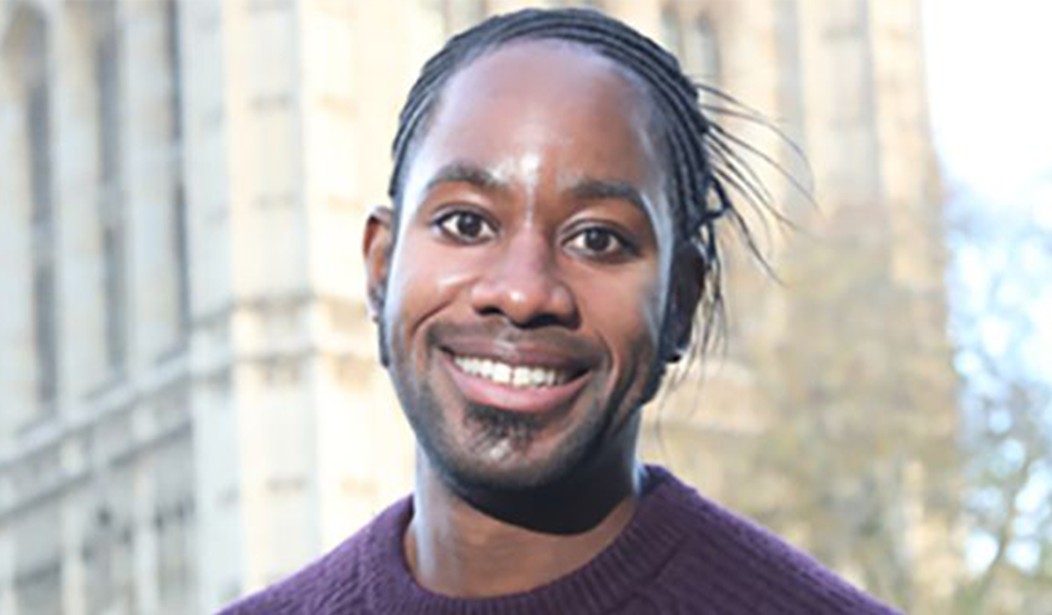
Jason Arday's resignation is not a personal tragedy. It is an indictment of an industry, in academia and in publishing, that stopped checking IDs at the door.
Jason Arday resigned his Cambridge professorship and his Jesus College fellowship on August 5, hours after The Telegraph revealed he had spent years claiming credit for a book he never wrote. He had listed himself as author of “Being Young, Black and Male: Challenging the Dominant Discourse,” attributed to Palgrave Macmillan, in his own biography, conference material, and an essay on racism in higher education. Palgrave confirmed the manuscript was abandoned years ago and never published. That is not a footnote error. It is the claim that broke him, arriving atop a plagiarism finding, a fabricated fundraising total, and a police force that spent four months investigating the reporter who asked about it all.
What actually happened is simpler: due diligence, in three industries at once, showed up about a decade late.
Arday became famous, and was made famous on purpose, as Cambridge's youngest black professor, appointed in 2023 at 37 on a life story built for daytime television: nonverbal until 11, illiterate into his late teens, autistic, then a PhD and a Cambridge chair. The BBC, CBS News, and Good Morning America ran the same redemption arc, none apparently checking the basics.
Then a philosopher in Belgium did the work journalism exists for. Nathan Cofnas, a University of Ghent researcher whose own Cambridge fellowship ended in 2024 amid backlash over his writing on race and meritocracy, ran Arday's 2015 thesis through plagiarism software and published what he found. Times Higher Education's Jack Grove had filed 97 pages of evidence with Cambridge and Liverpool John Moores, which granted Arday's PhD. A statistical analysis commissioned by The Telegraph found 188 sentences in that thesis identical or nearly identical to a 2009 thesis by Paula Zwozdiak-Myers, the odds of the overlap calculated at one in a hundred billion.
Here the press stops being a bystander and becomes a participant. When Times Higher Education prepared to publish its findings last September, Arday responded with Carter-Ruck, a London defamation firm, whose letter implied the coming story was racially motivated. The magazine spiked 10 months of reporting rather than risk a suit. A Metropolitan Police officer then called Grove to say Arday's mental health was suffering and he should stop, despite Grove not having emailed him in four months. Scotland Yard investigated Grove for four months and closed the case with a warning attached. Commissioner Sir Mark Rowley later admitted his force “dropped the ball.”
The personal claims kept unraveling on contact with a calendar. Arday said for years he had raised more than five million pounds for charity single-handedly. Last week he conceded the money actually came from a “syndicate of about 100 people,” none of whom he could name, citing non-disclosure agreements. His “30 marathons in 35 days” became a run he now says took 12 days, not six. Archival records for his fundraising page show £6,285. I've spent two decades as an expert witness picking apart this kind of gap, and when the number shrinks every time someone checks, that's not an accounting quirk. It's the tell.
To be fair, Liverpool John Moores reviewed the thesis and called the overlap “honest and reasonable error,” a finding Arday and more than 10,000 Good Law Project petitioners now cite as vindication. Arday denies wrongdoing and blames inadequate supervision. That finding predates The Telegraph's 188-sentence analysis and the fabricated-book revelation, and neither Liverpool John Moores nor Cambridge has engaged with either since.
Cambridge's line, for months, was to call the criticism a “vile campaign.” That cracked on August 6, when the university opened a formal investigation into Arday's qualifications, separate from the misconduct review already underway. Glasgow, where Arday briefly worked, opened its own review. Many Cambridge academics, organized by Professor Priyamvada Gopal, then demanded an independent inquiry, including into whether the university helped deter journalists from covering the story. Cambridge agreed to fold its findings into a review of how it appoints senior academics.
Meanwhile, the book came out anyway. "Great and Unfortunate Things" hit American shelves on August 11, reported a $1.4 million advance intact; the UK edition follows on August 27. The publicity tour didn't survive the week: an RGS fireside chat and an Edinburgh bookshop event were both pulled “at the request of the speaker.” First reviews, from The Telegraph, the Times of London, and The Atlantic, are savage, all three noting the memoir omits Arday's most colorful, least checkable claims while adding new unverifiable ones. No sales figures exist yet; the book landed only this morning. Don't expect a press release to brag about the number.
Thomas Sowell spent half a century warning that group identity, treated as a substitute for individually verified achievement, doesn't elevate anyone. It delays the bill and hands it to the next scholar who actually earned the title, now facing suspicion Cambridge invited by never picking up the phone. Diversity offices exist to widen the pool of candidates considered, not to exempt the winner from the background check everyone else survives. Cambridge's own numbers make the stakes plain: just 0.6 percent of its academics with recorded ethnicity are black.
Universities that want the public's trust back have an unglamorous fix: verify the CV before the name goes on the door. Newsrooms have an equally simple one: don't let a law firm's letterhead decide what gets printed, and don't let a police phone call decide who gets to ask questions. Publishers have the simplest fix: fact-check the manuscript before you cut the check. All three had a decade to reach these conclusions quietly. They chose the humiliation instead. The book shipped anyway. The rest of us just watched the marathon.
Jay Rogers is a financial professional with more than 30 years of experience in private equity, private credit, hedge funds, and wealth management. He has a BS from Northeastern University and has completed postgraduate studies at UCLA, UPENN, and Harvard. He writes about issues in finance, constitutional law, national security, human nature, and public policy.
Editor’s Note: Do you enjoy Townhall’s conservative reporting that takes on the radical Left and woke media? Support our work so that we can continue to bring you the truth.
Join Townhall VIP and use promo code FIGHT to receive 60% off your membership.


Join the Conversation
VIP members get the ability to comment on articles.