





President Trump recently unveiled a plan to remake America's immigration system and put "the jobs, wages, and safety of American workers first." Unfortunately, the plan won't achieve that worthy goal.
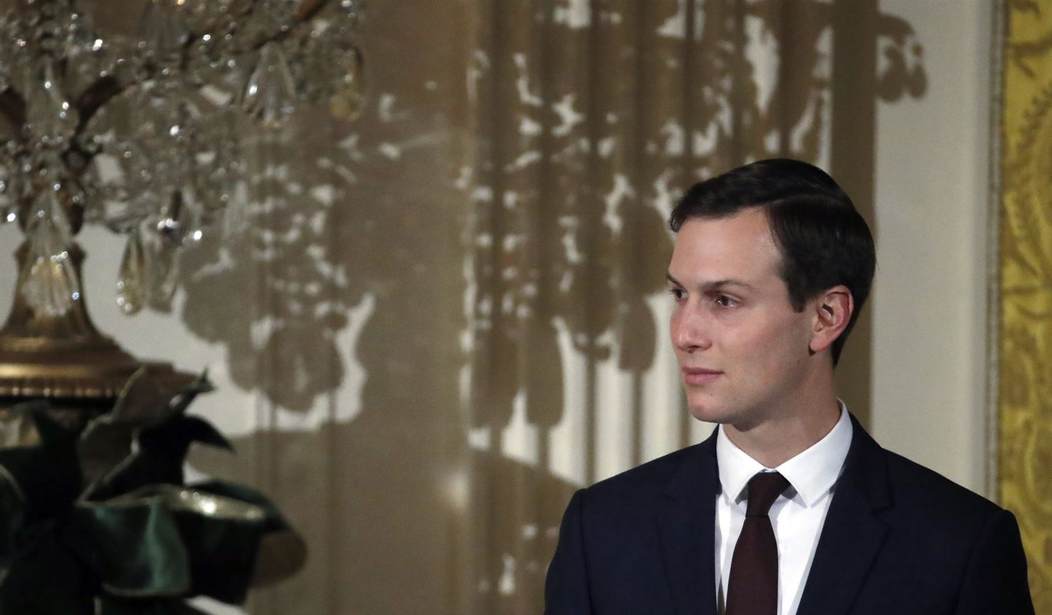
The proposal, which was developed by the president's son-in-law, Jared Kushner, would let in more high-skilled foreign workers and admit fewer low-skilled ones -- but maintain the overall legal immigration rate at the current level of 1 million per year.
In other words, the plan merely shifts the economic burdens of mass migration from blue-collar workers to better-educated middle-class Americans -- many of whom are already struggling. The president could drastically improve his son-in-law's proposal by cutting overall immigration levels.
Middle-class Americans face stiff financial headwinds. A college education has become a prerequisite for most white-collar jobs -- but the cost of earning a degree has skyrocketed in the past few decades. The nation's total outstanding student debt has more than doubled in the last ten years alone to over $1.5 trillion, surpassing debt from either car loans or credit cards.
Housing and healthcare costs have similarly grown faster than inflation in recent years.
Despite the surging cost of living, middle-class workers have experienced stagnant wage growth. The median annual wage for a recent college graduate has barely budged since 1990, after adjusting for inflation.
The White House proposal would squeeze these middle-class Americans. As more foreign white-collar workers flood the labor market, Americans will have to fight harder for jobs and pay raises.
That's not a knock on immigrants, most of whom are law-abiding and hardworking. It's simple supply and demand.
With a bigger pool of workers to choose from, employers can attract workers despite offering lower wages. An analysis by economist George Borjas of Harvard's Kennedy School of Government shows that when immigration increases the number of workers in a particular age and education cohort by 10 percent, wages for native-born men in that group fall by 3.7 percent.
In recent decades, historically high levels of immigration have swelled the white-collar workforce. The number of college-educated immigrants in the United States has tripled since 1990. Today, immigrants make up roughly a third of all computer programmers and healthcare support professionals. One in four doctors and engineers and one in five nurses are foreign-born.
This foreign competition boxes college-educated Americans out of their desired professions. Just half of all science, technology, engineering, and math majors find relevant work in their degree fields.
Across all majors, 40 percent of graduates accept jobs requiring no bachelor's degree at all. And two-thirds of those graduates still work in jobs that don't require a degree five years post-graduation. A decade after graduating, they earn 22 percent less, on average, than their peers who were lucky enough to find jobs requiring degrees.
The Kushner plan would undermine the president's "Pledge to America's Workers" initiative, which the White House rolled out last July.
The initiative, championed by Kushner's wife, Ivanka Trump, retrains American workers for new careers in technical and high-tech fields. If businesses can simply import hundreds of thousands of cheap white-collar workers from foreign countries, firms will have little reason to hire and train middle-class Americans.
To be sure, the Kushner proposal contains some great ideas. It would reduce "chain migration" -- the process by which recent immigrants sponsor their family members for green cards, irrespective of those relatives' ability to succeed in a 21st-century economy. The proposal would still allow recent immigrants to sponsor their spouses and minor children, but not extended family members.
It also eliminates the diversity visa lottery, a program that gives out more than 50,000 green cards a year to immigrants regardless of their skillsets. And it tightens asylum laws and boosts funding for border security.
These are all welcome reforms. And they'd ease pressure on blue-collar workers, who currently compete against lower-skilled immigrants.
But by increasing green card allotments for white-collar workers, the Kushner proposal simply shifts the pain from America's working class to its middle class. Let's hope President Trump revises his son-in-law's plan and scales back overall immigration rates.

Join the Conversation
VIP members get the ability to comment on articles.