







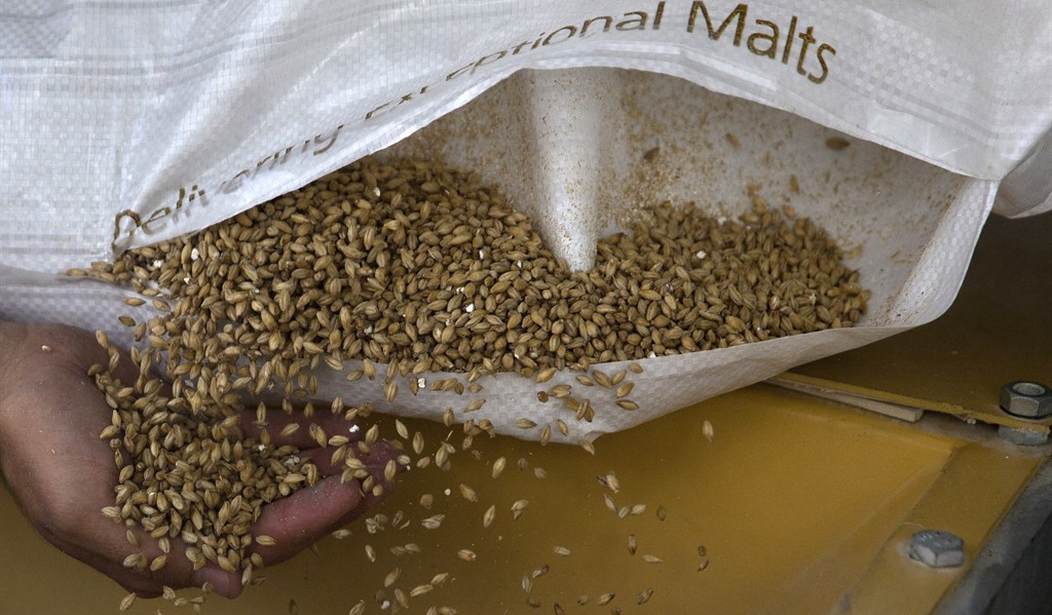
If you search for "home still" on Amazon, you will see a bunch of products that are explicitly advertised as tools for producing liquor. But while it is legal to make beer, cider or wine at home for your own consumption or to share with friends, unlicensed production of distilled spirits remains a federal felony punishable by up to five years in prison, a $10,000 fine, or both.
That law is unconstitutional, a federal judge in Texas ruled last week. In addition to potentially protecting at least some DIY distillers from a daunting threat, the decision offers hope of constraining a federal government that has expanded far beyond the limited and enumerated powers granted by the Constitution.
"This decision is a victory for personal freedoms and for federalism," said Dan Greenberg, general counsel at the Competitive Enterprise Institute, which represented the hobbyists who challenged the ban on home distilling. The ruling, he noted, "reminds us that, as Americans, we live under a government of limited powers."
That is easy to forget, given the chilling arrogance exemplified by the unsolicited letter that one of the plaintiffs in this case, Scott McNutt, received from the Treasury Department's Alcohol and Tobacco Tax and Trade Bureau. The TTB said it had learned that McNutt "may have purchased a still capable of producing alcohol," warned that "unlawful production of distilled spirits is a criminal offense," and noted the potential penalties.
To avoid those penalties, the TTB explained, anyone who wants to concentrate the alcohol in a fermented beverage must first obtain the requisite federal permits. But those permits are not available to home distillers.
That policy, the government argued, is justified by the need to safeguard federal revenue by preventing evasion of liquor taxes. But U.S. District Judge Mark T. Pittman concluded that the challenged provisions, which apply to noncommercial producers who owe no such taxes, do not count as revenue collection or as a "necessary and proper" means of achieving that goal.
One of those laws makes "distilling on prohibited premises" a crime, while the other prohibits stills in "any dwelling house." Those provisions, Pittman notes, make "no reference to any mechanism or process that operates to protect revenue." And while "prohibiting the possession of an at-home still" meant to produce alcoholic beverages "might be convenient to protect tax revenue," he says, "it is not a sufficiently clear corollary to the positive power of laying and collecting taxes."
Pittman also rejected the government's claim that the ban was authorized by the power to regulate interstate commerce, which Congress routinely invokes to justify legislation. He notes that "neither of these provisions connect(s) the prohibited behavior to interstate commerce."
Home distilling, the government argued, "substantially affects interstate commerce in the aggregate." But to justify regulation of noncommercial activity under that "substantial effects" test, Pittman says, requires showing that it is necessary to execute "a comprehensive statute that regulates commerce on its face," which is not true in this case.
In that respect, Pittman thinks, the ban on home distilling differs from the medical marijuana ban the Supreme Court upheld in 2005, which supposedly was justified as part of a comprehensive regulatory scheme established by the Controlled Substances Act. Dissenting from that decision, Justice Clarence Thomas warned that its logic would allow Congress to "regulate virtually anything."
As Pittman sees it, however, the Commerce Clause is still not quite the blank check that Congress would like it to be. He issued a permanent injunction that bars the government from enforcing the home-distilling ban against McNutt or other members of the Texas-based Hobby Distillers Association.
"While the federal government has become more enthusiastic about inflating the scope of its powers over the last century, this case shows that there are limits to the government's authority," said CEI attorney Devin Watkins. "If the government appeals this decision to a higher court, we look forward to illuminating those limits."


Join the Conversation
VIP members get the ability to comment on articles.