





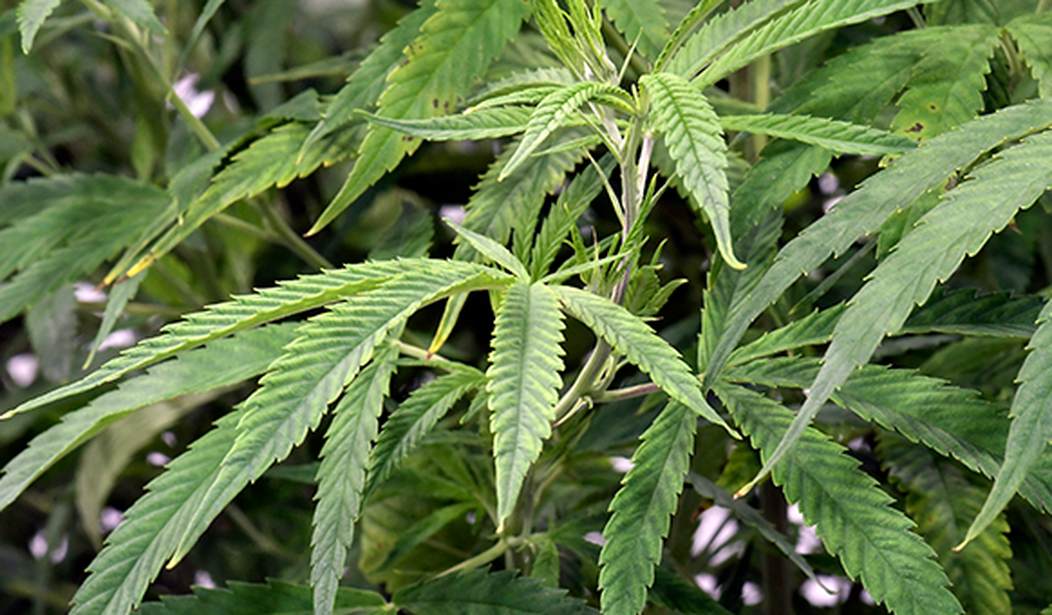
For half a century, critics have argued marijuana does not belong in Schedule I of the Controlled Substances Act, a category supposedly reserved for drugs that cannot be used safely even under a doctor's supervision due to their high potential for abuse and lack of accepted medical applications. Last week, the U.S. Department of Justice finally agreed, implicitly admitting that the federal government has been lying about marijuana for decades.
"This is monumental," President Joe Biden declared. That is true insofar as monuments look impressive but otherwise do not accomplish much.
Biden is trying to motivate younger voters whose turnout could be crucial to his reelection. But those voters overwhelmingly favor marijuana legalization, and the DOJ proposal falls far short of accomplishing that.
The proposed rule, which will be subject to 60 days of public comment before it is finalized, would move marijuana to Schedule III, which includes prescription drugs such as ketamine, Tylenol with codeine, and anabolic steroids. But that does not mean marijuana will be legally available as a medicine, which would require regulatory approval of specific cannabis-based products.
With marijuana in Schedule III, state-licensed cannabis suppliers will remain criminal enterprises under federal law, albeit subject to less severe penalties. Although an annually renewed congressional spending rider bars the DOJ from interfering with state medical marijuana programs, prosecutorial discretion is the only protection for businesses that serve recreational consumers.
The federally illegal status of state-approved marijuana businesses discourages financial institutions from serving them, since doing so could invite potentially devastating criminal, civil and regulatory consequences. Moving marijuana to Schedule III will not solve that problem either.
Biden portrays rescheduling as "an important move toward reversing long-standing inequities" caused by the federal government's "failed approach to marijuana." But it will not "decriminalize the use of marijuana," as he promised to do during his 2020 presidential campaign: Simple possession, even for medical purposes, will remain a federal offense punishable by a minimum $1,000 fine and up to a year in jail.
Although Biden decries the "needless barriers to housing, employment, and educational opportunities" created by marijuana convictions, rescheduling will not eliminate those. Nor do his pardons for people convicted of simple marijuana possession under federal law: Although Biden claims he is "expunging thousands of convictions," that is not true, because presidential pardons do not expunge criminal records.
Rescheduling, even combined with clemency, also does not lift the various legal disabilities associated with marijuana convictions, cannabis consumption, or participation in the cannabis industry. Those include loss of Second Amendment rights (a policy that Biden defends) and ineligibility for admission, legal residence, and citizenship under immigration law.
What does rescheduling accomplish? In practical terms, the two main benefits of moving marijuana to Schedule III are fewer regulatory barriers to medical research and a financial boon to state-licensed cannabis suppliers, who will no longer be barred from deducting standard business expenses when they file their federal tax returns.
That is not nothing. Abandoning the pretense that marijuana meets the criteria for Schedule I also represents progress of a sort. That reversal, however, comes at a time when 38 states have legalized medical use of marijuana, two dozen have taken the further step of legalizing recreational use, and seven out of 10 Americans oppose pot prohibition. In this context, admitting what most of us already knew is a pitifully inadequate concession.
Rescheduling and clemency fail to address today's central cannabis issue: the conflict between a federal government that is maintaining a scientifically dubious, morally bankrupt policy and states that have decisively rejected it. And Biden, despite his pose as a longtime drug warrior who has seen the error of his ways, is a big part of that problem.
The president, citing old-timey "gateway drug" concerns, has steadfastly resisted attempts to resolve this conflict by repealing the federal ban on marijuana. Even while condemning the injustice inflicted by a "failed approach to marijuana," he is sticking with it.

Join the Conversation
VIP members get the ability to comment on articles.