







This debate is so banal. Progressives shout “discrimination,” conservatives cry “liberty,” and it really all boils down to the difference between government and private action, which both sides misunderstand.
Progressives aren’t satisfied with state recognition of same-sex couples and want to bend the will of those private citizens who have religious objections to the only belief system that’s now allowed by MSNBC polite society. Conservatives are wrong to oppose the extension of state marriage licenses to same-sex couples – I’m against such licensing schemes, but states have no good reason to treat gay and straight people differently – and it’s that opposition that breeds distrust when they correctly argue that people should be free to live their lives according to their consciences.
As I said a year ago,
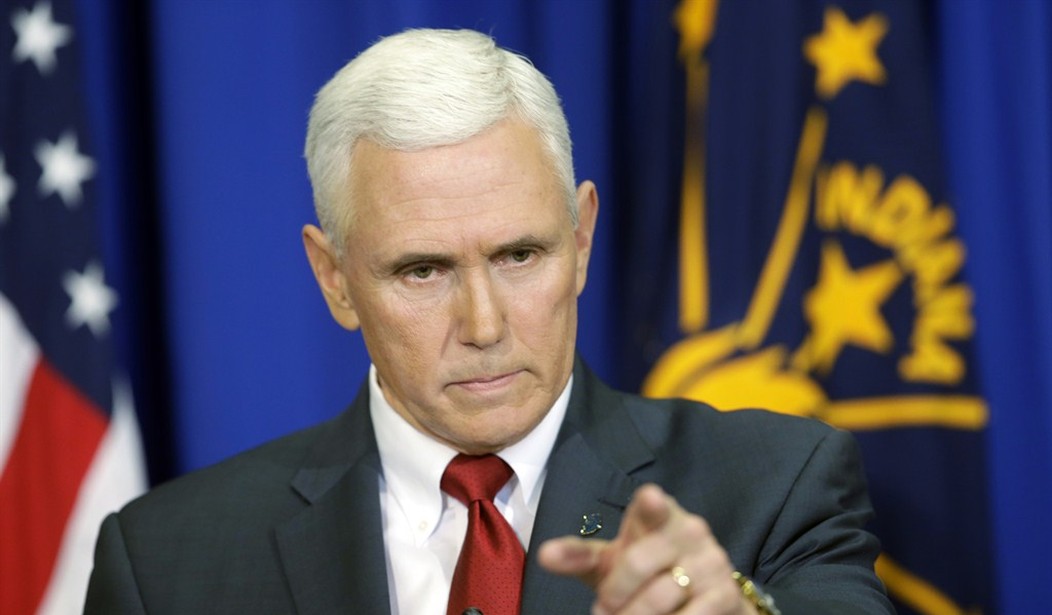
[The Indiana law] does nothing more than align state law with the federal Religious Freedom Restoration Act (which passed the House unanimously, the Senate 97-3, and was signed by President Clinton in 1993). That is, no government action can “substantially burden” religious exercise unless the government uses “the least restrictive means” to further a “compelling interest.” This doesn’t mean that people can “do whatever they want” – laws against murder would still trump religious human sacrifice – but it would prevent the government from forcing people to violate their religion if that can at all be avoided. Moreover, there’s no mention of sexual orientation (or any other class or category).
The prototypical scenario that [the law] is meant to prevent is the case of the New Mexico wedding photographer who was fined for declining to work a same-sex commitment ceremony. This photographer doesn’t refuse to provide services to gay clients, but felt that she couldn’t participate in the celebration of a gay wedding. There’s also the Oregon bakery that closed rather than having to provide wedding cakes for same-sex ceremonies. Why should these people be forced to engage in activity that violates their religious beliefs?
For that matter, gay photographers and bakers shouldn’t be forced to work religious celebrations, Jews shouldn’t be forced to work Nazi rallies, and environmentalists shouldn’t be forced to work job fairs in logging communities. This isn’t the Jim Crow South; there are plenty of wedding photographers – over 100 in Albuquerque – and bakeries who would be willing to do business regardless of sexual orientation, and no state is enforcing segregation laws. I bet plenty of [Indiana] businesses would and do see more customers if they advertised that they welcomed the LGBT community.
At the end of the day, that’s what this is about: tolerance and respect for other people’s beliefs. While governments have the duty to treat everyone equally under the law, private individuals should be able to make their own decisions on whom to do business with and how – on religious or any other grounds. Those who disagree can take their custom elsewhere and encourage others to do the same.
I hate to repost exactly the same thing, but literally nothing has changed but the site of the overwraught protests.
Moreover, I don’t know why you’d want to have someone who can’t in good faith (literally) support your celebration be a vendor for that event. Actually, I do know: it’s the desire of some to change and narrow the rules of the game “such that private institutions are allowed to continue operating only as long as they follow a prescribed list of behaviors and mores.” (To quote something new, my recent recent National Affairs essay on “Hobby Lobby and the Future of Freedom.”) For more smart takes, see Josh Blackman and Jon Adler.
Oh, and apparently Arkansas is now joining the party too. This could become one of the big issues of the 2016 election – not same-sex marriage itself, mind you, but the brave new world of government mandates clashing with religious (among other) freedoms.

Join the Conversation
VIP members get the ability to comment on articles.