





With millions of coronavirus cases in over 200 countries, the COVID-19 pandemic shows how rapidly a disease as contagious as COVID-19 can spread between and within countries. Recently, the administration has taken steps to curb immigration to the U.S. by suspending certain employment-based visas and announcing efforts to dismantle the Deferred Action for Childhood Arrivals (DACA) program. Yet the greatest immigration-related risk posed by COVID-19 and other infectious diseases is the porous southern border.
Border insecurity has the potential not only to worsen the current crisis we are facing but to lead to even more devastating public health repercussions in the future. We need to better control our borders so we can mitigate public health threats and prevent the next pandemic.
President Trump’s decision to ban travel from China in January, when COVID-19 began to aggressively spread in the U.S., played a crucial role in slowing the spread of the virus. As more cases were reported, the President announced further travel restrictions on global hotspots, including Europe, the United Kingdom, Ireland and Iran. These actions were widely criticized by Europe and the U.S. media at the time, but likely saved thousands of lives. Shortly thereafter, other European countries, which previously touted the virtues of no borders, were rushing to contain COVID-19 at their borders by limiting who could enter their country.
In the case of COVID-19, the U.S. was able to quickly restrict travel from China and Europe and limit the further spread of the disease, since these individuals travel to the U.S. by air or by boat. But imagine if this was a virus that was coming to the U.S. via our land borders?
This is exactly the reason why borders are necessary. The porousness of our borders could allow for infectious diseases like COVID-19, or worse, to enter the U.S. and quickly spread, perhaps before even coming to the authorities’ attention. That’s because porous borders make it impossible for officials to accurately track who enters the country and screen for infectious diseases. In fact, tens of thousands of migrants illegally slip into the U.S. each year undetected. This is a serious concern given that just one infected person has the potential to bring an infectious disease into the U.S.
In addition to having the ability to control the flow of people in and out of our country when necessary, there are other important reasons why we should prioritize border security. To name just a few, strong borders help ensure that the U.S., which is home to more immigrants than any country in the world, can continue to welcome people who arrive here legally. Controlled borders also prevent overcrowding at migrant facilities so migrants don’t find themselves in environments where they may not get the care and support they need.
At the start of the pandemic, the administration reached mutual agreements with Mexico and Canada to restrict non-essential travel across our borders. To prevent COVID-19 from being introduced at the border as well as further into the country, illegal immigrants caught crossing between ports of entry were prohibited from entering.
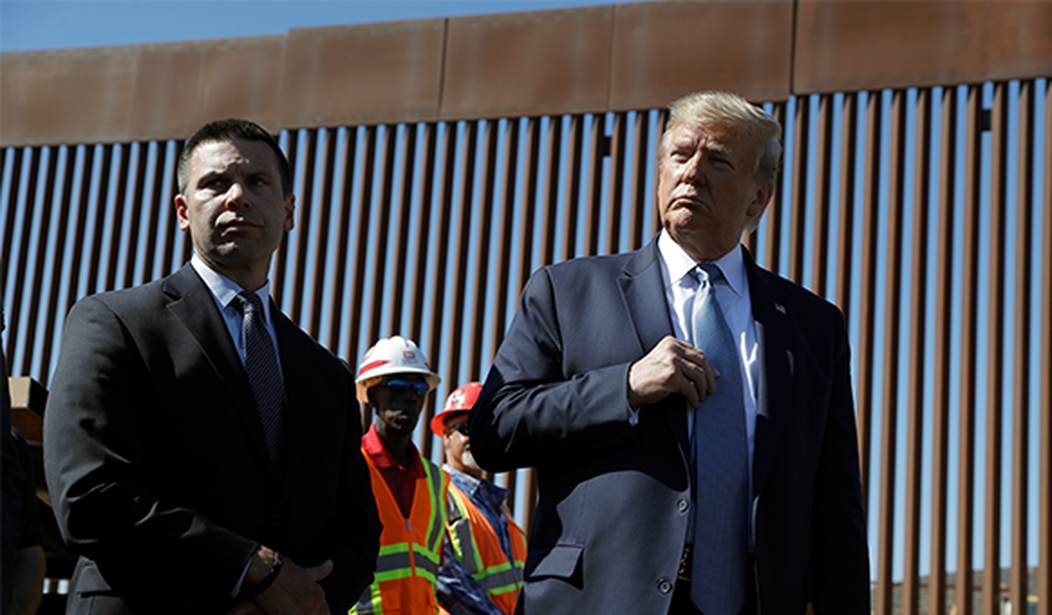
But even prior to the pandemic, the Administration had taken important steps to address the illegal immigration crisis at the southern border. For example, agreements with Mexico, Honduras, El Salvador and Guatemala require migrants to seek asylum in these countries first before doing so in the U.S. Since January 2017, about 216 miles of physical border wall have been constructed. Consequently, fewer people are illegally crossing into the U.S. In fact, apprehensions dropped by 75% from May to December of last year.
However, there are still hundreds of miles along the border that lack sufficient barriers, leaving the U.S. exposed to infectious diseases. We simply cannot afford this vulnerability. To ensure that the U.S. has the ability to control the flow of people in and out of our country, Congress should immediately provide the funding needed to secure the border.
COVID-19 shows why borders are necessary. Immigration is a public health issue as much as a national security and an economic issue. For the sake of today’s U.S. citizens, and also for the sake of people around the world who hope to one day call America home, Congress should take action now to ensure that we are adequately protected from the spread of infectious disease.
Heather Madden is director of operations and policy research at Independent Women’s Voice.



Join the Conversation
VIP members get the ability to comment on articles.