





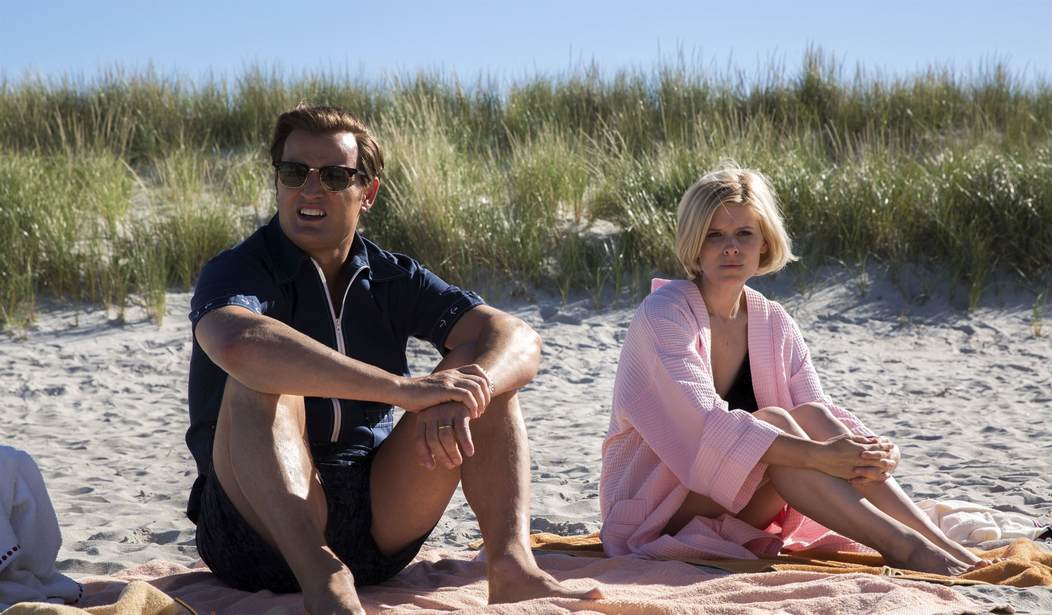
On July 18, 1969, there was a party in a vacation cottage on the island of Chappaquiddick, Mass. Twelve people attended -- six married men and six unmarried young women who had worked for Robert F. Kennedy's presidential campaign.
One of the married men was Senator Ted Kennedy (D-Mass.). One of the unmarried women was 28-year-old Mary Jo Kopechne. After she left the party with Kennedy, the senator drove his car off a bridge and into the waters of the tidal channel below. Kennedy escaped, leaving Kopechne to die inside his submerged Oldsmobile.
A new movie about the Chappaquiddick scandal is opening in theaters this month. Here are five takeaways about the film:
1. The movie presents Teddy in a very sympathetic light. He was the last of four brothers left after the violent deaths of his three elder brothers. His very ill father, Joseph Kennedy, was a shockingly bad influence. Rather than valuing and loving Teddy as a father should love his son, Joe treated his youngest child as the runt of the litter.
2. The production's release at this moment suggests an almost clairvoyant sense of timing. Had the producers known that 2018 would be the year of #MeToo in politics, Hollywood and media, they could not have chosen a more opportune moment to revisit the horrifying history of the Chappaquiddick incident.
3. While it is difficult to imagine the craven cowardice of the married Senator escaping with his life and deserting his younger female companion who is trapped underwater, it's downright excruciating to watch. Teddy walks away from the car, leaving Kopechne to suffocate and immediately begins damage control for his family and for his political career.
As Kopechne starts saying her prayers as the pocket of air runs out, you feel the terrifying darkness she experienced in her final moments. In the ensuing inquest into Kopechne's death, EMT captain and rescue diver John Farrar testified: "It looked as if she were holding herself up to get a last breath of air. It was a consciously assumed position. . . . She didn't drown. She died of suffocation in her own air void. It took her at least three or four hours to die. I could have had her out of that car 25 minutes after I got the call. But he didn't call."
Chappaquiddick was Ted Kennedy's Profile in Cowardice. Some view Kennedy's ability to remain in the United States Senate after Kopechne's scandalous death as a testament to the overwhelming power of the incumbency advantage. Instead, as the movie shows, Kennedy survived politically as a result of a concerted cover-up and his wealthy, politically connected family's ability to whitewash their misdeeds.
4. The character development is powerful. At one point, Kennedy seeks his cousin’s sympathy, pointing out that all great men had flaws, from Moses to St. Peter and on throughout history. His cousin retorts: "Moses didn’t leave a dead girl at the bottom of the Red Sea."
5. The best outspoken reaction to Kennedy is from his then-wife, Joan. You have to see the movie: I won't repeat her reaction here. Joan Kennedy attended Kopechne's funeral and the Senator's court appearance despite being confined to bed rest for a difficult pregnancy that followed two miscarriages. She is dragged into the cover-up and the public-relations campaign and suffers another miscarriage.
Gayle Trotter is an attorney and political analyst


Join the Conversation
VIP members get the ability to comment on articles.