





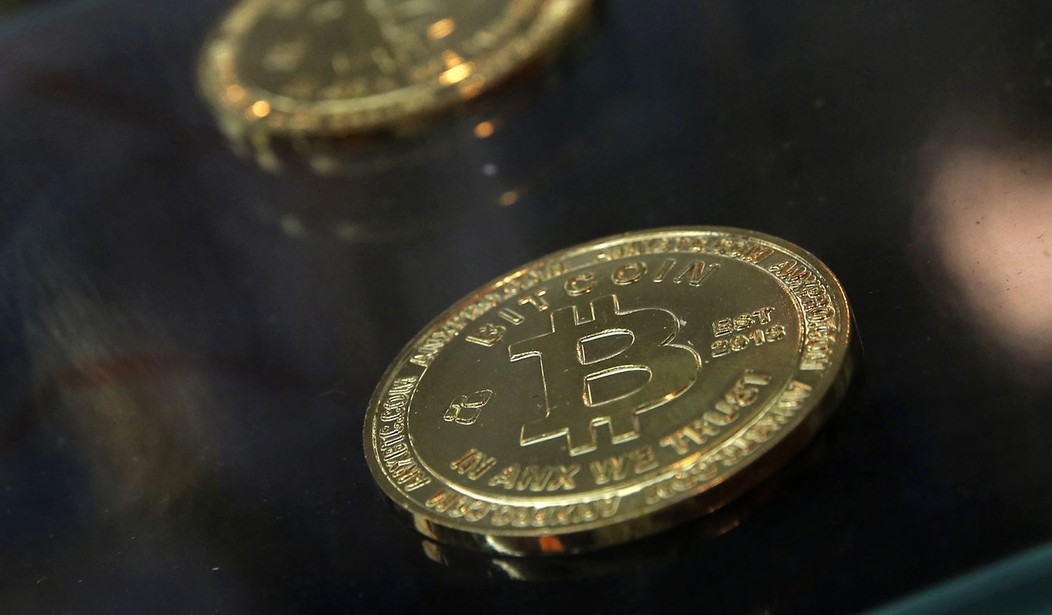
A fifth of all U.S. dollars ever created are just under one year old. In about the same time, Bitcoin has quadrupled in value. Currency competition is here, but the blessing for consumers is seen as a serious threat by the oligarchical elite.
Just as our country reaches a cultural and political crossroads, so too is there an economic rubicon to be crossed. Beyond any other social issue, however, Americans must take a greater interest in their money.
The reason is simply that fiat money systems have always ended up in the dustbin of history. Too often, it’s the same result for a civilization’s freedom and prosperity, even its claim to self-determination. What’s truly frightening is that the whole global economy is now under such a system of fiat, with the U.S. dollar as the world’s reserve currency.
No one can precisely predict the future, but based on what occurred in 2020, the reign of the U.S. dollar as the world’s reserve currency may not be long for this world.
Central banks and other behemoths of government and business have an interest in making any monetary transition as smooth as possible for themselves while also maintaining or increasing their current influence on markets. That is likely to be a central bank digital currency, known as a CBDC, portending a cashless future.
Thankfully, there are more free-market oriented innovations that serve the average American consumer’s best interests. Those would hedge against inflation, keep their purchasing power and storage of value long-term, and also allow at least some privacy protection against traceability.
The most obvious recent example of the latter is Bitcoin, which is not a fiat currency, meaning it is not decreed into existence by government or central bank officials. The cryptocurrency broke a new value record of $42,000 on January 8. Its rise over the last decade reflects deep concerns for the U.S. dollar’s fate.
“Bitcoin definitely created a revolution,” said Daniela Cambone, editor-at-large and anchor with Stansberry Research, on a recent episode of the Ron Paul Liberty Report. “It is a protest against the U.S. dollar and other currencies.”
“It is giving power back to the people,” Cambone added before noting that the Covid-19 lockdowns have “caused a lot of people to have more time to reflect about their money.”
Now, Cambone is no Bitcoin booster. She is unsure of its long term value. However, the undeniable point is that Bitcoin is becoming a perceived safe haven for value storage, at least in the short term.
That’s not thanks to any monetary dictator or board of expert economists. It’s a result of free and voluntary exchanges. That process should not only be allowed to continue, but should be further expanded into a truly unhampered market for currency competition.
When he was a congressman, Dr. Ron Paul introduced legislation to legalize currency competition. Paul sought the repeal of legal tender laws, which codify powers not authorized by the Constitution in the first place. His bill also called for a repeal of prohibitions on private mints and laws imposing capital gains and sales taxes on coins.
The last time such a law was proposed was the Free Competition in Currency Act of 2013, introduced by former Rep. Paul Broun (R-GA). Hopefully another version of this bill reemerges soon, as the new Sound Money Caucus, led by Rep. Warren Davidson (R-OH), was announced this past summer.
How urgent is this issue for Americans? Well, how stable does the country feel at the moment? In times of uncertainty or even great crisis, money alternatives are essential for many kinds of transactions, especially for politically marginal or oppressed groups.
Take a moment to review human rights activist Alex Gladstein’s Twitter thread documenting more than a dozen situations worldwide where Bitcoin is used to get around arbitrary government obstacles.
Americans are increasingly aware of the control over free speech online, and soon they may also learn of widespread denial of services such as payment processors for anyone deemed too politically incorrect. To protect against that, currency competition should be encouraged.
The takeaway here is not that Bitcoin or silver or gold are destined to replace the dollar. They may or may not. No matter what, it should never be illegal to do honest business in America, even if that means a transaction isn’t denominated in U.S. dollars.
Join the Conversation
VIP members get the ability to comment on articles.