





When White House Deputy Chief of Staff James Blair decided to push mid-decade congressional redistricting, Republicans had reason to be nervous. Redistricting battles are messy, procedurally arcane and easy to lose in the court of public opinion even when you win in a court of law. But Blair saw something others missed: Democrats had already boxed themselves in with maximum partisan redistricting and constitutional restrictions in some states that would prohibit radical gerrymandering.
The Virginia Supreme Court's rejection of the Democrats' redistricting effort last week is more than a procedural footnote. It is a consequential ruling that has reshuffled the electoral math heading into the midterms in ways that could meaningfully blunt what remains an uphill environment for House Republicans. According to the Cook Political Report, the breakdown now stands at 209 seats leaning Republican, 209 leaning Democrat and 18 true toss-ups. That is a tighter picture than Democrats had been banking on. Blair's redistricting gambit paid off, thanks in no small part to the Democrats' rushed response.
The structural headwinds facing House Republicans have not disappeared. History is not kind to the president's party in midterm elections. Economic anxieties linger. Eighteen toss-up seats are still enough for Democrats to reclaim the majority. But the margin that once looked comfortable for Democrats now looks razor thin. A governing majority built on a few seats is barely a majority at all. Blair turned what could have been a blowout into a knife fight and that matters enormously for the legislative agenda of the next two years.
Republicans started the fight in Texas, though now they insist they picked the fight in Texas because of Democrats in New York. It was a risky move that saw California rush through a redistricting plan with voter support to get rid of a nonpartisan redistricting commission. However, we should note the nonpartisan commission was highly partisan, with some members being long-time progressives who suddenly declared themselves Republicans to satisfy the commission. The newer lines are even more draconian than the old lines. But in many Democratic states, the states were already carved up to partisan extremes.
Unable to prevail on the merits, the response from the left has been rage. We are told that democracy is under attack. We are told that the Virginia Supreme Court must be restructured, its justices replaced or its authority curtailed, because it reached a conclusion Democrats did not like. Some have gone further, suggesting the ruling should simply be ignored in the interest of the people's will.
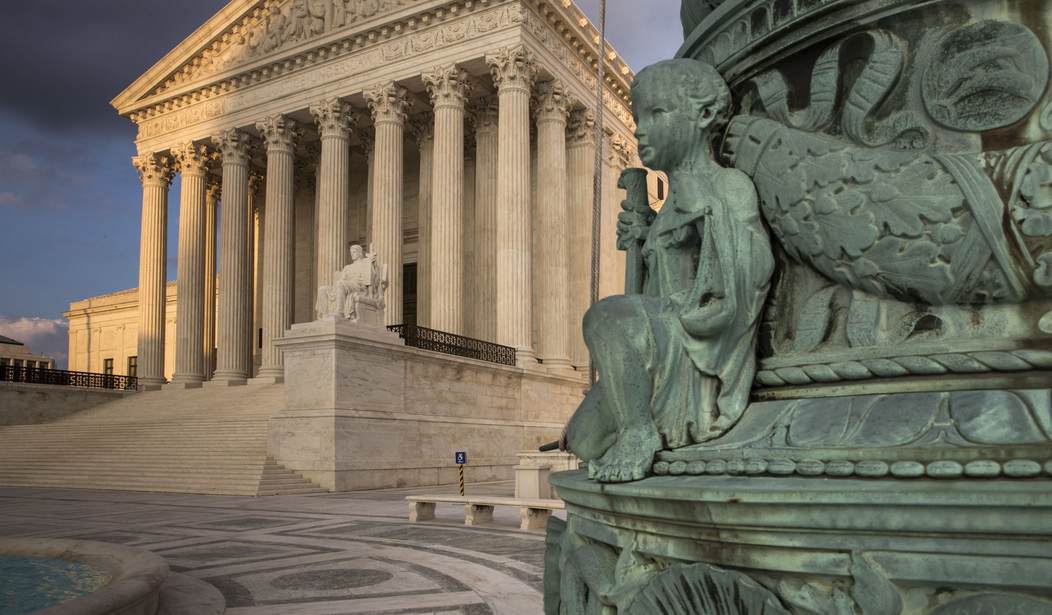
It is worth pausing to absorb the irony. These are the same political voices who were entirely comfortable when the United States Supreme Court struck down same-sex marriage bans that had been approved by voters in a majority of states. When the courts overrode the expressed democratic will of millions of Americans on that question, there were no op-eds demanding that justices be removed or rulings ignored. The courts were celebrated as a bulwark of rights against majoritarian overreach. The Constitution was a living document, properly interpreted by an independent judiciary.
Now, with Democratic electoral power on the line, the Virginia Supreme Court is suddenly an illegitimate obstacle to the people's voice. The constitution is a technicality. The law is an inconvenience.
The throughline in Democratic thinking on courts and constitutions is not a principle. It is an outcome. Courts that deliver Democratic victories are independent guardians of democracy. Courts that do not must be delegitimized. That is not a constitutional philosophy. It is a power philosophy wearing constitutional clothing.
I was not alone in my doubts about the mid-decade redistricting strategy. Everything had to go right. Remarkable, almost everything did. The Virginia Supreme Court upheld the plain language of Virginia's law. The United States Supreme Court upheld the color-blindness of the American Republic in Louisiana v. Callais. The pieces fell in place and, perhaps, now both sides will consider real nonpartisan redistricting. Though most objective observers believe that would help Republicans more than Democrats.
The Democrats may still capture the House. But it will be a much harder-earned Democratic victory than anyone anticipated and one man's willingness to pick the right fight at the right time is a significant reason why.
Editor’s Note: Do you enjoy Townhall’s conservative reporting that takes on the radical Left and woke media? Support our work so that we can continue to bring you the truth.
Join Townhall VIP and use promo code FIGHT to receive 60% off your membership.



Join the Conversation
VIP members get the ability to comment on articles.