





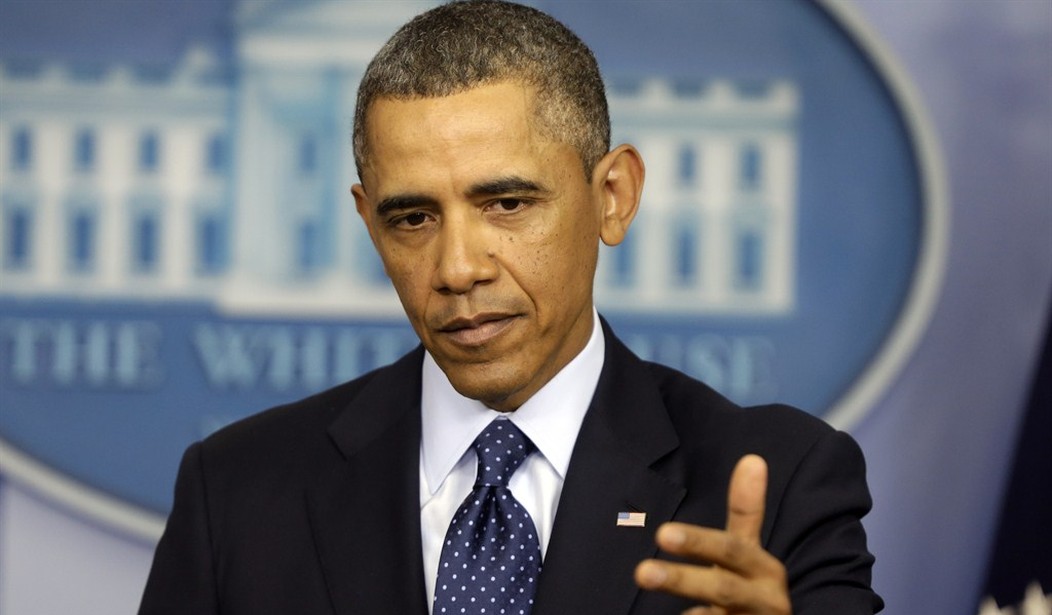
The Obama administration values a future relationship with Iran more than it values the historic relationship it has with Israel.
Unless there's a reversal in the reported deal with the Islamic Republic of Iran, all the superficial talk about this extraordinary friendship between Israel and the United States isn't going to mean much. And the histrionics surrounding Israeli Prime Minister Benjamin Netanyahu's planned speech in front of a joint session of Congress only confirm that there are plenty of people who are happy about it.
First, Americans were supposed to be outraged because Netanyahu engaged in a breach of protocol. Then we were supposed to be outraged because the speech would be given too close to the upcoming Israeli elections. (Sen. Tim Kaine, D-Va., is still using this excuse for his own boycott.) But if the Israeli elections -- and President Barack Obama's done about everything possible to weaken Netanyahu's position -- are so problematic, then the controversy should be centered on the behavior of the prime minister, not the substance of his argument. That's not the case, is it?
Administration mouthpieces warn us that the once-special relationship between the nations will collapse under the weight of a single speech -- and some of those warnings have come with a hint of anticipation. The real victims of Netanyahu? American Jews. Critics suggest that challenging the president while he is in the middle of foreign policy deal-making is both a bit unpatriotic and dangerously partisan.
But the problem isn't protocol, Israeli elections, patriotism or partisanship. It's the fact that Netanyahu is going to make a powerful argument against enabling Iran to become a nuclear power. Many Americans will hear it -- or of it. Many Americans will agree.
Devotion to Obama is not the same as loyalty to your country. The opposition party, in fact, has a responsibility to disrupt the president's agenda if it truly believes that it's the wrong path for the nation. This is why we have political parties. And this is why I'm pretty sure many anti-war liberals believe that the Hillary Clintons and John Kerrys of the world failed the country leading up to the Iraq War.
And seeing as I brought it up, Secretary of State Kerry sure did offer us a jaw dropper Wednesday: "The prime minister ... was profoundly forward-leaning and outspoken about the importance of invading Iraq under George W. Bush," said the former presidential candidate. "We all know what happened with that decision."
Yes, Netanyahu supported the Iraq War, but he did not send Americans to fight -- nor will his upcoming speech. Kerry, on the other hand, engaged in a cynical voted for/voted against charade driven by his own political ambitions. But there is a bigger falsehood -- let's call it presumption -- here. Critics of Netanyahu act as if opposing Obama's Iranian deal is tantamount to declaring war on Iran. In the long run, allowing Iran to become nuclear might well mean war. We don't know.
We do know some other things. Whereas Obama looks to be comfortable with the expansion of Iranian power with proxies in Syria and Lebanon, our allies in Israel may not feel the same way. Obama may be comfortable with the idea that Tehran can develop powerful centrifuges that put them in a position to build a bomb within a year, but that reality is probably unsettling for the Sunnis and Jews in the area. In fact, former CIA Deputy Director Michael Morell says that a potential Iran nuclear agreement would limit Iran to the number of centrifuges needed for a weapon but not enough for the imaginary nuclear power program it wants.
So the question is: What does the United States gain from entering a deal such as this?
Netanyahu may mention some of these apprehensions. Obama's national security adviser, Susan Rice, says the visit is "destructive of the fabric of the relationship." It seems unlikely that Rice would ever use the word destructive to describe Iran's obsession with obtaining nuclear weapons -- but "partisanship," now, that's really corrosive. The fact is that the alliance with Israel has never been much of a partisan issue in the United States. Not until now. And even today, only a handful of reliably anti-Israel politicians and a few Obama loyalists are skipping the speech so far. According to Gallup, 70 percent of Americans still have a favorable view of Israel.
So though there is plenty of criticism aimed at the aggressive methods of Netanyahu in Israel, there will also be widespread agreement among nearly all political denominations in the Jewish state regarding the substance of his speech and the warnings about a nuclear Iran. Surely, hearing out the case of an ally that is persistently threatened by Holocaust-denying Iranian officials doesn't need to come with this much angst from Democrats. But if it does, it's worth asking why.



Join the Conversation
VIP members get the ability to comment on articles.