





The following is an excerpt from Reclaiming Israel’s History: Roots, Rights, and the Struggle for Peace (Regnery Publishing). An updated and revised version will be released in October 2018!
A long history of rejectionism has taught Israelis that their concessions don’t bring peace, only more violence. Most Israelis, no matter how idealistic, now understand that it isn’t enough to dream of peace, visualize peace, or make painful concessions for peace. The only way Israel will know peace is if it has a partner that is both willing and able to deliver it. And no such Palestinian partner currently exists.
This difficult lesson has been taught with particular cruelty and clarity to Israel’s millennials, the cohort that came of age during the Second Intifada. This is a generation that spent their teen years effectively grounded, as their parents refused to let them out to shopping malls or restaurants when so many of them were so often blown up. This is a generation that still holds its breath when a bus passes, hoping it won’t explode. These are people who still avoid sitting near windows in restaurants since shattered glass flying at high velocity often kills more people than the bomb blast itself.
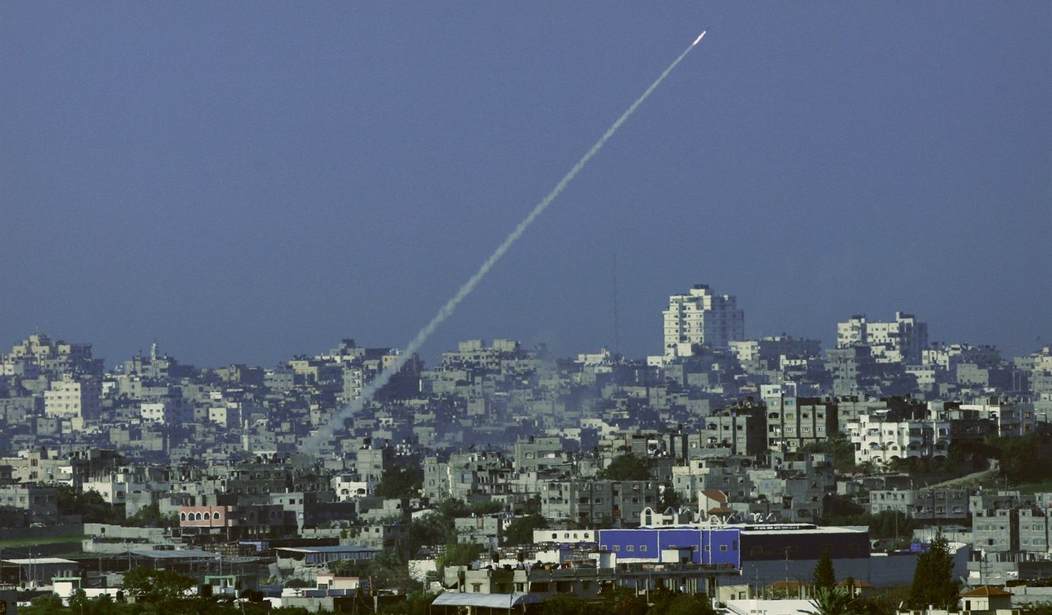
As they’ve grown up, these millennials have graduated from confinement in their homes to confinement in the safe rooms of their homes. Every Israeli home must be built with a reinforced safe room designed to withstand nearby missile and rocket explosions. In recent conflicts with Hamas and Hezbollah, almost every citizen of every city in Israel has experienced the terror of repeated air raid sirens giving them between fifteen and thirty seconds to seek shelter in their safe rooms.
These Israelis did not suffer these attacks because of their parents’ intransigence. Quite to the contrary, they were subject to these attacks because of their parents’ compromises. They can trace each wave of suicide bombings or barrage of missiles to concessions that Israeli leaders made in the hopes of peace.
It should surprise no one that a generation thus schooled has developed doubts about the land-for-peace formula. This Israeli skepticism toward peace may be the most bitter fruit of Palestinian rejectionism. Like the occupation, the settlements, and the security fence, Israel’s young hawks are very much a problem of the Palestinians’ own making.
Yet the same polls that show these young Israelis questioning the wisdom of land for peace also indicate that their concerns are largely pragmatic. Their life experience has made these young Israelis “cynical” and “skeptical” that concessions will bring peace, and rightly so. But they remain surprisingly open to compromise if such compromise would actually deliver peace.14History teaches that a sincere gesture of Arab goodwill can overcome years of bloodshed and persuade Israelis that, finally, their sacrifices may actually improve their lives.
Israel’s first Likud prime minister, Menachem Begin, was no dove. Begin’s life experience—from losing his family in the Holocaust to losing his friends in Israel’s struggle for independence—planted deep within him a suspicion of the world beyond Israel’s borders. Yet even Begin’s profound doubts melted when confronted with an Arab leader genuinely committed to compromise. When Egyptian President Anwar Sadat flew to Jerusalem and spoke from his heart about forging an historic peace, Begin embraced him and agreed to return the entire Sinai Peninsula to Egypt.
Few leaders are as courageous as Sadat. But it doesn’t take a Sadat to convince most Israelis to give peace yet another chance. Yasser Arafat was a lifelong terrorist. As it turned out, he was a completely unrepentant terrorist. Yet for a brief period he removed his holster from his hip and spoke of peace. Prime Minister Yitzhak Rabin agreed to enter into historic negotiations with him. Public support for territorial concessions to Arafat, previously nonexistent, became widespread.
Yes, young Israelis have been schooled in skepticism. But if past is prologue, any doubts they have developed from bitter experience will fade in the face of a sincere Palestinian offer of peace. The only problem—what has always been the problem—is that such an offer is not likely to be forthcoming any time soon.



Join the Conversation
VIP members get the ability to comment on articles.