





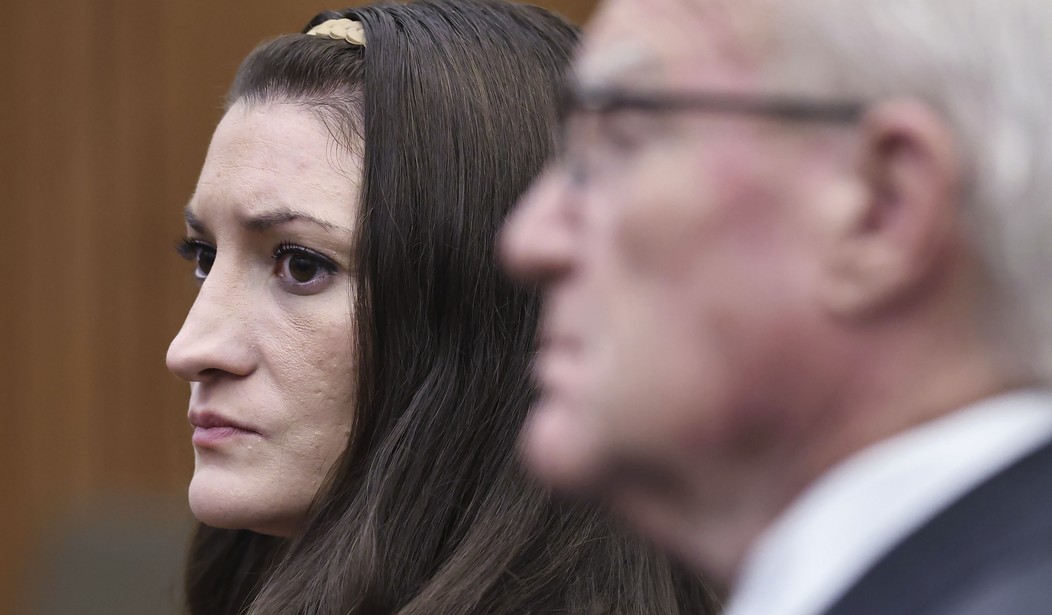
Lindsay Clancy strangled her three children to death, one by one. Cora was 5. Dawson was 3. Callan was 8 months old. She used exercise bands. She then tried to kill herself. Those facts are undisputed, and something at least one member of the jury refused to ignore.
The insanity defense is narrow on purpose. It is not “it is unthinkable that a mother could kill her own children, so she must not have known what she was doing.” It is whether, because of a mental disease or defect at the moment of the killings, she could not appreciate the wrongfulness of her conduct or could not conform her conduct to the law. Inability to believe a mother would do it is not the test. If it were, every parent who kills a child would walk.
Postpartum illness is real. Postpartum psychosis is real, rare, and a medical emergency. None of that converts three homicides into a protected class of conduct.
Depression is not a license. Exhaustion is not a license. Childbirth is not a license. Being a woman is not a license. A defendant who can send her husband out of the house, complete the act three times in succession, and later offer a diagnosis is not automatically a person who could not tell right from wrong. Juries are allowed to tell the difference between a break with reality and a theory offered after the bodies are found.
As a county prosecutor, and later as Indiana’s attorney general, I handled homicides people insisted could not be what they were, including Angelica Alvarez, who in 2006 strangled her four children in an Elkhart basement and then tried to take her own life. There was an outcry then, too. Some could not accept it. Some wanted a softer ending because the truth was ugly. The evidence does not care what you can accept. Men kill. Women kill. Fathers kill. Mothers kill. The statute does not grade the crime by the sex of the killer or the discomfort of the audience.
Massachusetts is a poor place to pretend otherwise. This is a state that has spent years treating the child as a secondary occupant of the mother’s body. In August, Governor Maura Healey signed a law governing abortions after 24 weeks, when a child can live outside the womb, that replaces specific legal limits on late-term abortion with a physician’s “professional judgment.” A culture that cannot say, without hesitation, that killing a viable child is homicide should not be shocked when a jury treats three dead children as a referendum on the mother’s narrative.
Hundreds of activists gathered outside the Plymouth courthouse, rallying around a message of belief, compassion, and solidarity with Lindsay Clancy. Signs and chants emphasized that she needed help, that she deserved justice and that her case represented the experiences of women who could find themselves in similar circumstances. Turning a triple murder into a broader women’s-rights cause risks substituting political advocacy for the sober application of criminal law.
There is a lazy claim that anyone who can kill must be “nuts.” If that is the rule, the criminal law is finished. We do not ask whether a killer is nuts or sick in the ordinary sense. We ask whether she chose the act and knew it was wrong. It takes a certain kind of person, man or woman, to put hands on a child’s throat and finish the job. Then do it again. Then do it a third time. Sick or not, that person is accountable.
The jury’s assignment was not to find an explanation that makes the rest of us feel more comfortable with an incomprehensible act. Its assignment was to determine whether the Commonwealth proved beyond a reasonable doubt that she was criminally responsible for the deaths of three children. At least one of them listened.
Understanding may help us grapple with what happened, and the failures that may have contributed to it, but understanding is not the jury’s assignment. Justice is.
Don’t tell me you can’t believe a mother would kill her children. Tell me you refuse to believe she can get away with it. A courtroom is not the place to rewrite an awful crime into a more comfortable story. It is the place to apply the law.
Curtis Hill is Senior Advisor to the Free Enterprise Project of the National Center for Public Policy Research, a Project 21 ambassador, and former Indiana Attorney General.
Editor's Note: Do you enjoy Townhall's conservative reporting exposing the radical Left and woke media? Support our work so we can keep bringing you the truth.
Join Townhall VIP and use promo code FIGHT to receive 60% off your membership.


Join the Conversation
VIP members get the ability to comment on articles.