





Move over, Nero.
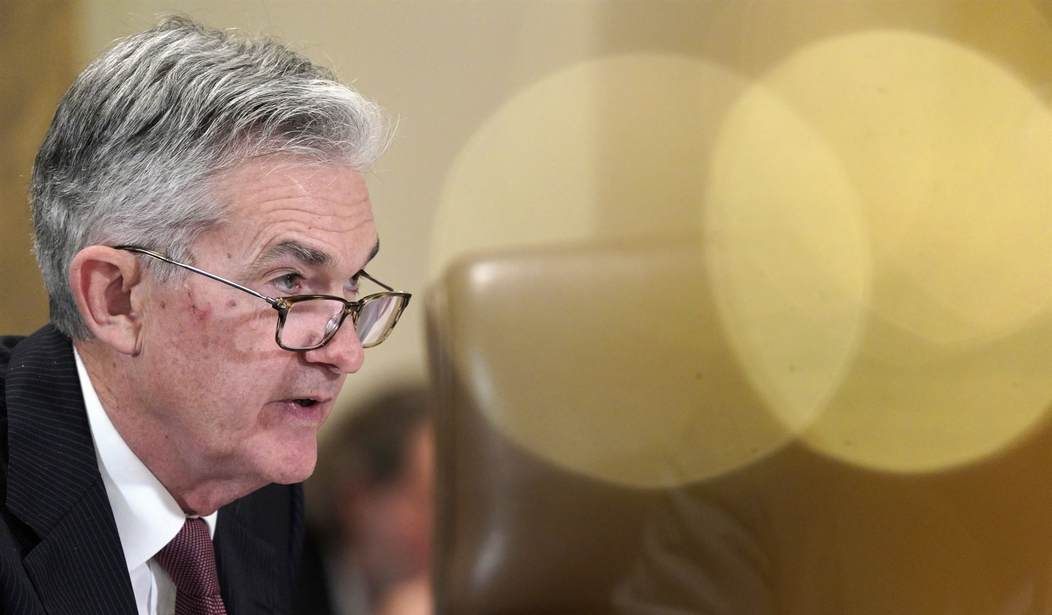
I’ve gone from thinking there is no way the Federal Reserve would allow Trump’s tweets and criticism to affect the monetary policy. Then came the question and answer period after the last Federal Open Market Committee (FOMC) gathering. I’m not so sure Jay Powell & Company aren’t letting emotions overrule guidelines and stated goals.
Making this conundrum even more complicated is the Bloomberg op-ed written by former NY Fed President William Dudley.
He is asking his former colleagues not to make any monetary policy moves that would aid President Trump in the trade war with China. He makes the case that it’s not in the “realm” of the Federal Reserve, which is supposed to only focus on stable prices and maximum employment. He considers the trade fight to be like government spending.
Dudley calls the fight a “manufactured disaster-in-the-making,” saying it keeps undermining business and consumer confidence. Yet, on the same day, we got the August Consumer Confidence report, which saw the highest present conditions level since November 2000. And the day after, we learned via the Durable Goods report that business investments had grown three consecutive months into July.
Be that as it may, Dudley thinks the Fed should let a worst-case outcome happen because that would absolve them of any blame. The same Fed that pumped four trillion dollars into the economy and established countless additional measures to bail out banks and certain businesses should be above the political fray.
If Dudley is right about a potential disaster, he is suggesting the Fed ignore prices and employment and just watch it all burn to the ground to prove they are independent. This wouldn’t be staying above the political fray - it would be playing the violin.
It’s also a de facto acknowledgment of what most folks already knew. The Fed is here to support big banks and big businesses during times of crisis, even if they are the authors of their misfortunes.
However, Dudley says the Fed should break out the violins and fiddles as Main Street starts to go broke. How do we know this kind of thinking isn’t already guiding the Fed? I hope it’s not, or all would be lost.
Message of Market
Yesterday, the market staged a late rally that was doomed, as the underlying market breadth was a wreck. There were a lot of curious actions during the session.
Energy was the biggest losing sector even as West Texas Intermediate (WTI) rallied $2.05 to $55.69 a barrel. Refiners were the biggest drag.
Financials continue to be a disaster this time; Unum Group (UNM) and other life insurers anchored the sector.
Health Care swayed on news Elizabeth Warren and Bernie Sanders have propelled to the top of the Democratic polls, according to Monmouth University. Back in April, Bernie Sanders unveiled his Medicare for all plan in the Senate, sending health insurance stocks lower, especially those in the managed care index. Humana (HUM) was hammered yesterday, tumbling below its 200-day moving average just a month after a strong earnings report and stronger guidance had Wall Street and financial media touting the stock.
Although Consumer Staples finished slightly lower, the stock of the day was Costco (COST), which saw its debut in China create a frenzy of shoppers eager for the big-box experience.
Social media and video game makers continue to hint at major breakouts, helping the Communication Services sector finish in the green.
S&P 500 Index | -0.32% | |
Communication Services (XLC) | +0.19% | |
Consumer Discretionary (XLY) | -0.49% | |
Consumer Staples (XLP) | -0.28% | |
Energy (XLE) | -0.62% | |
Financials (XLF) | -0.61% | |
Health Care (XLV) | -0.59% | |
Industrials (XLI) | -0.52% | |
Materials (XLB) | +0.07% | |
Real Estate (XLRE) | -0.33% | |
Technology (XLK) | -0.15% | |
Utilities (XLU) | +0.18% |
With all the data out this week, including the FHFA Price Index +0.2%, I’m beginning to wonder if the U.S. economy is picking up steam. That would be something - meanwhile, the Atlanta Fed is at a 2.3 Gross Domestic Product (GDP) estimate for the quarter.
Approach
There is a serious shift into medical instruments and diagnostic equipment, and we took a position in the model portfolio. All subscribers should have adequate cash levels for new ideas.
Communication Services | Consumer Discretionary | Consumer Staples |
1 | 2 | 1 |
Energy | Financials | Healthcare |
1 | 1 | 3 |
Industrial | Materials | Real Estate |
3 | 2 | 1 |
Technology | Utilities | Cash |
2 | 0 | 3 |
Today’s Session
There is more pressure on the market from lingering questions on the deepening yield curve between the two- and ten-year treasuries and yuan to the dollar. But the main driver of the phenomenon is negative global yields.
Global Yields | 10- Year |
United States | 1.466 |
Germany | -0.713 |
Japan | -0.28 |
Switzerland | -1.05 |
Sweden | -0.37 |
United Kingdom | 0.47 |

Join the Conversation
VIP members get the ability to comment on articles.