





In February 2018, the House Intelligence Committee released the so-called Nunes memo. In four pages, the document, from the committee's then-chairman Rep. Devin Nunes, revealed much of what the public knows today about the FBI's reliance on the Steele dossier in pursuing since-discredited allegations that the Trump campaign and Russia conspired to fix the 2016 election. Specifically, it revealed that the FBI included unverified material from the dossier in applications to a secret spy court to win a warrant to wiretap Trump foreign policy volunteer adviser Carter Page.
All that was classified. To release it, the committee appealed to President Trump, who made a declassification order. That is the only way Americans know about the Page warrant. From that knowledge came later revelations about the FBI's use of confidential informants and undercover agents to get information on Trump campaign figures.
It is good that the public knows such things, just as it is good that the public knows what is in the Mueller report. But in the days before the Nunes memo was declassified, many of the nation's top current and former intelligence officials, members of Congress, and analysts in the press warned that declassification would do grave damage to American national security.
It didn't happen.
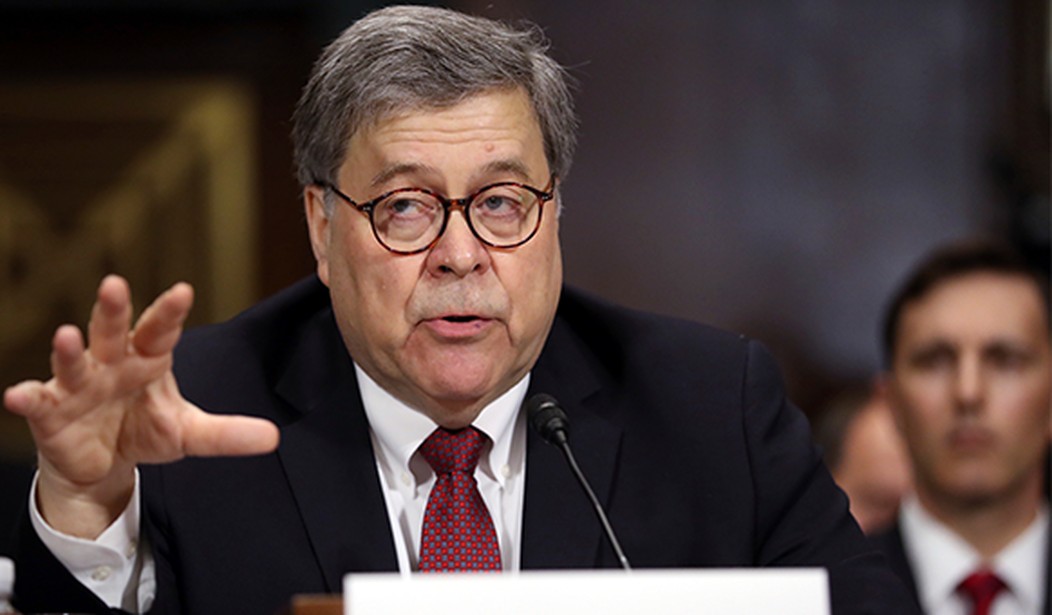
Now, some of the same people are issuing somber warnings of the damage that will be done if Attorney General William Barr declassifies documents showing what else the nation's law enforcement and intelligence agencies did in the 2016 Trump investigation.
In 2018, former CIA Director John Brennan said of the Nunes memo, "I never witnessed the type of reckless partisan behavior I am now seeing." Recently, Brennan called the Barr declassification project "a reckless, reckless initiative."
In 2018, Rep. Adam Schiff, the current chairman of the Intelligence Committee, said the Nunes memo "crosses a dangerous line." Recently, he said the Barr initiative marks "a new and dangerous phase."
In 2018, former Attorney General Eric Holder called the Nunes memo "unheard of," "dangerous" and "irresponsible." Recently, he called the Barr initiative "the height of irresponsibility" and "a dangerous precedent."
Many others echoed Brennan's and Schiff's and Holder's sentiments. The problem is, they were wrong then, and they are likely wrong again now.
The revelation that the FBI used the Steele dossier -- the collection of unconfirmed anti-Trump dirt compiled for the Hillary Clinton campaign by the former British spy Christopher Steele -- set off a tremendous argument about the dossier's reliability. But there was no doubt that the Nunes memo was correct, that the FBI had indeed cited the dossier as evidence in its argument that Carter Page should be wiretapped. It's hard to avoid the conclusion that some of the loudest voices denouncing Nunes were angry about the exposure of the FBI's questionable actions, and not the fact that the FBI's actions were indeed questionable.
Indeed, after the release of the Nunes memo, there was little discussion of any specific damage it had done to U.S. national security.
Now, there is another fight about declassification. Nunes himself has heard this all before. "Every time we have tried to get information on the Russia hoax, the left as well as the media and their leakers claimed it would devastate national security," Nunes said in a text exchange. "Now we hear the same argument from the same reporters, leakers and leftists, even though all their previous doomsday warnings proved false. These people simply use national security as a false justification to hide information that would reveal their abuses."
Nunes summed up with one more line: "Democracy dies in darkness."
The resistance to declassification is likely to be ferocious. Almost immediately after President Trump ordered intelligence agencies to cooperate with Barr and gave the attorney general "full and complete authority" to declassify information from the Trump-Russia investigation, the intelligence world struck back when The New York Times reported that Barr's project could endanger one of the CIA's most prized sources.
Attributing its story to "former officials," the Times said the source was someone "close to (Vladimir) Putin" who gave the CIA "information about (Putin's) involvement" in U.S. election interference, and specifically turned over evidence to support the conclusion that "Putin himself was behind the Russia hack." The source had been "long nurtured" by the CIA and was highly valued by Brennan when he was director. All of that work might be at risk if Barr moves ahead, the Times suggested.
Now, if anything might endanger such a source, it would be exposure in The New York Times. But the story showed that the intelligence world will push back hard against this new effort to investigate its record. The fight could be messy. But Barr, like Nunes, has heard such threats before. It's time to find out what the CIA, FBI and other agencies did in those difficult days of the 2016 campaign.
Byron York is chief political correspondent for The Washington Examiner.
Join the Conversation
VIP members get the ability to comment on articles.