





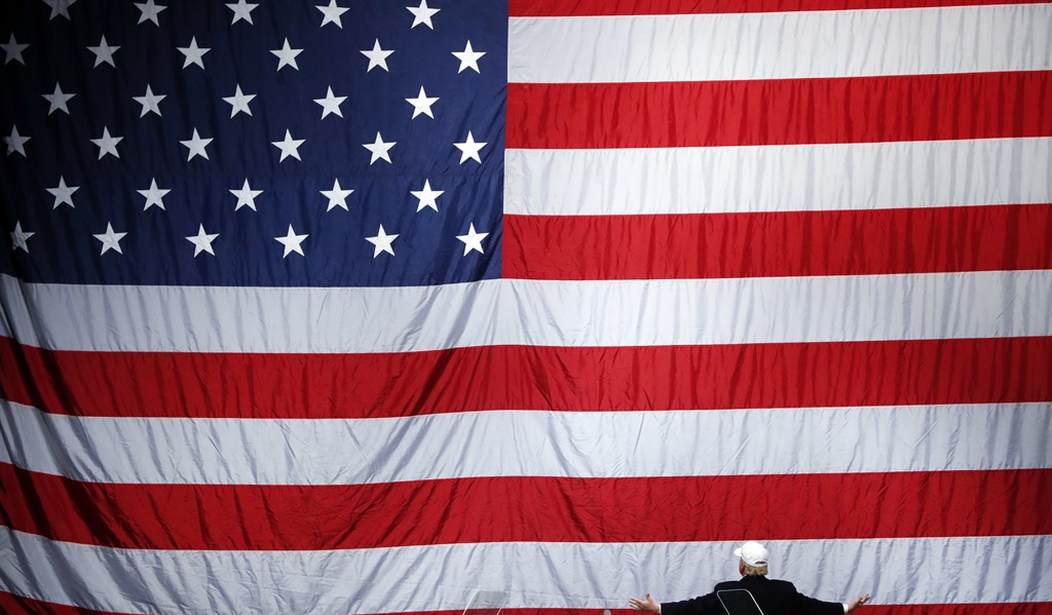
The questions hit home in these nervous days following, first, Donald Trump's ordering of a cruise missile strike against a Syrian airfield (retaliation against Bashar Assad's apparent use of sarin gas on villagers) and, second, the back-to-back Palm Sunday massacres of Christians in Egypt.
The situations are not identical twins. Of military leverage in Syria we still have a modicum. That is thanks to the U.S. Navy, and very much in spite of President Barack Obama's reversals over "red lines" and his notion that our country was morally compromised by long-ago misdeeds. Professor Obama, rather than wield American power just about anywhere, chose to finger it gingerly, all the while delivering lectures that made many of his countrymen yearn for the swaggering gait of George W. Bush.
In Egypt, the plight of Coptic Christians targeted for destruction by -- may the Democrats pardon me -- Islamic terrorists is not one the Pentagon is capable of addressing directly. On the other hand, Egypt's America-friendly military regime already benefits from the Trump administration's relaxed attitude toward regimes not necessarily nice but a lot nicer for sure than the freelance homicidal maniacs of radical Islam. In broader terms, the Palm Sunday massacres argue for more forceful U.S. leadership in putting the maniacs away for good: either directly or through cooperation with more sensible Middle Easterners.
''Nationalism," as a slogan, made an impact during the 2016 campaigns: the focus on us and our own needs over the needs of the world. But you can't just go play in your backyard when no one else is capable of doing the vital work at hand. From time to time, you have to step in, as in Bosnia back in the 1990s, when, without NATO intervention, many thousands who lived would otherwise have died. How many of Syria's 400,000 dead might be alive now had not the Obama administration looked for an easy way out of a situation requiring American resolve?
Trump, possibly without intending to do so, has brilliantly focused minds on the consequences of turning over whole international neighborhoods to punks and thugs.
Evil effects, when ignored, tend to multiply -- a priceless insight from New York City's "broken windows" policing in the 1990s. New York, blessed at the time with relatively conservative civic leadership, sought to discourage the big bad stuff -- murder especially -- by cracking down on smaller not-so-bad stuff, such as vandalism. What you find you can get away with, you get away with, if you're of a thuggish disposition; then you see what else you can do without anyone's calling your hand. Failing to punish Syria for earlier use of chemicals against civilians encouraged the regime to gas yet more civilians.
Trump hasn't shown all the cards in his hand; possibly he hasn't even looked at his hand. For all that, he is due vast credit for showing that even a practicing nationalist in charge of the indispensable nation is somebody of whom a practicing terrorist might want to walk wide.
George W. Bush's democracy-for-everybody line of business was unrealistic; but so, in a world whose dangers he tended to slight, were Obama's sermons and lectures. If Trump can miraculously steer the indispensable nation between "Rock 'em and sock 'em" and "Oh mercy me, what can we do," ours might prove a safer, freer world.
But looking to Donald Trump as the enabler, the patent-holder of way between wild extremes, I think I see the problem. What we know of Trump, nevertheless, is that you never quite know.

Join the Conversation
VIP members get the ability to comment on articles.