





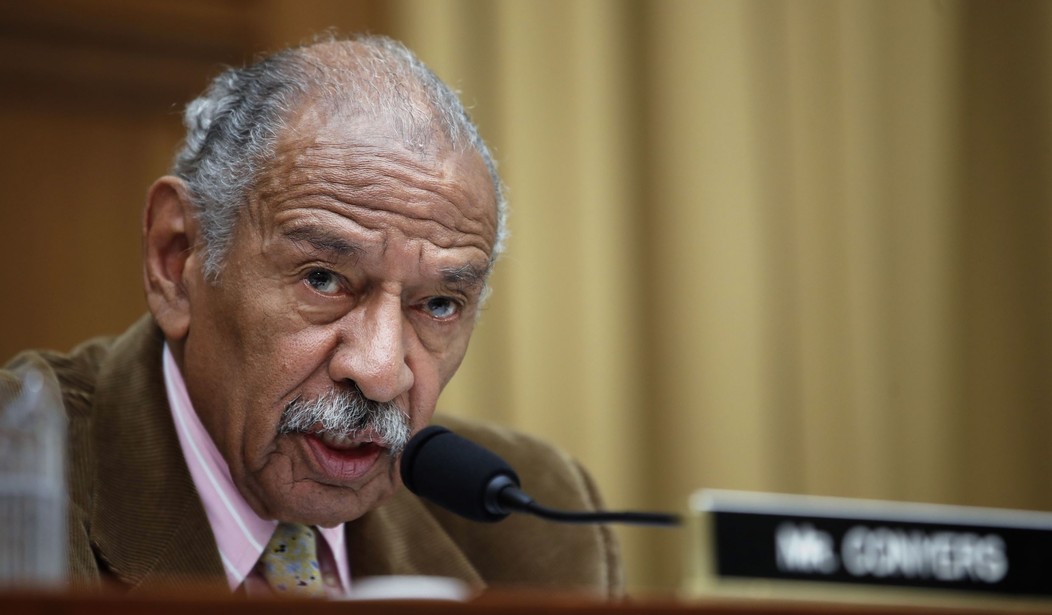
Republicans and Democrats in Washington are vying to appear the more outraged by sexual harassment on Capitol Hill. Don't be fooled. Groping, suggestive remarks and quid pro quos are business as usual on the Hill, thanks to a cover-up scheme devised by Congress itself using taxpayer dollars. The real scandal is that we the people pay the settlement costs and legal fees when members of Congress get caught with their pants down.
On Monday, the website BuzzFeed reported that in 2015 Michigan Rep. John Conyers, top Democrat on the House Judiciary Committee and the longest-serving current House member used taxpayer funds to settle a complaint from a staff member about unwanted sexual advances. The $27,000 was paid in exchange for a confidentiality agreement. On Tuesday, Conyers denied harassing anyone but acknowledged the settlement.
This year alone, the U.S. Treasury has confidentially paid $934,754 to settle sexual harassment and other complaints against members of Congress and their staff.
Similar hush money has been paid out yearly since Congress passed the Congressional Accountability Act. The 1995 law makes members and their employees anything but accountable. If they're accused of discrimination or harassment, their settlement costs get bankrolled by taxpayers. Secretly.
How dare Congress vote itself such a perk. Eliminating it is key to reducing sexual harassment on Capitol Hill. A bipartisan chorus is calling for mandatory sexual harassment training to make Congress a more hospitable workplace for women. Sorry. Training is window dressing. The harassers need to get clobbered where it hurts -- in their wallets.
After all, even Washington's most famous harasser, President Bill Clinton, didn't fleece taxpayers to settle his legal affairs. In February 1998, he set up a legal defense fund to cover costs associated with accusations by Paula Jones. Many Clinton supporters ponied up for that fund, including another now notorious harasser, movie mogul Harvey Weinstein.
Two decades later, things have gotten worse. Now taxpayers get stuck with such bills, and not just in D.C. The California legislature uses public funds to settle harassment complaints. This year, California taxpayers paid a $100,000 tab for Assemblyman Steve Fox, accused by an aide of exposing himself and then firing her for reporting it.
When the Oklahoma legislature paid off a female aide, who accused her boss of harassment, part of the confidential payment got labeled "cleaning supplies." Indeed. Former House Speaker Jeff Hickman defended the hush money, claiming it was cheaper than litigating. If Hickman thinks he did taxpayers a favor, he's wrong. Shielding politicians from the consequences of their misconduct encourage more of it and more payments.
New Yorkers learned that when former Assembly Speaker Sheldon Silver repeatedly paid zip-your-lips money to women accusing lawmakers of harassment. Hush money begets more harassment.
Same is true in the corporate world. Major insurer Nationwide, one of the biggest covering sexual harassment settlements and legal costs, reports a 15 percent surge in policy sales in the last year. Nearly half of employers with over 1,000 workers now carry such coverage.
Some companies swiftly investigate and punish proven sexual harassment, like Fidelity Investments, which recently fired one of its star stockpickers. But many other employers make hefty confidential payouts to protect marquee employees accused of harassment and even conceal the payments from investors.
Sen. Kirsten Gillibrand, D-N.Y., and Rep. Jackie Speier, D-Calif., are getting accolades for their "Me Too" Act to combat harassment on Capitol Hill. Admittedly, their bill would end taxpayer-funded settlements for members of Congress. But otherwise, their bill only protects victims working on Capitol Hill.
How about protecting the over 70 million women in workplaces everywhere else -- factories, stores and offices -- not just Capitol Hill insiders? A provision in the GOP Senate tax cut plan, to be debated after Thanksgiving, would eliminate the tax deductibility of settlement payments and legal fees in sexual harassment workplace cases if the settlement includes a confidentiality clause. That would make hush money much more costly.
Transparency will unmask offenders, instead of enabling them. And the unfairly accused will fight back to protect their reputations, rather than going along with secret settlements that cost them nothing.
It's high time sexual harassment became an expensive mistake -- in Congress and everywhere else.

Join the Conversation
VIP members get the ability to comment on articles.