





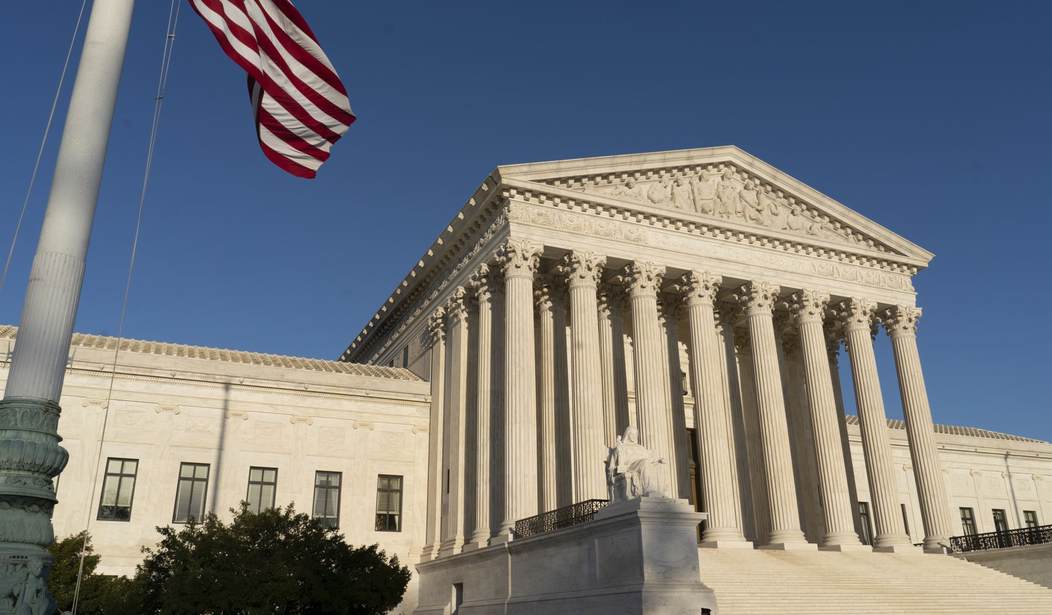
This week, the Supreme Court ruled on the Masterpiece Cakeshop case. That case involved a religious Christian man, Jack Phillips, who decorates cakes for a living. Two men came into his shop one day and demanded that Phillips decorate a cake for their same-sex wedding. Phillips refused. For this grave breach of civic duty, the Colorado Civil Rights Commission referred his case for prosecution, ruling that he had breached the customers' rights to receive service.
The Supreme Court ignored the key issues of the case. It refused to countenance whether First Amendment speech rights could be violated in favor of nondiscrimination laws -- whether, for example, a gay songwriter could be forced to perform work for an evangelical, Christian choir looking for a tune to liven up Leviticus 18. It refused to consider whether First Amendment free association rights could be completely overthrown by reference to nondiscrimination laws -- whether any business could be told to serve anyone for any reason at any time. Finally, it refused to consider whether First Amendment freedom of religion could be overturned in favor of nondiscrimination law -- whether religious practice stops at the front door of the home and the church.
Instead, the court ruled that the baker didn't have to bake the cake because the members of the Colorado Civil Rights Commission were unduly mean. You see, the commission pilloried the man's religious viewpoint rather than giving it a respectful hearing; it compared his viewpoint to pro-slavery and pro-Holocaust viewpoints. This was extreme and nasty. Thus, Justice Anthony Kennedy concluded: "The commission's hostility was inconsistent with the First Amendment's guarantee that our laws be applied in a manner that is neutral toward religion. ... The outcome of cases like this in other circumstances must await further elaboration in the courts."
I must have missed the "be kind; rewind" section of the First Amendment.
Of course, the Supreme Court likely ruled on narrow grounds in order to achieve a 7-2 majority including liberal Justices Elena Kagan and Stephen Breyer. But the ruling bodes ill for the future: It doesn't protect religious Americans, nor does it protect freedom of speech.
In reality, the founders would have been aghast at this issue ever rising to the level of the judiciary. Freedom of speech, and, by extension, freedom of association, were designed to allow private individuals to live their lives as they see fit, free of the burden of an overreaching government. Freedom of religion was to be guaranteed by a small government unconcerned with the day-to-day matters of business. Free markets were considered enough incentive to prevent mass discrimination in public accommodations.
Now, however, the courts have decided that the government can tell you what to say, who to say it to and how to act out your religion. The only holdup is that they have to be nice about telling you what to do.

Join the Conversation
VIP members get the ability to comment on articles.