





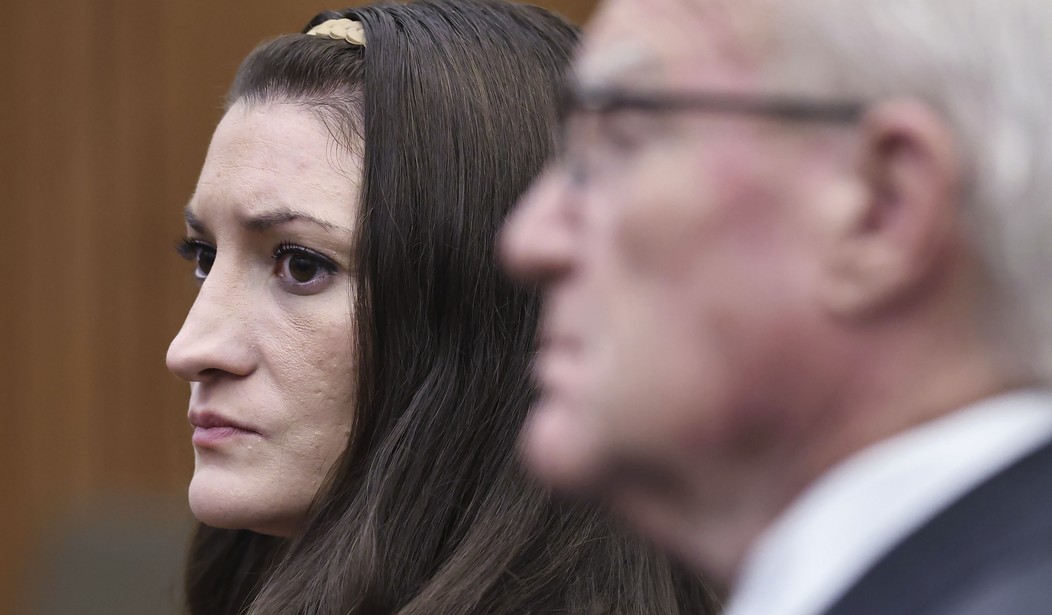
The trial of Lindsay Clancy forces us to confront a tragedy almost beyond human comprehension: A mother killed her three young children — 5-year-old Cora, 3-year-old Dawson and 8-month-old Callan — inside their Massachusetts home.
We must begin with those children. They were innocent, vulnerable and entitled to the protection of the person they trusted most. Their names and stolen futures must not disappear beneath arguments about psychiatric diagnoses, prescription drugs or criminal law. Whatever verdict the jury reaches, three beautiful young lives were taken, a father's world was destroyed, and an entire family was shattered.
Clancy does not deny killing her children. The central question is whether she was legally responsible for her actions. Her defense contends that postpartum psychosis had overtaken her mind so completely that she could no longer understand the nature or wrongfulness of what she was doing. Prosecutors argue that although she was mentally ill, she remained capable of planning, making decisions and appreciating that her conduct was wrong.
That distinction is difficult but essential. Mental illness and legal insanity are not synonymous. A person can be profoundly depressed, anxious, suicidal or emotionally unstable and still remain criminally responsible. For an insanity defense to prevail, the illness generally must have so severely impaired the defendant's mind that she could not comprehend the wrongfulness of her actions.
The prosecution points to evidence of deliberation. Clancy sent her husband out of the house on errands, researched how long it would take him to complete them, and killed the children during his absence. Prosecutors also challenged her later claim that a male voice had suddenly commanded her to kill them. To the state, these were not the movements of a person detached from reality but the calculated actions of someone creating an opportunity to commit murder.
The defense presents a very different portrait. It describes a devoted mother whose mental health deteriorated following childbirth. In the months before the killings, Clancy reportedly struggled with severe insomnia, anxiety, suicidal thinking, paranoia and fears that something was terribly wrong with her. Family members testified that she appeared increasingly unlike herself. She had received psychiatric care and had recently been hospitalized, yet the crisis continued.
Then there is the question of medication.
Clancy reportedly received numerous psychiatric prescriptions during the months preceding the killings. Four medications—mirtazapine, lamotrigine, trazodone, and quetiapine, were detected in her blood afterward. These drugs may be prescribed for depression, mood instability, insomnia and other serious psychiatric conditions. Her defense maintains that repeated medication changes and inadequate treatment worsened her deterioration.
But we must resist the temptation to turn a complex medical catastrophe into the simplistic declaration that "the drugs made her do it." A toxicologist testified that the medications found in her system were at low concentrations, with some below therapeutic levels. That evidence does not support the theory that she was acutely intoxicated or chemically driven to kill at that moment.
Still, a blood test taken after the crime cannot answer every question. It may reveal which substances were present and at what concentrations, but it cannot fully reconstruct the cumulative effects of months of changing prescriptions, interrupted sleep, severe depression and possible psychosis. Nor can it tell us whether the medications failed to control an underlying illness or whether the entire treatment process lacked the coordination this crisis demanded.
The greater failure may not have been one particular drug. It may have been a fragmented system in which different symptoms were treated separately while the full danger went insufficiently recognized. Medication can save lives, but prescriptions cannot replace careful diagnosis, close monitoring and communication among physicians, patients and families.
Postpartum psychosis is rare, but it is real, and it is a medical emergency. It can involve hallucinations, delusions, paranoia, mania, severe depression and a sudden loss of contact with reality. When a new mother reports suicidal thoughts, fears of harming her children, extreme insomnia or the sensation that her mind is collapsing, the response cannot be another routine appointment weeks away. She and her children may require immediate protection, hospitalization and continuous psychiatric supervision.
Acknowledging that reality does not excuse murder. It recognizes that prevention must begin long before a courtroom asks jurors to decide whether a mother was evil, ill or some agonizing combination of both.
The jury must weigh the evidence, not public sympathy. If Clancy understood that killing her children was wrong, mental illness alone cannot erase accountability. If psychosis truly destroyed that understanding, placement in a secure psychiatric institution would reflect both the law and the severity of her condition.
Justice and compassion are not opposites. Justice demands that we remember Cora, Dawson and Callan, and honestly confront the horror inflicted upon them. Compassion demands that we recognize the potentially devastating power of postpartum mental illness and build a health system capable of identifying it before another family is destroyed.
No verdict can restore these children. But the country can honor them by learning from the warnings that came before their deaths and by ensuring that when another mother says her mind is unraveling, someone listens, acts and protects every life at risk.
Armstrong Williams is manager/sole owner of Howard Stirk Holdings I & II Broadcast Television Stations and the 2016 Multicultural Media Broadcast owner of the year.
Editor’s Note: Do you enjoy Townhall’s conservative reporting that takes on the radical Left and woke media? Support our work so that we can continue to bring you the truth.
Join Townhall VIP and use promo code FIGHT to receive 60% off your membership.



Join the Conversation
VIP members get the ability to comment on articles.