





Americans are often warned about the dangers of overreaction, hysteria or xenophobia, and rightly so. But there is an equal danger in denial. What the country has witnessed over the past several years is not a series of disconnected curiosities, nor the product of political imagination. It is a pattern of incursions, violations and exploitations that demand sober attention and serious response.
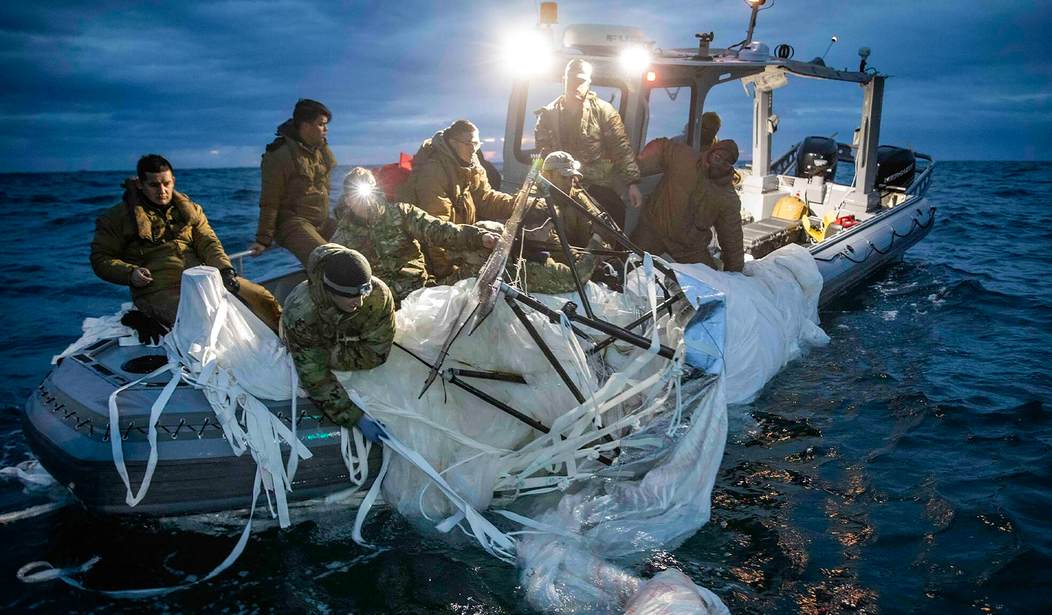
Start with what was visible to everyone: a Chinese surveillance balloon traversing U.S. airspace before being shot down off the American coast. This was not speculation. It was confirmed by the U.S. government and acknowledged by Beijing. A foreign intelligence platform penetrated sovereign airspace, testing response time, detection capability and political will. That alone should have ended any debate about intent.
But the balloon was not an anomaly; it was a symbol.
Consider what has followed or come into clearer view. Federal prosecutors charged Chinese nationals for operating an undeclared, Chinese Communist Party-linked "police station" on U.S. soil, designed to monitor, intimidate and coerce individuals living in America. This was not diplomacy. It was foreign law enforcement activity conducted illegally inside a sovereign nation.
Then there are the biosecurity cases. In Michigan, a Chinese national pleaded guilty to smuggling a dangerous biological pathogen into the United States. That is not academic misconduct or paperwork error. That is a direct breach of public safety and federal law, involving materials that could cause real harm if misused or mishandled. In an era still shaped by pandemic trauma, the gravity of that offense should not be minimized.
Add to this a growing list of economic espionage and cyber intrusion cases. U.S. indictments have repeatedly described Chinese state-linked actors targeting universities, corporations, dissidents, infrastructure and government institutions. Intellectual property theft, trade secret violations and cyber surveillance are not byproducts of competition; they are instruments of state strategy.
What ties these incidents together is not coincidence. It is consistency.
Even the Federal Bureau of Investigation has been explicit in its warnings: The threat is not the Chinese people, Chinese culture or Chinese immigrants. The threat lies in the programs, policies and tactics of the CCP and those acting on its behalf while violating U.S. law. That distinction matters -- and must be preserved -- because losing it undermines both justice and national unity.
This is not about fear. It is about vigilance.
Biological materials, advanced research, cyber tools and surveillance technologies are no longer confined to governments or large institutions. They are portable, concealable and powerful. That reality lowers the barrier to harm and raises the stakes of enforcement. When clandestine labs appear, when biological materials are smuggled, when cyber intrusions multiply, the cost of complacency grows.
At the same time, the response cannot be reckless. Sensationalism corrodes credibility. Overstatement fuels backlash. The strength of a democratic society lies in its ability to confront danger without abandoning principle. Due process matters. Evidence matters. Precision matters.
But so does pattern recognition.
Airspace breaches.
Illegal policing operations.
Cyber espionage.
Research theft.
Biological smuggling.
Each incident alone would warrant concern. Together, they form a warning that cannot be ignored without consequence.
The United States does not need to choose between openness and security. It needs the discipline to protect both. That means enforcing laws already on the books, closing regulatory gaps, strengthening counterintelligence, and speaking honestly with the public without panic and without euphemism.
History shows that threats most often succeed not because they are invisible but because they are normalized. What begins as "unlikely," then "inconvenient," eventually becomes "accepted." That is how negligence masquerades as tolerance.
A nation that shrugs at repeated incursions invites more. America must respond with clarity, enforcement and consequences before normalization becomes negligence, and before biological or technological capabilities are misused in ways that could cost American lives.
Vigilance is not hostility.
Preparedness is not paranoia.
And recognizing patterns is not prejudice. It is a responsibility.
Armstrong Williams is manager/sole owner of Howard Stirk Holdings I & II Broadcast Television Stations and the 2016 Multicultural Media Broadcast owner of the year. To find out more about him and read features by other Creators Syndicate writers and cartoonists, visit the Creators Syndicate website at www.creators.com.
Editor’s Note: Do you enjoy Townhall’s conservative reporting that takes on the radical left and woke media? Support our work so that we can continue to bring you the truth.
Join Townhall VIP and use promo code FIGHT to receive 60% off your membership.


Join the Conversation
VIP members get the ability to comment on articles.